A campsite can feel wonderfully quiet until a phone battery dies, the lantern dims, and the camera needs charging. Choosing a Portable Power Station For camping is not simply about buying the biggest battery. It means matching usable capacity, output, weight, and recharging options to the trip. A station that runs a small cooler overnight may be too heavy for a long hike. A compact model may suit weekend lighting and phones, but disappoint when several devices run together.
Energy-efficiency expert Amory Lovins is often credited with the reminder, “The cheapest energy is the energy you don’t use.” That idea matters outdoors. Check each device’s wattage and expected hours of use before comparing battery capacities. Then consider how you will recharge: a car outlet, wall socket, or compatible solar panel. Solar can help on a sunny, open site, but clouds and shade can slow charging. Plans should allow for that.
This guide compares practical options for different camping styles, from short car-camping trips to longer stays away from outlets. It will look at capacity, ports, portability, charging speed, and useful safety features. Specs do not tell the whole story. Real-world performance varies with temperature, device load, and charging conditions. And yes, a larger station can still be the wrong choice. The best pick is the one you can carry, recharge, and use confidently—without packing power you never need.
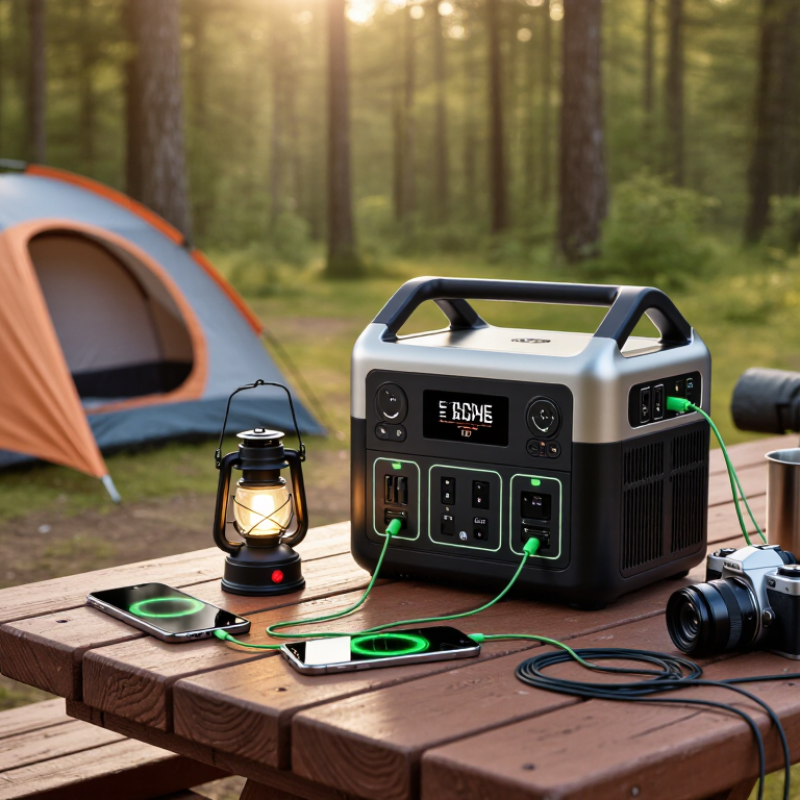
What a Portable Power Station Is and How It Works
A portable power station is a rechargeable battery system in a compact case. It stores electricity for use away from a wall outlet. Inside, battery cells hold energy as direct current, or DC. USB ports and many vehicle-style sockets deliver DC directly. For standard household plugs, an inverter changes DC into alternating current, or AC.
The two numbers worth checking are capacity and output. Capacity, shown in watt-hours, suggests how much energy is stored. Output, measured in watts, limits how much power the station can provide at one time. A small lamp may run for hours, while a kettle can drain a battery quickly or exceed its output limit. Read the device’s power label, and allow for conversion losses. They matter.
A built-in battery management system monitors charging, temperature, and electrical load. Many units can recharge from a wall outlet, a vehicle socket, or compatible solar panels. Solar charging depends on sunlight, panel placement, and the station’s input limits. In camp, keep the unit dry, shaded, and ventilated, with cables arranged where nobody will trip. The display can be useful, but its runtime estimate is only an estimate. It may shift as the load changes. For a quiet evening, that is usually enough; planning a whole trip from one percentage reading is less certain.
Key Features to Compare for Camping Use in 2026
For camping in 2026, compare capacity in watt-hours with the devices you plan to run. A phone needs little power; a small cooler may draw energy for hours. Add up estimated use across one night, then leave a practical reserve. Bigger capacity usually means more weight. Weight matters.
Check continuous output, not just the advertised peak. A kettle or compact cooking appliance may exceed a station’s limit, even briefly. Compare the output rating with each device’s startup demand. Also count the ports you will actually use: USB-C, standard USB, and AC outlets can prevent a tangle of adapters. Small details count. Charging options matter, too. A wall recharge is convenient before departure, while solar input may help on longer trips, though output varies with shade and weather. Look for clear temperature limits, overload protection, and readable battery indicators. I would not choose by capacity alone; a heavy unit can stay in the car while the campsite is a long walk away.
Tips: Test your setup at home. Run the cooler and charge your phone together, then note the battery percentage after a few hours. Check the manual for safe operating temperatures.
2026 Best Portable Power Station for Camping? Key Features to Compare
Typical energy use for common camping devices. Compare your daily needs with a power station’s usable capacity before choosing.
Bars show approximate energy-use ranges in watt-hours (Wh). Actual consumption varies with device model, settings, weather, and usage; allow extra capacity for conversion losses and a reserve.
How to Match Battery Capacity and Output to Your Needs
For camping, match capacity to energy use, not the biggest number on the box. Capacity is measured in watt-hours (Wh); output is measured in watts (W). Add each device’s watts multiplied by hours of use. A 40 W cooler running for eight hours needs about 320 Wh, before conversion losses. Add your phone, lamp, and a margin for cold weather or longer nights. Check the station’s usable AC capacity, since inverter losses vary. NREL’s 2024 Annual Technology Baseline models utility-scale lithium-ion storage at 85% round-trip efficiency; that is useful context, not a guarantee for portable units.
Output matters just as much. A station must supply enough continuous watts for devices running together, and enough surge power for startup loads. Check the cooler’s label and the station’s manual; motor-driven equipment can briefly draw more than its rated running wattage. Do the math. Then check it again. It is easy to underestimate a cooler’s overnight runtime, especially when the campsite is warmer than expected.
Tips: List your devices, watts, and hours before shopping. For example, a 10 W lamp used for five hours adds 50 Wh. Keep charging options in mind: AC outlets are convenient, while USB can avoid inverter use for small electronics. Leave some headroom. A tight estimate looks neat on paper, but real trips rarely follow the paper exactly.
2026 Best Portable Power Station for Camping? - How to Match Battery Capacity and Output to Your Needs
| Camping Use Case |
Suggested Capacity |
Suggested AC Output |
Example Devices and Average Load |
Illustrative Runtime |
Best Fit |
| Day trip or overnight, light electronics |
250–350 Wh |
300–500 W continuous |
LED lights, phones, camera batteries; about 30–40 W combined while charging |
About 5–8 hours at a steady 35 W load |
Campers who mainly need USB charging and modest lighting |
| Weekend camping with a small 12 V cooler |
400–600 Wh |
500–800 W continuous |
12 V cooler averaging about 30 W, plus small devices averaging 15 W |
About 8–10 hours at a 45 W average load |
Short trips where the cooler is used alongside phones and lights |
| Multi-device weekend setup |
800–1,000 Wh |
1,000–1,500 W continuous |
Fridge averaging 40 W, laptop charging at 60 W, and lights at 10 W |
About 7–8 hours at a combined 110 W load |
Campers using a portable fridge, laptop, and several small devices |
| Long weekend or higher daily energy use |
1,200–1,600 Wh |
1,500–2,000 W continuous |
Devices drawing about 150 W in total while in use |
About 7–9 hours at a steady 150 W load |
Longer stays, more frequent charging, or several devices used together |
| Group camping or power-hungry equipment |
1,800–2,000+ Wh |
2,000 W or more continuous |
Combined load around 250 W; check each appliance’s starting surge before use |
About 7–8 hours at a steady 250 W load |
Groups or campers with multiple appliances and higher simultaneous demand |
How to read the estimates: Runtime examples assume roughly 85% of the rated battery capacity is available for use and divide that usable energy by the stated average load. Actual runtime varies with temperature, device cycling, conversion losses, and battery condition. Check both continuous and surge output against appliance requirements; heating appliances can drain a battery quickly.
Portable Power Station Types and Their Camping Trade-Offs
2026 Best Portable Power Station for Camping?
Portable Power Station Types and Their Camping Trade-Offs
Portable power stations differ most in battery chemistry, size, and output. Lithium iron phosphate models often offer long cycle life and strong thermal stability, but can be heavier. Lithium nickel manganese cobalt units are often lighter for similar capacity, though their service life varies by design and use. Check the watt-hour rating, not just the product’s size. A 500Wh unit may run a 40W cooler for roughly ten hours in ideal conditions; inverter losses and startup surges reduce that time. Cold nights can also limit battery performance.
For a tent-based weekend, a compact station may handle phones, lamps, and a camera without taking much trunk space. It may struggle with a kettle or other high-wattage appliance. Larger units provide more capacity and outlets, but add weight and take longer to recharge. Solar input can help on a sunny, multi-day trip, yet shade, clouds, and panel angle make charging unpredictable. Quiet operation matters, too. A fan can be noticeable beside a sleeping bag.
Tips: Add up each device’s watt-hours for one day, then leave a 20–30% buffer. Check the station’s continuous output and surge rating before packing. Test your setup at home. A short trial can expose an inconvenient cable or an optimistic runtime estimate.
How to Choose and Use a Station Safely Outdoors
KOA’s 2024 North American Camping Report says 58 million U.S. households camped at least once in 2023. Portable power can make trips more comfortable, but choose a station by your actual loads, not its biggest advertised number. Add up each device’s watt-hours: watts multiplied by hours of use. Then allow for conversion losses and reduced performance in cold conditions. Check capacity in watt-hours and continuous output in watts; a large capacity cannot run a device that exceeds the output limit. Small print matters.
At camp, place the station on a dry, stable surface, shaded from direct sun, with vents unobstructed. Keep it away from pooled rain and sleeping areas, and follow the manual for charging temperatures, cables, and weather protection. UL 2743 is a safety standard for portable power packs; look for evidence that the unit was evaluated to the relevant standard. Inspect the casing and cords before use. Stop if the unit is cracked, unusually hot, swollen, or smells odd. Not glamorous. I’d still recheck the load estimate at camp: lanterns and phones seem minor until a cooler runs all night.
Conclusion
A portable power station stores electricity in a rechargeable battery and supplies it through outlets or ports for camping devices. Choosing one in 2026 means comparing more than its advertised capacity: consider usable energy, continuous and peak output, charging options, weight, durability, and the ports you actually need. A compact model may suit phones, lights, and small accessories, while longer trips or power-hungry equipment call for greater capacity and output.
To find the right Portable Power Station For your camping plans, estimate each device’s wattage and how long you will use it, then allow extra capacity for changing conditions. Battery type, recharge speed, and portability involve trade-offs, so match them to trip length and how far you will carry the unit. Outdoors, keep the station dry, shaded, ventilated, and on a stable surface; follow its operating instructions, protect cables from damage, and avoid overloading it. Planning ahead helps you balance convenience, runtime, and safe use.

 Litongwei Electronic