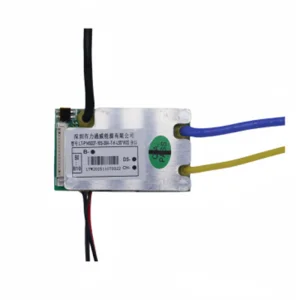
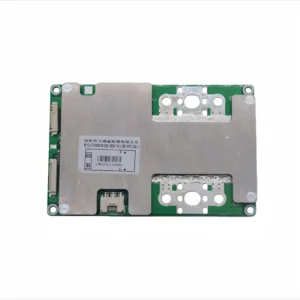
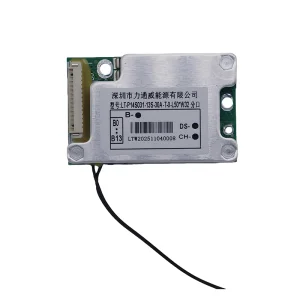
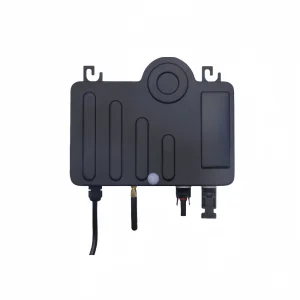
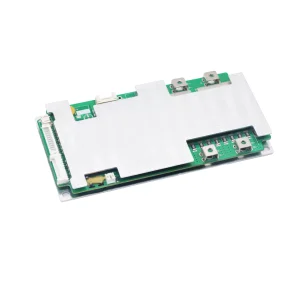
Explore our high-performance engineered battery management system boards and distributed micro-inverters. Built to industry specifications for reliable industrial and vehicle operations.
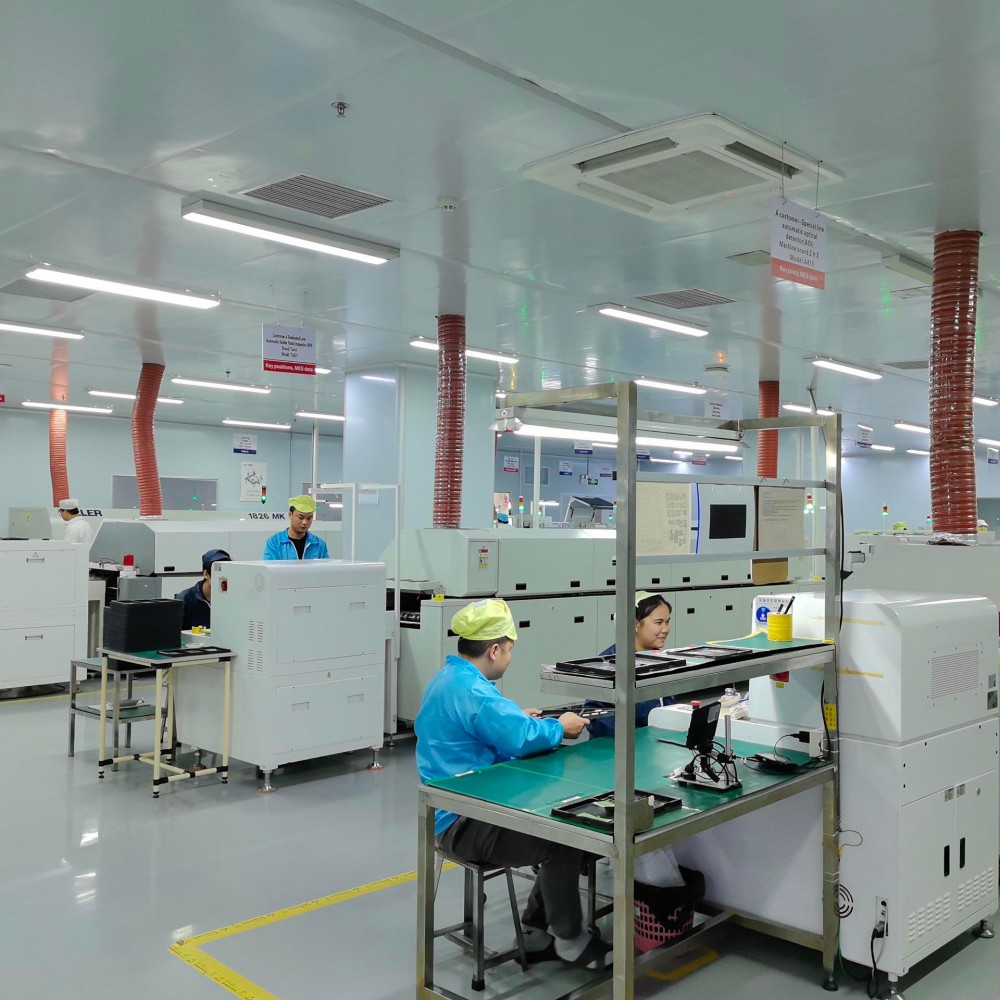
Established in 2005, Shenzhen Litongwei Electronic Technology Co., Ltd. is a national high-tech enterprise specializing in the R&D and manufacturing of high-reliability lithium-ion safety control systems. Over the past two decades, we have dedicated ourselves to the complex engineering design behind Hardware BMS and Intelligent Software BMS, establishing an elite reputation among top-tier brands and manufacturing groups.
Our expansive production systems service critical fields including 3C digital devices, micro-mobility solutions (electric scooters, bicycles, motorcycles, tricycles), utility fleets (golf carts, AGVs), industrial equipment, unmanned aerial vehicles (drones), and power tools. By partnering with Litongwei, enterprise clients secure robust intellectual property protection (collaborative patent frameworks to prevent infringement risks), access optimized industry-standard shared boards that decrease NRE costs, and secure full manufacturing lifecycle traceability.
We work hand-in-hand with engineering groups to develop custom architectures, offering patent-sharing protocols and technical audits to eliminate layout infringement risks in export markets.
Access our validated library of shared layout boards. Standardized form factors reduce deployment cycle times while improving thermodynamic reliability in dense assemblies.
Every PCBA manufactured is logged on our centralized MES platform. From incoming component analysis and AFE batches down to final function test (FCT) calibration records.
Industrial buyers and assembly operations demand robust validation, manufacturing capacity, and consistent silicon sourcing. Litongwei meets these rigorous standards with verified processes.
We work directly with tier-1 AFE (Analog Front-End) and MCU manufacturers like TI, STMicroelectronics, and Infineon, ensuring continuous supply lines even during global semiconductor disruptions.
Applying unique laser-etched matrix codes on PCB boards allows us to query component placement records, solder profile data, and SPI test logs decades after installation.
Our physical testing labs accelerate electrical development cycles, performing thermal validation (IR imagery), high-current discharge cycles, and simulated environment aging in days instead of months.
From component placement to wire harness custom tailoring, conformal coating protection, and custom housing integration, we support complete box-build integration.
Understanding the functional topology of battery protection circuits. Selecting the ideal protection profile ensures optimal safety thresholds and cost parameters.
| Specification Parameter | Hardware-Based BMS Protection Board | Intelligent Software-Based BMS (Bluetooth/CAN) |
|---|---|---|
| Primary Control Engine | Dedicated analog hardware comparator & protection logic ICs | High-performance MCU integrated with programmable AFE (Analog Front End) |
| Response Latency | Under 100 microseconds (Hardware comparator delay) | Variable, typically 1 to 10 milliseconds (Software loop execution) |
| Communications Support | None (Isolated analog loop control) | Bluetooth, CAN bus, RS485, SMBus, and UART networks |
| Parameter Configurations | Hard-coded via precise resistor dividers and hardware IC layout | Real-time configuration via digital software registers or mobile applications |
| Balancing Mechanisms | Passive shunt balancing (thermal dissipation per channel) | Active balancing (inductive/capacitive charge transfer) or passive |
| Typical Use-Cases | Power tools, e-bikes, garden tools, cost-effective consumer devices | Light EVs, micro-inverters, energy storage systems (ESS), AGVs |
Our forward-looking research institute develops solutions targeted at emerging cell chemistries, improved thermodynamic profiling, and smarter communication architectures.
Developing dedicated analog comparative logic circuits optimized for the unique voltage thresholds (1.5V to 4.1V) and discharge characteristics of sodium-ion battery strings.
Moving beyond passive heat dissipation. Our future platforms utilize inductive charge transfer systems to redistribute charge between cell groups with minimal heat generation.
By coupling edge microcontroller units with deep learning algorithms, we predict pack thermal degradation and cell aging anomalies before safety mechanisms trip.
Enterprise manufacturing scaling requires both extreme capacity and stringent precision tooling. Review our operational footprint below.
Our operations span a 13,000 square meter headquarters and advanced assembly factory in Shenzhen alongside an automated 27,000 square meter manufacturing base in Dongguan (Huangjiang). Both facilities maintain high-speed, clean-room environments.
We consistently allocate over 10% of our annual sales revenue to product development. This sustained investment fuels our Litongwei Technology Research Institute and maintains our technological advantage.
Housing 24 high-speed pick-and-place component mounters, multi-zone nitrogen reflow ovens, inline 3D AOI scanners, and automated optical coordinate testers for zero-defect production.
From an early pioneer in analog battery protection boards in 2005 to an automated manufacturer integrated with global supply ecosystems.
Began design and assembly of digital BMS models. Expanded into battery pack protection development in 2006. Secured ISO9001 certification in 2007 and ISO14001 certification in 2009, creating our foundational quality framework.
Acquired 8 major utility and design patents in 2011. Established the Litongwei Technology Research Institute in 2012 to research high-accuracy fuel gauge chips and multi-cell balancing. Awarded Gold Partner status by Gaogong Lithium Battery in 2015.
Upgraded to the 2016 versions of ISO9001/ISO14001, achieved automotive-grade IATF16949 certification in 2018, and deployed our automated MES platform. Named the leading lithium battery protection board brand for 2-wheeled vehicles in 2020.
Litongwei Electronics continues to innovate, deepening its technological expertise while embracing IoT and Industry 4.0. Through its Smart Manufacturing+ strategy, the company drives industrial transformation and upgrading.
Exporting energy products globally demands strict compliance. Litongwei designs, tests, and manufactures boards to pass rigorous international standards.
We design our PCBs with safety margins and electrical clearances that comply with UL standards, helping your final battery products pass laboratory validation quickly.
Our raw boards, active components, and solder materials are certified lead-free. They meet global environmental import restrictions for the European Union and North America.
Our intelligent Bluetooth modules and MCU-driven protection systems are designed with EMI shielding to prevent radio frequency interference, helping you pass EMC testing.
Litongwei's partners include Huawei, Lenovo, Desay, Guoguang, Sunwoda, Eve Energy, Guoxuan High-tech, and other industry brand clients who have collaborated for many years.













Find answers to technical and manufacturing questions about hardware BMS configurations, scaling parameters, and support services.
A hardware BMS relies on fixed analog comparator circuits to monitor overvoltage, undervoltage, and overcurrent conditions, with parameters set by resistors and capacitors. A software BMS uses a programmable MCU and an AFE to process measurements, allowing for adjustments, state-of-charge calculation, and communication over buses like CAN or RS485.
NTC (Negative Temperature Coefficient) thermistors measure temperature directly at high-risk points like MOSFET groups and cell connections. They trigger thermal protection if temperatures exceed set limits during charging or discharging, preventing thermal runaway.
We use our own patented topologies and source components from clear supply chains. Our R&D team reviews board layouts to verify IP ownership, helping clients avoid patent disputes in overseas markets.
Yes, our 20S 100A and 200A protection boards use thick copper traces, low-RDS(on) MOSFET arrays, and heavy-duty heatsinks to manage high current levels while minimizing heat buildup in vehicle applications.
Every board goes through solder paste inspection (SPI), automated optical inspection (AOI) after reflow, hardware functional testing (FCT) to verify protection thresholds, and electrical parameter calibration on our MES-monitored lines.
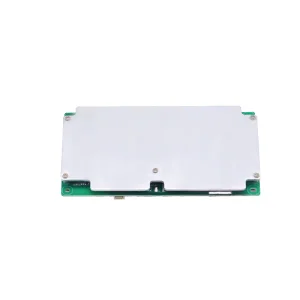
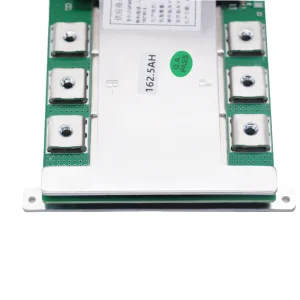
A selection of our customizable hardware protection boards, portable power storage solutions, and efficiency micro-inverters.
 Litongwei Electronic