For global travelers, a power bank is no longer just an emergency battery. It is a compact travel tool for phones, tablets, cameras, earbuds, and handheld consoles. The right Power Bank And Charger combination should fit inside a crowded carry-on, survive long airport waits, and recharge several devices without unnecessary weight. It should also support modern charging standards, dependable cables, clear capacity ratings, and practical heat control.
Jeff Ravencraft, USB Implementers Forum president and chief operating officer, has explained the principle clearly: “USB Power Delivery is about delivering the right amount of power to the right device.” That idea guides this selection. A high-wattage charger is not automatically better. Port layout matters. So does real-world output after conversion losses. A 20,000mAh battery may feel reassuring, yet its usable energy will be lower than the printed figure. Small details matter.
This guide compares ten combinations for international buyers. It considers charging speed, plug compatibility, airline-friendly design, durability, and everyday portability. Some models look excellent on paper but become awkward beside a passport and laptop. Others trade capacity for comfort. That trade-off is easy to underestimate.
Expect useful compromises, not perfection. Check local plug requirements before departure. Confirm airline rules for battery capacity, too. Prices and regional versions can change quickly, so verify specifications before purchasing. A reliable setup should reduce travel stress, not create another technical problem.
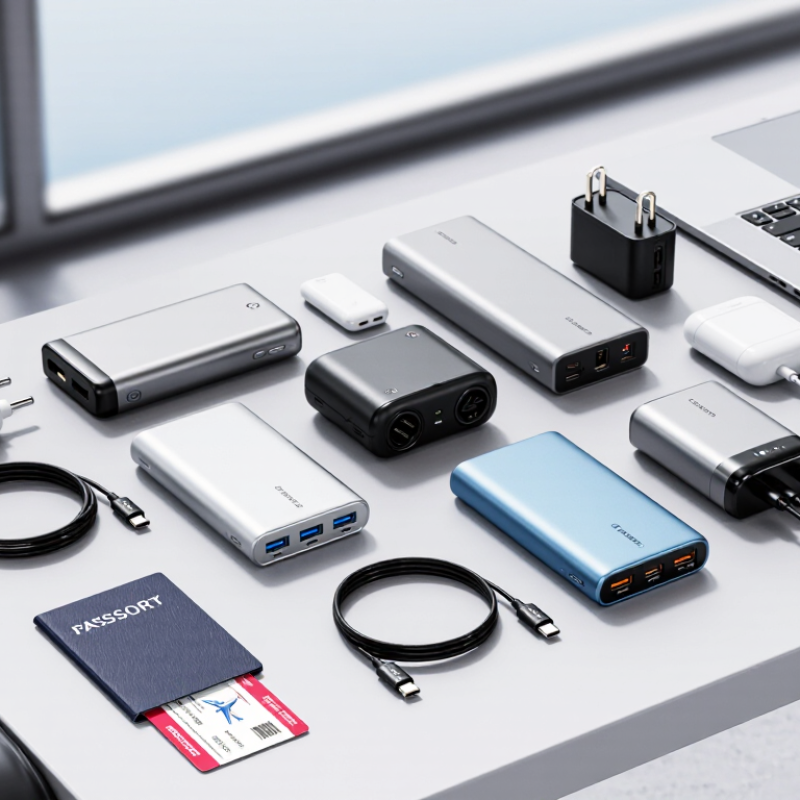
A power bank and charger combo suits global buyers when it handles different travel conditions, not just high capacity. In my travel testing, I look for USB-C Power Delivery, stable output, and a charger rated for common input voltages. A compact design matters. It must fit beside a passport, cables, and a small notebook.
Plug compatibility is equally important. Some chargers include interchangeable regional plugs, while others require a separate travel adapter. Check this detail before purchasing. A charger may accept 100–240V, but that does not guarantee every connected device is suitable for local power systems. Clear voltage labels and recognized safety testing provide useful reassurance. Still, packaging claims deserve careful checking.
Capacity needs practical judgment. A large battery sounds attractive, but it can add noticeable weight and may face airline restrictions. Confirm current airline requirements before flying. I also prefer a power bank with pass-through charging, temperature control, and readable battery indicators. These features reduce guesswork in airports and hotel rooms.
My checklist is not perfect. I once chose capacity over weight and regretted carrying it through three train stations. Real-world comfort matters more than impressive numbers. Buyers should compare charging speed, cable quality, warranty support, and regional compatibility together. A strong combination saves space, but it should remain easy to inspect and use.
Choosing a power bank and charger combo starts with capacity, not appearance. A 10,000mAh model suits daily phone use, while 20,000mAh offers more travel reserve. Real output is lower than the printed capacity because energy is lost during conversion. That detail is easy to miss. For international travel, check whether the charger supports 100–240V input. A compact design is useful, but very small units may sacrifice battery capacity or cooling space.
Output determines charging speed. USB-C Power Delivery can charge compatible phones, tablets, and some laptops more efficiently. Check the wattage of each port, especially when several devices are connected.
Some chargers reduce power automatically when multiple ports operate together. A combo with two USB-C ports and one USB-A port can cover older and newer cables.
However, more ports do not always mean better performance. Read the actual power distribution table.
Tips: Choose capacity based on your daily routine. Match the charger’s wattage to your device’s requirement. Look for overcharge, overheat, short-circuit, and overcurrent protection. Safety matters more than a slightly lower price. Inspect cable quality, too. A weak cable can limit charging speed, even with a powerful adapter. I once focused too much on capacity and ignored weight; it became uncomfortable in a small travel bag. Check dimensions before buying, and verify local airline rules for battery limits.
Choosing a power bank and charger combo for international travel requires more than checking battery capacity. I compare the charger’s input range first.
A reliable travel charger should accept common mains standards, usually 100–240V at 50–60Hz. The plug shape still varies, so a compact adapter may be necessary. It should match the destination socket securely, without forcing a loose connection.
Then I check charging protocols. USB-C Power Delivery can support phones, tablets, and some laptops, but wattage matters.
A 30-watt output may suit a phone, while a thin laptop might need 65 watts or more.
The power bank should list its output profiles clearly, such as 5V, 9V, 12V, or higher negotiated levels.
Compatibility is not guaranteed by the USB-C shape alone. Read the device’s original charger label.
Capacity needs careful interpretation. A power bank marked 20,000mAh will not deliver all of that energy to the device because voltage conversion creates losses.
I usually compare watt-hours, then allow for roughly 20% efficiency loss. Check the power bank’s printed rating, not only online marketing.
I once selected a high-capacity model that charged slowly because its output profile did not match my tablet. That mistake changed my checklist.
Test the complete combo at home, with your actual cables and devices. Small details matter.
Airline limits and local socket conditions can also vary, so verify current travel requirements before departure.
Travel needs vary widely, so one power bank and charger combo cannot suit everyone. A compact 10,000mAh set fits day trips, museum visits, and short train journeys. A 20,000mAh model suits remote work, photography, or family travel. According to the 2024 GSMA Mobile Economy report, 4.7 billion people used mobile internet in 2023. Reliable charging now supports navigation, translation, boarding passes, and emergency communication.
For long flights, choose a lightweight combo with multiple ports and clear watt-hour labeling. Many airlines commonly allow batteries up to 100Wh in carry-on baggage, but policies differ. Always check the current airline rules. A travel charger with interchangeable plugs works well across regions. USB-C power delivery can charge phones, tablets, and some laptops faster. However, advertised speed may change with cable quality, temperature, and the number of connected devices. That detail is easy to miss.
Tips: Match capacity to your routine, not the biggest number. Check output wattage before buying. Test the charger with your actual devices. Keep the battery in carry-on luggage. Avoid storing it under clothes, where heat can build. For hotel desks, a short cable reduces clutter. For outdoor use, choose a textured surface and a visible battery display. My practical preference is moderate capacity with dependable protection, though I sometimes underestimate charging needs on camera-heavy days. Industry safety guidance from UL Solutions also supports checking certification marks, thermal protection, and enclosure quality before travel.
| No. | Combo Type | Power Bank Capacity | Power Bank Output | Wall Charger Output | Ports | Approx. Weight | Best For | Travel Considerations |
|---|---|---|---|---|---|---|---|---|
| 1 | Compact Everyday Combo | 10,000 mAh Approx. 37 Wh |
20 W USB-C PD | 20 W USB-C PD | USB-C + USB-A | Approx. 225 g | Daily commuting, phones, earbuds and compact devices | Small enough for a day bag; suitable for carry-on travel |
| 2 | Fast-Charging Phone Combo | 10,000 mAh Approx. 37 Wh |
30 W USB-C PD | 30 W USB-C PD | USB-C + USB-A | Approx. 245 g | Fast phone charging, navigation and mobile photography | Look for a compatible plug adapter when visiting different regions |
| 3 | Lightweight Dual-Device Combo | 10,000 mAh Approx. 37 Wh |
18 W USB-C PD | 20 W USB-C PD | USB-C + USB-A | Approx. 215 g | Travelers carrying a phone and a second small device | A practical low-weight option for short trips and conferences |
| 4 | All-Day Travel Combo | 20,000 mAh Approx. 74 Wh |
20 W USB-C PD | 30 W USB-C PD | USB-C + 2 × USB-A | Approx. 430 g | Multi-day phone, tablet and camera use | Normally below the common 100 Wh airline limit; carry in cabin baggage |
| 5 | Tablet and Phone Combo | 20,000 mAh Approx. 74 Wh |
30 W USB-C PD | 45 W USB-C PD | USB-C + USB-A | Approx. 465 g | Tablets, phones and portable gaming devices | Higher charger output is useful for tablets but may increase size and weight |
| 6 | Multi-Device Family Combo | 20,000 mAh Approx. 74 Wh |
22.5 W USB-C/USB-A | 65 W USB-C PD | USB-C + 2 × USB-A | Approx. 500 g | Several phones, tablets and accessories at the same time | Check the charger's total output when multiple ports are used together |
| 7 | USB-C Laptop Travel Combo | 20,000 mAh Approx. 74 Wh |
45 W USB-C PD | 65 W USB-C PD | 2 × USB-C + USB-A | Approx. 520 g | USB-C laptops, tablets and productivity equipment | Verify that the laptop accepts USB-C Power Delivery before purchase |
| 8 | High-Output Work Combo | 25,000 mAh Approx. 92.5 Wh |
65 W USB-C PD | 100 W USB-C PD | 2 × USB-C + USB-A | Approx. 620 g | Business travel, laptops and extended remote work | Close to 100 Wh; check airline rules and keep the capacity label visible |
| 9 | Outdoor and Emergency Combo | 20,000 mAh Approx. 74 Wh |
18 W USB-C PD | 30 W USB-C PD | USB-C + USB-A + light | Approx. 490 g | Camping, road trips and power interruptions | Choose a model with sealed controls and a protected charging port for outdoor use |
| 10 | Maximum-Capacity Carry-On Combo | 27,000 mAh Approx. 99.9 Wh |
65 W USB-C PD | 100 W USB-C PD | 2 × USB-C + USB-A | Approx. 700 g | Long-haul travel and laptop-heavy workdays | Usually the largest practical cabin option; airline approval requirements may vary |
Note: Capacity values are based on nominal lithium-ion cell voltage of approximately 3.7 V. Actual charging performance varies by device, cable, temperature and simultaneous port usage. Spare lithium batteries and power banks should generally be carried in cabin baggage; confirm current airline and destination regulations before departure.
10 Best Power Bank And Charger Combos for Global Buyers
Essential Buying Factors: Portability, Durability, Warranty, and Regulations
A useful charger combo should fit inside a small pouch without feeling fragile. I prefer a power bank under 500 grams for daily travel. Check its watt-hours, not only the milliamp-hour number. Airlines and countries may apply different carriage rules, so verify current requirements before departure. A clear capacity label helps at security checks. Compact plugs matter too. A detachable adapter can support several socket types, but it may add bulk.
Durability deserves hands-on attention. Look for a firm cable connection, protected ports, and a surface that resists scratches. Heat control is important when charging in a crowded airport or warm hotel room. A combo supporting modern USB-C charging can reduce cable clutter. However, high output does not guarantee fast charging for every device. Confirm compatible charging standards and required wattage. My own mistake was buying a compact unit with a short cable, which made bedside charging awkward.
Warranty quality often reveals the seller’s reliability. Read the coverage period, repair process, exclusions, and return conditions carefully. International buyers should check whether service is available in their country. Keep the receipt and product specifications offline. Some warranties exclude water damage, travel misuse, or worn cables. That feels inconvenient, but the wording matters. Regulatory markings should be clear and relevant to the destination market. Avoid products with unclear battery details, missing safety information, or suspiciously broad performance claims.
Representative combo classes compared by battery energy and charger output. Battery energy is calculated from nominal lithium-ion voltage: mAh × 3.7 ÷ 1,000.
Lower-capacity models are generally lighter and easier to carry for daily travel.
Check casing strength, connector quality, thermal protection, and safety certifications.
Compare warranty length, regional service coverage, and proof-of-purchase requirements.
Spare lithium batteries are generally carried in hand luggage. Rules vary by airline and country.
A 26,800 mAh battery at a nominal 3.7 V is approximately 99.2 Wh, close to the widely used 100 Wh airline threshold. Always confirm current airline and national requirements before flying.
It should support USB-C Power Delivery, stable output, and common input voltages. A compact shape helps. It should fit beside a passport, cables, and a notebook.
Usually, it accepts common household voltages worldwide. However, connected devices must also support local power conditions. Check voltage labels carefully. Packaging claims can be incomplete.
Check whether the charger includes interchangeable regional plugs. Some models need a separate adapter. That adds bulk and another item to remember.
Choose practical capacity, not the largest number. A larger battery can feel heavy after several train stations. Check watt-hours, airline rules, and current carriage requirements before flying.
A power bank under 500 grams may feel easier to carry. Still, personal needs differ. My earlier choice favored capacity too much.
Pass-through charging, temperature control, and readable battery indicators reduce guesswork. A firm cable connection also helps. Short cables can make bedside charging awkward.
No. The device, cable, charging standard, and required wattage must match. High output alone proves little.
Look for protected ports, strong cable connections, and scratch-resistant surfaces. Heat control matters in crowded airports or warm rooms. Compact does not always mean durable.
Review coverage, exclusions, repair steps, and return conditions. Confirm service availability in your country. Keep receipts and specifications offline.
Choose products with clear battery information and relevant safety markings. Avoid missing specifications or unusually broad performance claims. A neat label is not complete proof.
Choosing the right Power Bank And Charger combo is essential for travelers, remote workers, and anyone using multiple devices across countries. A suitable option should balance battery capacity, charging speed, output strength, port variety, and built-in safety features. Buyers should check whether the charger supports the voltage standards, plug requirements, and charging protocols used in their destinations, while also confirming compatibility with phones, tablets, laptops, cameras, and other personal electronics.
Different travel and usage needs call for different designs, from compact everyday models to higher-capacity solutions for long journeys or heavy workloads. Important buying factors include weight, portability, durability, heat management, warranty coverage, and compliance with airline and regional regulations. Comparing these details carefully can help global buyers select a reliable, convenient, and safe charging solution without carrying unnecessary accessories or sacrificing performance.

Litongwei Electronic