Why Choose Li Ion Lithium Battery for Your Power Needs?

Time:2026-06-08 Author:Charlotte
0%

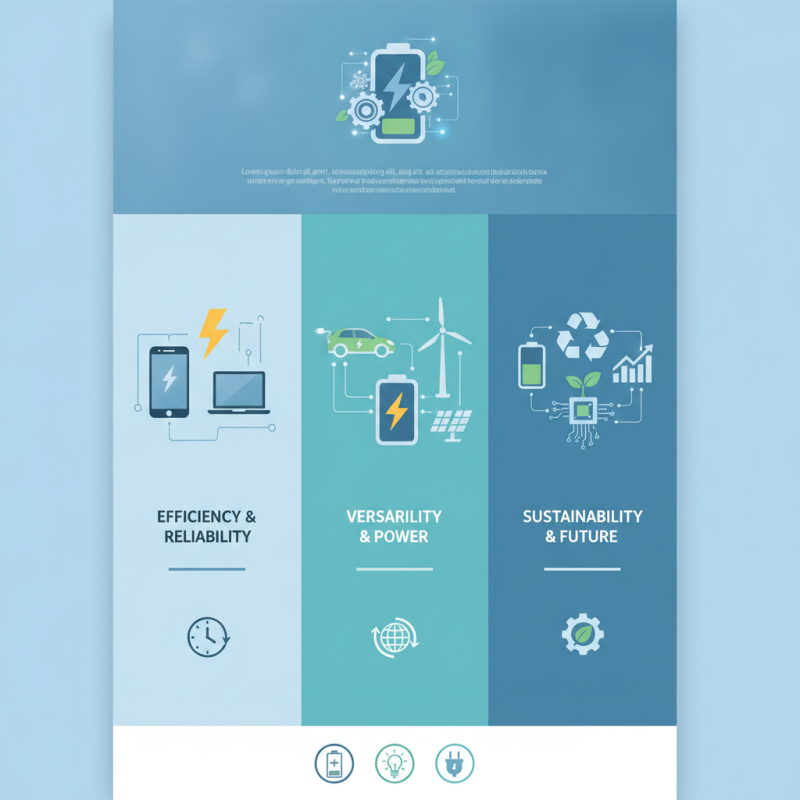
In today's fast-paced world, energy storage solutions are vital for various applications. The Li Ion Lithium Battery stands out as a top choice among consumers and industries. Its efficiency, reliability, and compact design make it ideal for both portable devices and large-scale energy storage.

Despite its advantages, some question the longevity and environmental impact of Li Ion Lithium Batteries. Critics argue that manufacturing processes may not be as green as desired. However, advancements in technology have significantly improved battery recycling and sustainability.

With the growing demand for renewable energy, the importance of Li Ion Lithium Battery cannot be overstated. It not only powers smartphones and laptops but also supports electric vehicles and renewable energy systems. This versatility highlights its essential role in our energy future.
Why Choose Li Ion Lithium Battery for Your Power Needs?

Advantages of Li-Ion Lithium Batteries for Energy Storage

Lithium-ion batteries have become a staple in energy storage solutions. Their ability to hold a significant charge is one reason they are widely chosen. These batteries exhibit a remarkable energy density, meaning they store more energy in less space. This characteristic makes them perfect for both personal and industrial use.

Additionally, Li-ion batteries have a long life cycle. They can endure numerous charge and discharge cycles without significant loss of capacity. This durability results in fewer replacements over time, reducing overall energy expenditures. Many users appreciate the reduced maintenance needs of these batteries, allowing them to focus on other priorities.

However, not all applications may benefit equally from Li-ion technology. In some situations, they may not perform well in extreme temperatures or heavy usage. It's essential to analyze specific needs and conditions before making a decision. Ultimately, understanding both advantages and limitations will help users make informed choices for their power requirements.

Advantages of Li-Ion Lithium Batteries for Energy Storage

Comparative Analysis: Li-Ion vs. Other Battery Technologies

When comparing lithium-ion (Li-Ion) batteries with other technologies, several factors stand out. Li-Ion batteries offer a higher energy density, which means they can store more energy in a given space. Reports indicate that Li-Ion batteries can achieve energy densities up to 250 Wh/kg. In contrast, lead-acid batteries typically reach only about 30-50 Wh/kg. This significant difference allows Li-Ion batteries to power devices longer while occupying less room. This advantage is critical for portable electronics and electric vehicles.

Another key point is the efficiency of Li-Ion batteries. They boast a charging efficiency of about 90-95%. Meanwhile, nickel-metal hydride (NiMH) batteries usually operate at around 70-80% efficiency. This higher efficiency translates into reduced energy waste over time, a crucial consideration for sustainability in energy consumption. However, Li-Ion batteries have a limited lifespan compared to some alternatives. They may start to degrade after 500-1000 charge cycles, depending on usage and conditions.

Safety is another consideration. While Li-Ion batteries are generally safe, they can pose risks if damaged or improperly handled. In contrast, lithium iron phosphate (LFP) batteries are more stable and pose lower risks but have lower energy density. Users should weigh the trade-offs carefully as both technology options have specific advantages and limitations that cater to different needs.

Applications of Li-Ion Batteries in Various Industries

Li-ion batteries are widely used across various industries due to their efficiency and reliability. In the automotive sector, these batteries power electric vehicles (EVs), providing long ranges and quicker charging times. This shift reduces emissions and dependency on fossil fuels. However, challenges remain in recycling and supply chain management that require ongoing attention.

In consumer electronics, li-ion batteries are essential in smartphones and laptops. Their lightweight design enhances portability for users. However, performance can degrade over time, leading to a need for proper maintenance and potential replacement. Users often face frustration when devices can't hold a charge as effectively.

The renewable energy sector also relies on li-ion batteries. They store energy generated from solar or wind, making it available during peak usage. This integration is crucial for energy transition efforts. Yet, issues around production sustainability and battery lifespan need careful consideration to optimize this usage. As industries evolve, so too must our approaches to battery technology and its implications.

Sustainability and Environmental Impact of Li-Ion Batteries

Li-ion batteries have become essential in modern energy solutions. Their sustainability aspect is particularly noteworthy. Unlike traditional batteries, Li-ion technology significantly reduces hazardous waste. Its lifespan outmatches many alternatives, minimizing disposal frequency.

The environmental impact of lithium extraction is often debated. Mining can disrupt local ecosystems. Water usage in the extraction process raises concerns. However, advancements in recycling methods aim to mitigate these issues. New technologies can reclaim up to 95% of lithium, promoting a circular economy.

Transitioning to renewable energy sources relies heavily on efficient storage. Li-ion batteries are crucial for solar and wind power systems. They store excess energy, enabling a smoother energy transition. Despite challenges in sourcing materials responsibly, the shift towards these batteries offers considerable environmental benefits.

Future Trends and Innovations in Lithium Battery Technology

Lithium battery technology is evolving rapidly. Innovations continue to push boundaries, improving performance and safety. Future trends indicate a focus on solid-state batteries. These batteries promise enhanced energy density and lower risks of overheating. Researchers are also exploring new materials to increase lifespan and reduce costs. These changes could lead to more efficient energy solutions for various applications.

Tips for choosing lithium batteries: Always consider the energy density. A higher density means less weight and size for the same energy output. Pay attention to safety features, especially with energy storage systems. Look for advancements in recycling methods as well. Sustainable practices are becoming essential in battery production.

While advancements are exciting, challenges remain. The production of lithium batteries still relies heavily on finite resources. Recycling processes need improvement to handle the growing volume of used batteries. Consumers must think critically about these issues when considering their power needs. Balancing innovation with environmental responsibility is crucial as we rely more on lithium technology.

FAQS

: What industries commonly use Li-ion batteries?

: Li-ion batteries are used in automotive, consumer electronics, and renewable energy sectors.

How do Li-ion batteries impact electric vehicles?

They provide long ranges and quicker charging times, reducing emissions and fossil fuel dependency.

What challenges are associated with Li-ion batteries?

Key challenges include recycling, supply chain management, and performance degradation over time.

Why are Li-ion batteries important in consumer electronics?

Their lightweight design enhances portability, but users face frustrations with charging efficiency over time.

How do Li-ion batteries support renewable energy?

They store energy from solar or wind sources, making it usable during peak demand periods.

What future trends are anticipated in lithium battery technology?

Innovations will focus on solid-state batteries, improving energy density and safety features.

What should consumers consider when choosing Li-ion batteries?

Look for energy density, safety features, and advancements in recycling methods.

What environmental concerns exist with lithium battery production?

The reliance on finite resources and the need for better recycling practices are major worries.

How can consumers balance innovation and environmental responsibility?

Critical thinking about power needs and sustainable practices is essential in the evolving battery landscape.

What is a common frustration for users of Li-ion batteries in devices?

Devices often can't hold a charge effectively as the battery ages, leading to user dissatisfaction.

Conclusion

Li Ion Lithium Batteries have emerged as a premier choice for energy storage due to their numerous advantages. With a higher energy density and longer lifespan compared to traditional battery technologies, they provide efficient and reliable power for a wide range of applications across various industries, including consumer electronics, renewable energy, and electric vehicles. The comparative analysis shows that Li Ion batteries outperform alternatives in terms of charging speed and weight, making them a preferred option for today's energy demands.

Moreover, the sustainability and environmental impact of Li Ion Lithium Batteries continue to improve with advancements in recycling technologies and materials. As the industry trends toward innovation, future enhancements may lead to even more efficient and eco-friendly battery solutions. Emphasizing the capacity for growth and adaptation, Li Ion Lithium Batteries are set to play a crucial role in the evolution of energy solutions in the coming years.

Charlotte

Charlotte

Charlotte is a seasoned marketing professional with a deep understanding of the company's portfolio and a passion for elevating its presence in the market. With a keen eye for detail and a commitment to excellence, she ensures that our professional blog is regularly updated with insightful articles......