Choosing a reliable Bms Battery System manufacturer is not a simple ranking exercise. It requires evidence, engineering judgment, and careful comparison.
This article examines ten leading manufacturers worldwide. It considers cell compatibility, balancing accuracy, thermal monitoring, communication protocols, functional safety, and after-sales support. These details matter in real installations. A battery cabinet may operate beside a factory wall, inside an electric vehicle, or under changing outdoor temperatures. Small design weaknesses can become expensive service problems.
Davide Andrea, a recognized battery-management author and engineer, describes the system clearly: “The BMS is the brain of the battery pack.” That perspective remains useful. A Bms Battery System does more than measure voltage. It estimates state of charge, detects abnormal temperatures, controls charging limits, and protects cells from unsafe operating conditions.
The manufacturers discussed here serve different markets. Some focus on electric vehicles. Others specialize in energy storage, industrial equipment, or customized battery packs. Their strengths are not identical. One company may offer strong software diagnostics, while another provides better thermal integration or global technical support.
Evidence matters more than promotional language. Public certifications, field experience, documented testing, and transparent specifications deserve close attention. However, manufacturer data can still be incomplete. Independent verification is not always available, and performance may change between product generations.
This comparison therefore remains practical, not absolute. A supplier with impressive laboratory results may struggle with local service. A smaller specialist may outperform a global brand in one application. The right choice depends on system voltage, operating environment, safety requirements, lifecycle expectations, and budget. There is no perfect list. There is only a more informed decision.
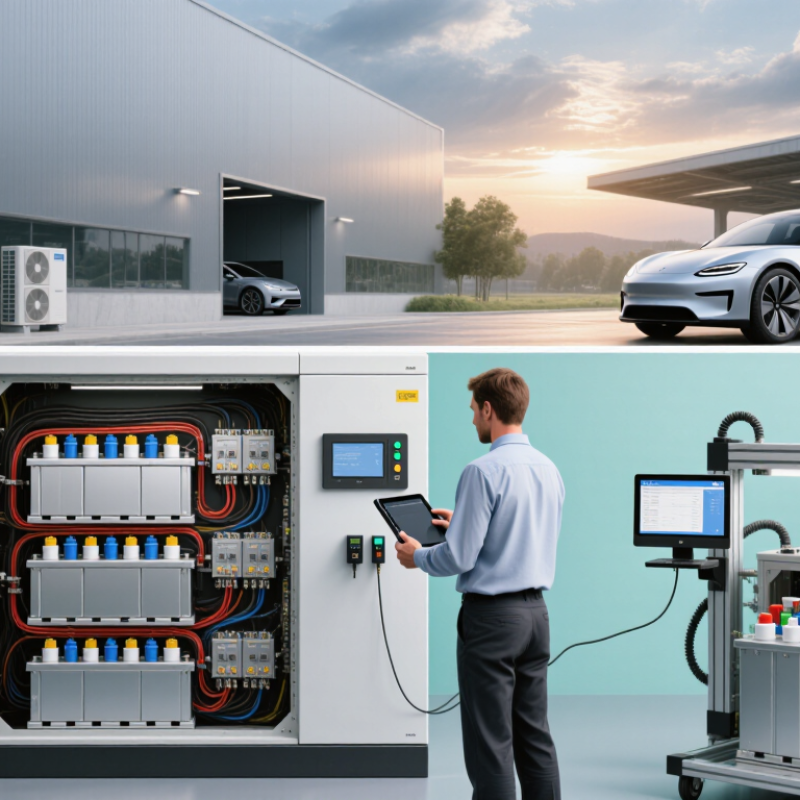
A Battery Management System (BMS) is the control layer between rechargeable cells and the equipment they power. It measures voltage, current, temperature, and sometimes insulation resistance. Its central task is keeping each cell within a safe operating window. In a 400-volt battery pack, one weak cell can limit the entire system. Small errors matter.
Core BMS functions include cell monitoring, balancing, protection, estimation, and communication. Passive balancing releases excess energy as heat through a resistor. Active balancing transfers charge between cells, but adds complexity and cost. The BMS can disconnect charging when a cell reaches its voltage limit. It can also stop discharge after an abnormal temperature rise. These decisions protect cells from overcharge, deep discharge, overheating, and excessive current. Sensors collect measurements repeatedly, while software checks them against calibrated thresholds. Fault logs help technicians trace an event instead of guessing.
A capable BMS estimates state of charge and state of health from current history, voltage behavior, temperature, and aging data. Those estimates are useful, not perfect. A cold cell may show misleading voltage, and sensor drift can distort calculations. Engineers therefore validate readings, test fault responses, and review field data over time. Reliable systems use redundant checks, secure communication, and documented calibration procedures. Installation quality also matters. Loose connections, poor thermal contact, or an incorrect sensor position can undermine excellent software. In real service work, the BMS is both a safety monitor and a practical diagnostic record.
Ranking the top 10 BMS battery system manufacturers requires more than comparing product brochures. I would begin with field evidence, including installation records, service reports, and verified cycle-life data. A reliable system should maintain accurate voltage, temperature, and current measurements under changing loads. Small errors can become expensive failures.
Safety performance deserves heavy weighting. Reviewers should examine overcharge protection, thermal monitoring, cell balancing, fault isolation, and emergency shutdown response. Independent laboratory testing adds credibility, especially when reports include test conditions and failure limits. Manufacturing consistency also matters. Auditors should inspect calibration records, component traceability, software version control, and quality procedures.
Communication capability is another practical criterion. A BMS should provide stable data through common industrial interfaces and record useful diagnostic events. Cybersecurity controls, update procedures, and access management should be assessed carefully. After-sales support needs evidence, not promises: response times, spare-part availability, training, and warranty handling reveal operational maturity. Cost matters, but the lowest initial price may hide integration work and downtime.
No ranking is perfect. Public data is often incomplete, and successful laboratory tests cannot represent every climate or duty cycle. I would therefore combine technical scores with customer references, independent audits, and transparent limitation statements. Manufacturers that disclose weaknesses may deserve more trust than those presenting flawless claims. The final order should remain adjustable as new field data appears.
The top 10 BMS battery system manufacturers worldwide represent different technical strengths. The global automotive specialist develops high-voltage systems for electric cars, using cell balancing, insulation monitoring, and thermal protection. The industrial energy leader focuses on containerized storage, where remote diagnostics and fire-control interfaces matter. The consumer electronics expert builds compact protection boards for phones, tools, and portable devices. Its designs prioritize low power use and tight packaging.
The commercial vehicle supplier supports buses, trucks, and fleet equipment. It usually emphasizes vibration resistance, CAN communication, and long service intervals. The marine-focused manufacturer designs systems for salt air, changing loads, and limited maintenance access. The aerospace-oriented producer follows strict traceability practices, although its products often cost more. The battery pack integrator combines cells, enclosures, sensors, and firmware under one engineering process. This can reduce compatibility problems during installation.
The research-driven manufacturer tests advanced estimation algorithms in demanding laboratory conditions. The mass-production specialist offers competitive pricing and large monthly output, but customization may be limited. The regional service expert stands out through rapid troubleshooting, local inventory, and practical field support. These profiles should be judged through test records, warranty terms, production audits, and software-update policies. Public performance data can be uneven. That is worth questioning. A strong BMS needs accurate state estimation, stable communications, thermal awareness, and documented failure responses. Real-world reliability depends on the complete battery system, not the circuit board alone.
| Rank | Profile | Primary Base Region | Established | Core BMS Market | Typical Battery Voltage | Supported Chemistries | Key Product Capability | Quality / Safety Focus |
|---|---|---|---|---|---|---|---|---|
| 1 | Manufacturer A | North America | 1910s | Automotive Industrial | 12 V, 24 V, 48 V and high-voltage EV packs | Li-ion, LFP, NMC and lead-acid | Battery monitoring, current sensing, thermal protection, cell balancing and pack diagnostics | Automotive-grade quality systems and functional-safety development |
| 2 | Manufacturer B | Western Europe | 1930s | Passenger EV Commercial Vehicle | 400 V and 800 V high-voltage platforms | NMC, NCA and LFP | Centralized and distributed BMS architectures with pack-level control software | ISO 26262-oriented engineering and automotive production controls |
| 3 | Manufacturer C | East Asia | 1950s | EV Batteries Energy Storage | 48 V residential systems to 1,000 V-class battery packs | LFP, NMC and other lithium-ion variants | High-channel cell-voltage acquisition, active/passive balancing and battery analytics | Automotive and stationary-storage compliance programs |
| 4 | Manufacturer D | United States | 1960s | Semiconductor-Based BMS Automotive | Low-voltage auxiliary systems to 800 V EV platforms | Li-ion, LFP, NMC and mixed-chemistry designs | Battery-monitoring ICs, wireless BMS options, isolation monitoring and state estimation | AEC-Q qualified components and ISO 26262 support |
| 5 | Manufacturer E | Japan | 1980s | Automotive Mobility | 12 V and 48 V systems, plus 400–800 V traction batteries | Li-ion, LFP and nickel-based lithium-ion cells | Battery control units, cell-monitoring units, SOC/SOH algorithms and CAN communication | Vehicle-grade validation and long-life reliability testing |
| 6 | Manufacturer F | South Korea | 1990s | EV Grid Storage Consumer | 24 V, 48 V, 400 V and 800 V battery systems | LFP, NMC, NCA and lithium-polymer cells | Integrated battery packs, master-slave BMS, thermal management and remote monitoring | IEC, UN 38.3 and customer-specific automotive qualification |
| 7 | Manufacturer G | Central Europe | 2000s | Industrial Vehicles Marine Energy Storage | 24 V to 1,000 V-class systems | LFP, NMC, LTO and lead-acid | Modular BMS platforms, embedded software, data logging and fleet-level diagnostics | IEC 61508-related practices and industrial safety testing |
| 8 | Manufacturer H | Greater China | 2000s | Two-Wheelers Commercial EV ESS | 24 V, 48 V, 72 V and medium-voltage battery packs | LFP, NMC and lithium-ion cylindrical or prismatic cells | Cost-optimized protection boards, smart BMS, Bluetooth connectivity and cloud dashboards | CE, UN 38.3, IEC 62619 and application-specific certification |
| 9 | Manufacturer I | Nordic Europe | 1990s | Marine Heavy-Duty Stationary Storage | 12 V, 24 V, 48 V and high-voltage modular systems | LFP, NMC and lead-acid | Ruggedized battery controllers, redundant sensing, thermal supervision and remote service tools | Marine, industrial and environmental durability testing |
| 10 | Manufacturer J | South Asia | 2000s | Telecom Backup Solar Storage Low-Speed EV | 12 V, 24 V, 48 V and scalable DC battery cabinets | LFP, NMC and lead-acid | Protection circuitry, passive balancing, thermal cut-off, RS-485 and CAN connectivity | IEC-based testing, UN 38.3 transport compliance and local grid requirements |
| Note: Ranking is indicative and based on global market visibility, application coverage, manufacturing capability and BMS technology presence. Voltage ranges, supported chemistries and compliance requirements vary by product series and customer configuration. | ||||||||
The leading ten BMS manufacturers compete through different technologies, applications, and market strengths. Their systems commonly monitor voltage, current, temperature, insulation, and state of charge. Advanced platforms also estimate state of health through cycle data and impedance changes. Accuracy depends on sensor placement, calibration, and battery chemistry. A laboratory result may not match a dusty factory floor.
Passive and Active Balancing Passive balancing remains affordable and reliable for electric tools, scooters, and entry-level storage. Active balancing moves energy between cells, improving efficiency in large battery packs. Wired systems suit high-volume vehicles and industrial cabinets. Wireless architectures reduce harnesses, but electromagnetic interference still requires careful testing. Some suppliers offer cloud diagnostics, while others prioritize local control and fast response.
Application needs separate the market leaders. Electric vehicles demand rapid fault detection, thermal propagation monitoring, and strict functional safety processes. Grid storage values modular communication, long service life, and remote maintenance. Marine and backup-power systems often need corrosion resistance, redundant sensing, and flexible installation. Manufacturers with strong regional engineering teams usually adapt faster to certification and service requirements. High-volume producers may offer lower costs, yet customization can become slower. No platform is perfect. Buyers should compare balancing current, sampling intervals, communication protocols, firmware update methods, and field failure data. A clear warranty process matters as much as impressive specifications.
Selecting a BMS manufacturer requires more than comparing cell counts and communication ports. The IEA’s Global EV Outlook 2024 reported nearly 17 million electric cars sold worldwide in 2024. That scale increases pressure on safety, diagnostics, and long-term support.
Choose a supplier that can show test records for thermal runaway detection, overcharge protection, balancing accuracy, and fault response times. Ask for evidence under relevant standards, such as IEC 62619, ISO 26262, or UN 38.3, when applicable.
During evaluation, request a sample BMS and test it with your actual cells, sensors, wiring lengths, and charging profile. Check whether the software records abnormal temperatures clearly. Confirm firmware update controls, data ownership, cybersecurity practices, and remote troubleshooting procedures.
BloombergNEF’s 2024 Battery Price Survey placed the average lithium-ion battery pack price at 115 dollars per kilowatt-hour, down 20% from the previous year.
Lower system costs can encourage rapid deployment, but a cheap BMS may create expensive downtime.
A capable manufacturer should explain production traceability, calibration methods, warranty limits, and spare-part availability. It should also provide engineering support after installation, not only during sales discussions.
Be cautious with impressive claims. Some specifications look precise but lack independent validation.
An uncomfortable question can reveal more than a polished brochure: what happens when one temperature sensor fails at 2 a.m.? Reliability is often visible in that answer.
A BMS monitors cell voltage, current, temperature, and sometimes insulation resistance. It keeps each cell inside a safe operating range. Small errors can affect the whole battery pack.
Balancing reduces voltage differences between cells. Passive balancing releases extra energy as heat through resistors. Active balancing transfers energy between cells and can improve efficiency. It also adds cost and complexity.
It can stop charging when a cell reaches its voltage limit. It can also interrupt discharge after abnormal heating or excessive current. These actions help prevent overcharge, deep discharge, and overheating.
It estimates charge from current history, voltage, temperature, and aging data. The result is useful, but not perfect. A cold cell can show misleading voltage. Sensor drift may also distort the estimate.
Loose connections can create unstable readings and unwanted heat. Poor thermal contact may hide a rising temperature. An incorrectly positioned sensor can make good software appear unreliable. Hardware still matters.
Yes. Test it with the intended cells, sensors, wiring lengths, and charging profile. Check abnormal temperature records and fault response times. A laboratory result may not match a dusty factory floor.
Compare balancing current, sampling intervals, communication methods, update controls, and field failure data. Review data ownership and cybersecurity practices. A polished specification is not independent proof.
It should explain calibration, traceability, warranty limits, and spare-part availability. Engineering support should continue after delivery. Ask what happens when one temperature sensor fails at 2 a.m. The answer may be uncomfortable.
A Bms Battery System is the intelligent control center of a rechargeable battery pack, designed to monitor voltage, current, temperature, and state of charge while helping protect cells from overcharging, over-discharging, overheating, and imbalance. This article explains the core functions of battery management systems and presents a practical framework for evaluating manufacturers worldwide. Ranking considerations include product reliability, safety performance, system efficiency, software intelligence, customization capabilities, production capacity, certifications, and technical support.
The profiles of the top ten manufacturers are organized around their technological strengths, application expertise, and market coverage, including solutions for electric mobility, energy storage, industrial equipment, and portable electronics. A comparison of architectures, communication features, balancing methods, and integration options highlights how different suppliers address varied operating requirements. The article concludes with guidance on selecting the right manufacturer by assessing battery chemistry, application conditions, scalability, compliance needs, lifecycle expectations, service resources, and total ownership cost.

Litongwei Electronic