Explore our leading selection of custom battery management systems, intelligent protection boards, and outdoor power management solutions.

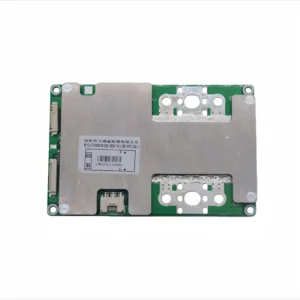
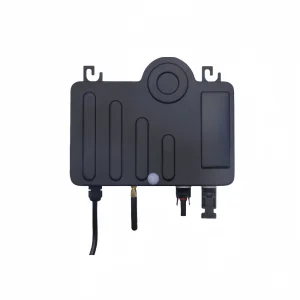
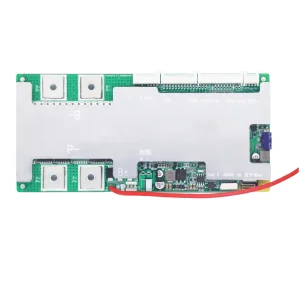
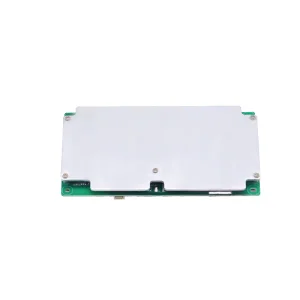
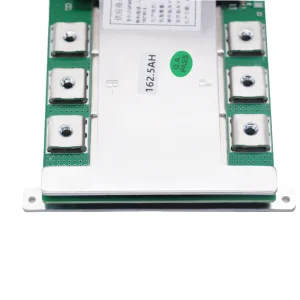
An authoritative analysis of 24V battery management systems, covering technical paradigms, commercial opportunities, and deployment models.
In modern industrial and commercial energy systems, lithium iron phosphate (LiFePO4) chemistry has established itself as the leading technology for safe, long-lasting, and highly stable battery storage. At the heart of these architectures lies the 8S (8 Cells in Series) configuration, yielding a nominal voltage of 25.6V. This specific voltage profile is the direct replacement pathway for traditional 24V Sealed Lead-Acid (SLA) battery arrays, which have historically powered marine craft, warehouse logistics systems, and off-grid solar infrastructure.
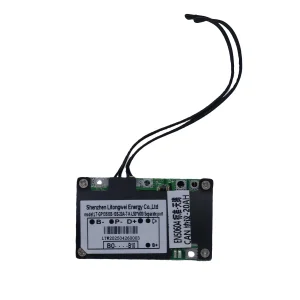
However, the transition to LiFePO4 is not simply a matter of drop-in replacement. The chemistry requires meticulous oversight. A single overcharge event or deep discharge incident can compromise cell structure, leading to premature capacity degradation or thermal runaway. This vulnerability dictates the necessity of an intelligent 8S LiFePO4 BMS (Battery Management System). Modern systems act as highly precise gatekeepers, providing cell-level voltage balancing, transient overcurrent suppression, multi-point temperature checking, and embedded communications to host systems.
Information Gain Insight: Unlike generic battery protection boards, high-tier custom 8S BMS solutions leverage dynamic Coulomb counting and advanced Kalman filtering algorithms. This provides state-of-charge (SoC) and state-of-health (SoH) estimates with less than 1.5% margin of error, compared to the 10% drift commonly experienced in analog-only protection modules.
The global demand for custom 8S LiFePO4 BMS has seen double-digit compound annual growth (CAGR), driven by the convergence of regulatory decarbonization mandates and the economics of battery longevity. Industrial manufacturing hubs in China, Southeast Asia, North America, and Europe are transitioning material handling machinery away from internal combustion engines and heavy lead-acid batteries.
In logistics and warehousing, Automated Guided Vehicles (AGVs) and Autonomous Mobile Robots (AMRs) operate almost exclusively on 24V or 48V lifepo4 architectures. A robust 8S BMS facilitates quick charging (often up to 1C to 2C charging rates), allowing these robots to opportunity-charge during short operational breaks without degrading cell chemistry. Regionally, the European market heavily prioritizes BMS units that offer ISO 26262 functional safety and CE compliance, whereas North American developers focus on UL 1973 and UL 9540A certifications for residential and light-commercial energy storage integrations.
The technical architecture of contemporary 8S LiFePO4 BMS models is moving away from passive resistor-shunted bypass topologies toward smart active balancing and embedded telemetry. Below are the key engineering vectors defining the current state-of-the-art:
Traditional passive balancing works by dissipating excess energy from higher-voltage cells as heat through a resistor network, typically operating at low current thresholds (30mA to 50mA). For larger industrial battery packs (e.g., exceeding 100Ah capacities), passive balancing is highly inefficient and slow. Modern custom 8S BMS designs integrate active balancing protocols, utilizing capacitive or inductive energy transfer topologies. This allows the system to move charge from strong cells to weak cells at rates up to 1A or 2A, maximizing runtime, preventing cell deviation, and reducing internal thermal stress.
An isolated battery pack is a liability in a modern smart energy ecosystem. Industrial 8S BMS designs incorporate high-speed CANbus (using CANopen or J1939 protocols) to communicate directly with vehicle motor controllers or solar inverters. For remote monitoring, RS485 Modbus networks enable daisy-chain configurations across dozens of battery modules in microgrids. Additionally, integrated Bluetooth Low Energy (BLE) transmitters allow field technicians to query cell data, log cycles, and modify threshold parameters securely via mobile applications.
Charging LiFePO4 batteries below 0°C causes permanent lithium plating on the anodes, which can cause internal short circuits. Advanced custom BMS boards feature intelligent heating control loops. When low-temperature charging is detected via high-precision NTC thermistor probes, the BMS diverts incoming charge current to internal silicone heating blankets or heating elements. Only when the core battery temperature reaches a safe operating threshold (e.g., 5°C) does the BMS route power to the cells.
The adaptability of the 24V 8S configuration has led to its deployment across several distinct environments, each requiring unique customization from BMS suppliers:
Shenzhen Litongwei Electronic Technology Co., Ltd. (established in 2005) is a leading national high-tech enterprise specializing in the R&D and manufacturing of lithium-ion safety control systems. Over two decades of industry leadership, Litongwei has built a reputation for engineering excellence and supply-chain stability. Our products are widely used in 3C digital devices, electric scooters, bicycles, motorcycles, tricycles, golf carts, AGVs, drones, and power tools.
We provide intellectual property protection (patent collaboration to prevent infringement), industry-standard shared boards (cost reduction and efficiency improvement), full-process traceability (quality control), and remote maintenance (cloud platform support) to help you address technical, cost, and operational challenges. Choosing Litongwei means partnering with a tier-one supplier committed to building a brighter, greener future together.
Our long-term success is built on continuous technological improvement and strategic partnerships. The timeline below illustrates our evolution from a specialized design house to an industry-leading smart manufacturing enterprise.
Technology-driven growth. In 2005, the company commenced R&D and manufacturing of digital Battery Management Systems (BMS). By 2006, it expanded into power battery management system development. ISO9001 certification was obtained in 2007, followed by ISO14001 certification in 2009.
Technological advancement. The company secured 8 utility model and design patents in 2011, while expanding its mobile power bank manufacturing operations. The Litongwei Technology Research Institute was established in 2012. It received the Del New Energy Quality Excellence Award in 2014 and earned the Gold Partner title from Gaogong Lithium Battery in 2015.
Digital transformation. The company upgraded its ISO 9001 and ISO14001 certifications in 2016, achieved IATF16949 certification in 2018, and implemented an MES system for warehouse automation. It was awarded the Guangdong Battery Industry Association Innovation Award in 2019 and recognized as a leading brand in lithium battery protection board technology for two-wheeled vehicles in 2020.
Smart Manufacturing+. Litongwei Electronics continues to innovate, deepening its technological expertise while embracing IoT and Industry 4.0. Through its Smart Manufacturing+ strategy, the company drives industrial transformation and upgrading.
Over the years, Litongwei has built long-term strategic relationships with industry-leading electronics, battery, and technology companies:












Our collaborative network includes industry leaders such as Huawei, Lenovo, Desay, Guoguang, Sunwoda, Eve Energy, and Guoxuan High-tech, alongside other long-term partners.
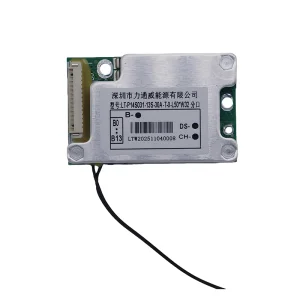
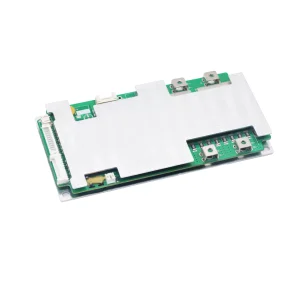
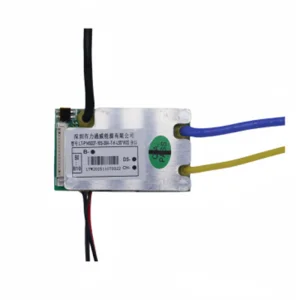
Discover our broad range of low-power, high-current, and communication-enabled battery protection systems.
 Litongwei Electronic