Explore our premium product offerings featuring cutting-edge battery management systems, IP67 inverters, and safe mobile lifestyle applications designed for maximum security.

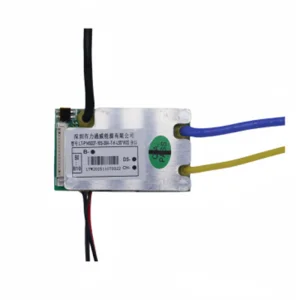
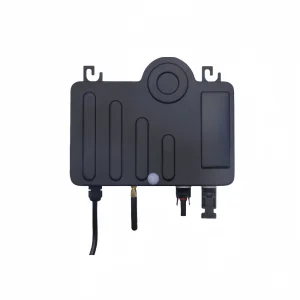
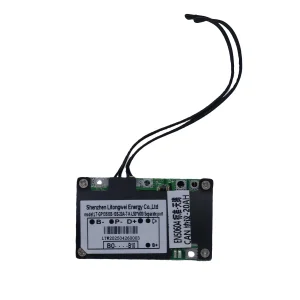
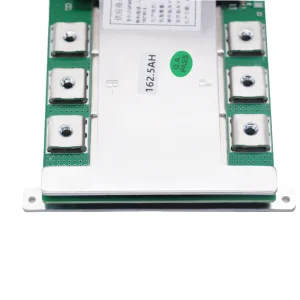
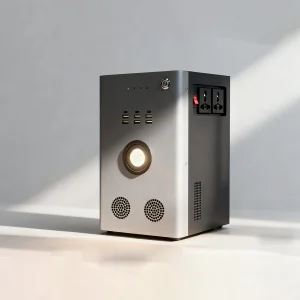
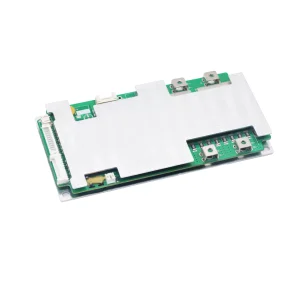
As the global transition toward electrification accelerates, the demand for high-integrity energy management systems has emerged as the definitive engineering challenge of the decade. Battery safety is no longer a localized component issue; it is a complex, systemic imperative that spans micro-mobility, stationary energy storage systems (ESS), automotive drivetrains, and smart industrial automation.
At the center of this paradigm is the Battery Management System (BMS). An advanced BMS acts as the cognitive center of the lithium-ion battery pack, monitoring cell voltages, calculating precise State of Charge (SoC) and State of Health (SoH), and deploying multi-layered protection mechanisms against over-charge, over-discharge, over-current, and thermal runaway. Litongwei Electronic Technology Co., Ltd. has stood at the forefront of this technology since 2005, engineering protective architectures that safeguard millions of active devices worldwide.
By implementing redundant analog front-end (AFE) sensing, high-speed microcontrollers (MCUs), and industrial-grade CAN bus / Bluetooth communication protocols, modern battery safety systems ensure that potential failures are isolated at the cell level before escalating into catastrophic events. This level of safety engineering forms the foundational barrier between simple energy storage and reliable, long-life industrial power.
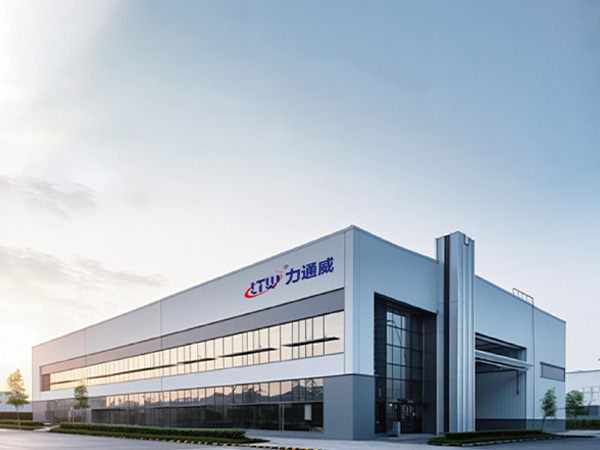
A comprehensive overview of our production assets, research investments, and industry footprint as a leading national high-tech enterprise.
Shenzhen (13,000 m²) & Dongguan Huangjiang (27,000 m²) high-precision plants.
Powered by 24 high-speed pick-and-place machines and 12 PCBA lines.
Consistently allocated over the last 5 consecutive years to pioneer BMS safety.
Patented topologies for circuits, automatic testing systems, and structural protection.
We combine manufacturing scale with intelligent product development to mitigate technical, financial, and regulatory risks for global OEMs.
Collaborative patent integration prevents market infringement. We work closely with our clients to co-develop distinct circuit layouts and protected algorithms, securing international market access without legal roadblocks.
Standardized, multi-application protection boards optimize supply chains. By developing unified board layouts that span diverse voltage configurations, we dramatically reduce BOM costs and shorten time-to-market cycles.
Every PCBA undergoes rigorous optical and functional automated inspections with full process tracking. Cloud connectivity and remote telemetry integration enable predictive maintenance and field-level diagnosis.
Purchasing components from offshore factories introduces complex compliance challenges. When international companies procure custom lithium-ion protection architectures, they require more than just raw manufacturing capacity. They require localized technical support, robust compliance frameworks, and an active understanding of international regulatory updates (such as the EU Battery Regulation, UL 2580, and UN38.3 protocols).
Recognizing this, Litongwei has established comprehensive regulatory pipelines. Our development cycle is natively aligned with international quality management structures. With certifications spanning ISO 9001, ISO 14001, and IATF 16949 (Automotive Quality Standard), we deliver products that transition smoothly into automotive, industrial, and highly regulated commercial markets.
Our strategic operations in Shenzhen and Dongguan provide unprecedented access to the world’s most integrated electronics cluster. By locating our operations in the heart of this manufacturing hub, we access primary semiconductor distributors, advanced passive components, high-speed PCB fabrication facilities, and raw raw-material suppliers within a 50km radius. This geographic advantage results in significant cost reductions, rapid prototyping turns, and highly resilient lead times that protect our global clients from supply-chain disruptions.
A history of pioneering technology, industrial transformation, and constant R&D achievements over two decades.
Began R&D of digital BMS systems. ISO9001 certified in 2007; ISO14001 certified in 2009. Shifted focus to power battery systems in 2006.
Acquired 8 utility patents in 2011. Established the Litongwei Technology Research Institute in 2012. Won New Energy Quality Excellence Awards.
Upgraded management systems, securing IATF 16949 certification in 2018. Integrated MES automation across warehouse operations.
Launched Smart Manufacturing+ initiatives. Blending IoT, cloud diagnostics, and Industry 4.0 paradigms for global green energy markets.
We work closely with the world's most trusted brands, delivering hardware stability and safety validation for leading products.






The next phase of battery safety is driven by three technological trends: Active Balancing topologies, Intelligent Thermal runaway detection, and Cloud-connected IoT management. Traditional passive balancing dissipates excess energy as heat, which adds to thermal stress. Today, active balancing designs dynamically transfer energy from high-capacity cells to lower-capacity cells. This extends overall pack capacity, improves long-term cycle life, and reduces localized hot spots.
In addition, advanced edge computing on BMS chips now supports real-time modeling of electrochemical states. By monitoring slight anomalies in internal cell resistance (via precise current-voltage measurements), systems can identify internal short circuits before they trigger a thermal event. When paired with our IoT platform, these insights are transmitted to operating systems, allowing operators to safely isolate compromised battery packs before failure occurs.
Our commitment is to embed these advanced functionalities into standard industrial designs, ensuring that safe, high-integrity energy solutions remain accessible to global growth markets.
Crucial industrial queries answered by our senior engineering and product architecture divisions.
Passive cell balancing bleeds off energy from cells with higher State of Charge (SoC) through a resistor network, converting it into waste heat. This is cost-efficient but generates thermal loads. Active cell balancing transfers energy dynamically between cells using capacitive or inductive charge shuttling. This improves energy efficiency and reduces thermal stress, extending cell life.
Our protection boards feature multi-channel NTC thermistors placed directly at critical thermal junctions. The BMS constantly monitors temperatures and executes rapid circuit interruption (via MOSFETs or contactor controls) if temperature thresholds are breached. Advanced models also feature intelligent heating controls to warm cells safely before charging in cold climates.
IATF 16949 is the global automotive quality management system standard. It demands strict defect prevention, process capability assessments, and continuous improvement metrics throughout the supply chain. For global companies, sourcing from an IATF 16949 certified facility like Litongwei guarantees high product consistency, long-term reliability, and compliance with automotive safety requirements.
We offer boards with CAN, RS485, and UART interfaces to support diverse host controller integrations. In addition, our Bluetooth-enabled models communicate directly with mobile applications, providing real-time data on cell voltages, current, temperature, and alarms.
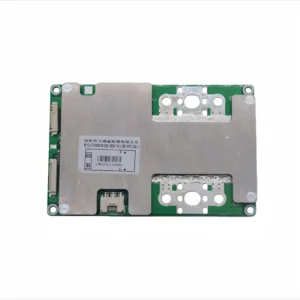
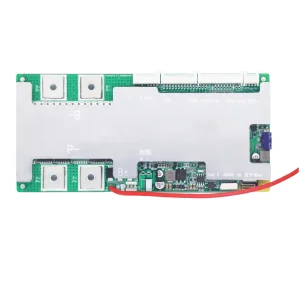
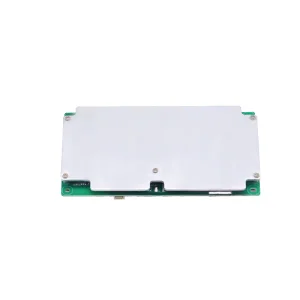
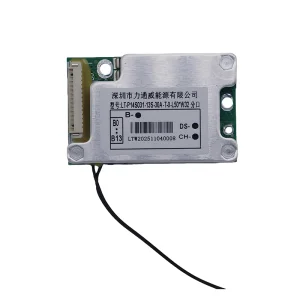
Explore our industrial range of high-current protection systems, micro-inverters, and smart energy accessories designed for rugged operating environments.
 Litongwei Electronic