Explore our cutting-edge portfolio of smart micro-inverters and advanced lithium battery management systems engineered for reliability.
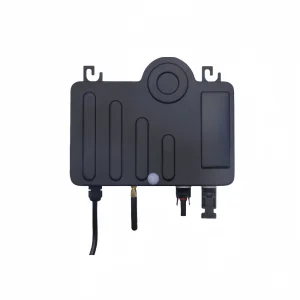
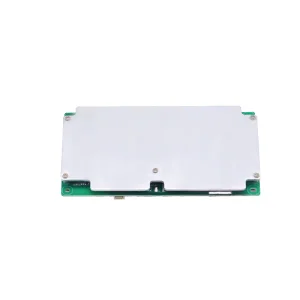
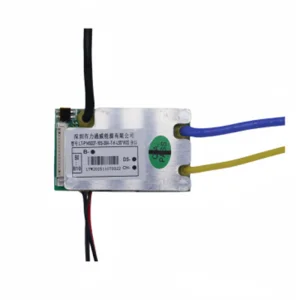
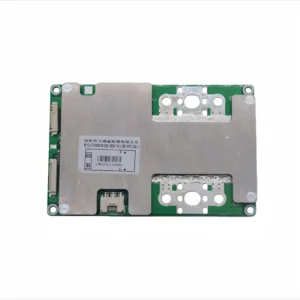
An authoritative breakdown of current technological developments, industrial demands, and localized engineering considerations.
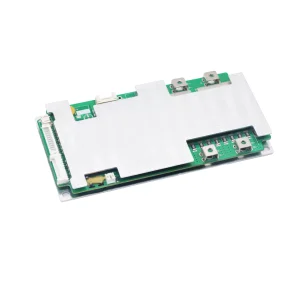
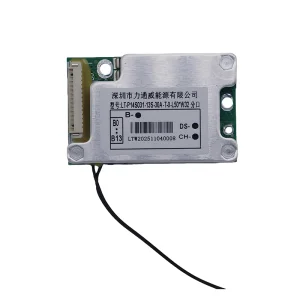
In the rapid expansion of localized energy storage systems (ESS), light electric vehicles (LEVs), and backup telecommunications power, the 16S 48V 100A Battery Management System (BMS) serves as a critical technological pillar. A 16S configuration (typically utilizing 16 Lithium Iron Phosphate, or LiFePO4, cells in series) provides a nominal voltage of 51.2V (traditionally classed as a 48V system). When integrated with a continuous current capability of 100A, the system delivers a sustained power delivery of up to 5.12 kW.
As a pioneer in lithium-ion safety control systems established in 2005, Shenzhen Litongwei Electronic Technology Co., Ltd. (LITONGWEI) has dedicated two decades to mitigating risks associated with thermal runaways, voltage imbalances, and cell degradation. Under the rigorous frameworks of our ISO9001 and IATF16949 accreditations, our custom BMS systems provide global industrial clients with unprecedented safety thresholds.
Operating in demanding sectors requires adherence to strict quality guidelines. The Litongwei Smart BMS utilizes multi-tiered protection mechanisms including over-voltage protection (OVP), under-voltage protection (UVP), over-temperature protection (OTP), and high-accuracy coulomb counting SOC (State of Charge) algorithms.
By designing customized 16S BMS platforms, we enable global commercial networks to implement modular battery packs that interface seamlessly with leading inverter brands. Our strategic partnerships with giants like Huawei, Lenovo, and Sunwoda highlight our capabilities and establish Litongwei as an authoritative voice in global industrial-grade energy management.
The lithium battery management space is shifting from passive monitoring to intelligent, cloud-connected active diagnostics. The deployment of 16S 48V 100A systems is heavily influenced by key architectural developments:
Traditional passive balancing dissipates excess energy as heat, lowering overall system efficiency. Modern custom BMS platforms employ active balancing circuits that redistribute charge from higher-voltage cells to lower-voltage cells, extending overall battery lifecycle by up to 20%.
Integrating Bluetooth, CAN-bus, RS485, and Cloud platforms allows operations managers to monitor pack health in real time. Remote firmware updates (OTA) ensure systems can adapt to evolving operating parameters without physical site visits.
Industrial components must meet functional safety standards. Advanced diagnostics, redundant thermal sensors (using NTC thermistors), and isolation monitoring prevent catastrophic failures in high-discharge applications.
When purchasing BMS units globally, technical sourcing managers look for partners who can mitigate technical and supply risks. Key evaluation criteria include:
Recent global events have highlighted vulnerabilities in component sourcing. Procurement teams must partner with OEMs that guarantee supply chain continuity. Litongwei addresses this through dual-site redundancy: our high-capacity facility in Shenzhen covers 13,000 square meters, complemented by our Dongguan Huangjiang facility spanning 27,000 square meters.
Equipped with 24 high-speed SMT assembly systems and 12 distinct PCBA production lines, our operations reach a monthly throughput of 15 million safety control units, stabilizing the supply chain for our global client base.
Inside Litongwei's smart manufacturing infrastructure, where quality and large-scale delivery capacity are integrated.
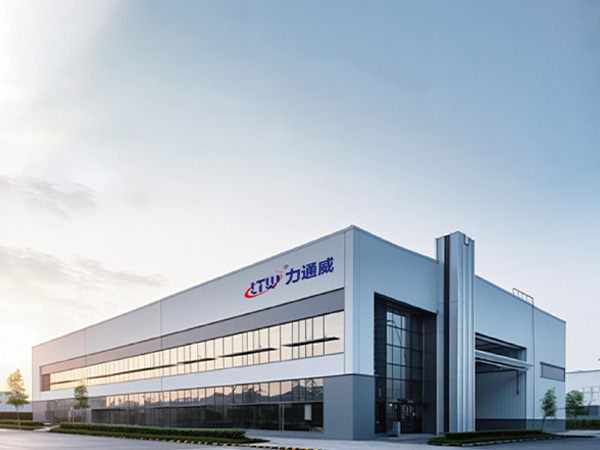
Our manufacturing philosophy revolves around complete process traceability. By implementing advanced MES (Manufacturing Execution Systems), every PCBA produced is serialized, enabling end-to-end component tracking. In the event of a field anomaly, the exact production batch, raw component lot, and testing parameters can be identified within minutes.
By dedicating over 10% of total sales revenue to research and development for five consecutive years, we hold more than 100 industry patents, protecting clients' market access globally.
How our custom BMS solutions address localized operational needs across key global industries.
Telecom towers demand long lifecycles under varying ambient temperatures. Our 16S BMS provides real-time monitoring and Modbus/RS485 communications, allowing remote NOCs to manage battery health, reducing dispatch costs.
Logistics warehouses utilize continuous AGV fleets. High vibration resistance, rapid-charging current management, and dual-port configurations are required to ensure safe operations throughout 24/7 shifts.
Coupled with smart micro-inverters, 48V energy storage systems help residential properties manage energy use during peak grid hours. Our BMS handles charge-discharge curves to extend the operational life of the home power station.
Our progression from a localized BMS developer to a global provider of intelligent green energy solutions.
Technology-Driven Growth. Commenced R&D and manufacturing of digital BMS. Expanded into power battery management system development in 2006. ISO9001 certification obtained in 2007, and ISO14001 in 2009.
Technological Advancement. Secured 8 utility model and design patents in 2011. The Litongwei Technology Research Institute was established in 2012. Earned the Del New Energy Quality Excellence Award in 2014 and Gold Partner title from Gaogong Lithium Battery in 2015.
Digital Transformation. Upgraded ISO certifications in 2016 and achieved IATF16949 certification in 2018. Implemented our custom MES system for automated warehouse and assembly line traceability. Recognized as a leading brand in two-wheeled vehicle lithium battery protection boards in 2020.
Smart Manufacturing+. Deepening technological expertise through IoT integrations, active balancing patents, and Industry 4.0 standards. Continuing our commitment to environmental sustainability and green energy management.
We work with global electronics and energy brands to build integrated, resilient supply chains.












Litongwei's partners include Huawei, Lenovo, Desay, Guoguang, Sunwoda, Eve Energy, Guoxuan High-tech, and other industry brand clients who have collaborated for many years.
Addressing the technical, operational, and commercial questions asked by professional energy storage buyers and engineers.
Explore further configurations including balanced protection boards, smart CAN-bus modules, and micro-inverter lines.
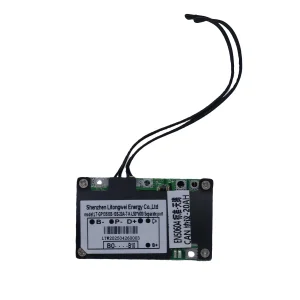
 Litongwei Electronic