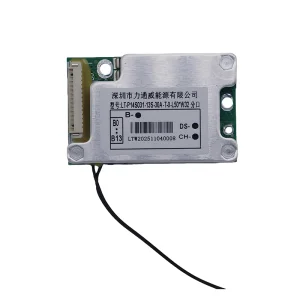
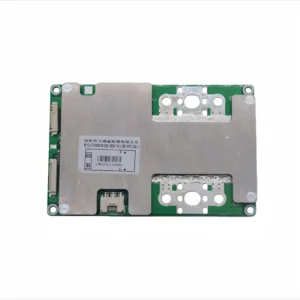
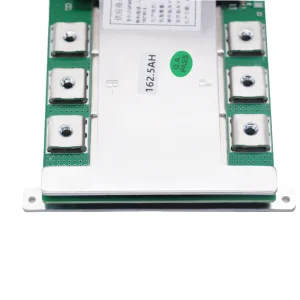
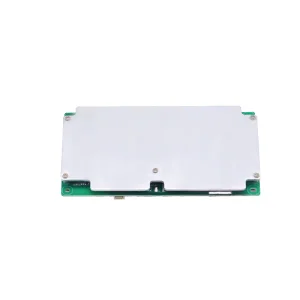
Explore our high-performance custom BMS designs, micro-inverters, and energy storage assemblies engineered for safety and efficiency.
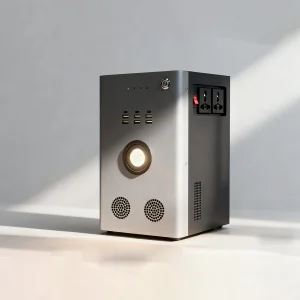
An in-depth industrial perspective on selection, configuration, compliance, and global supply chain dynamics for 4-Series 40-Ampere Battery Management Systems.
The 4S (4-Series) battery configuration is the backbone of nominal 12V to 14.8V lithium-based power packs, depending on the chemistry. For Lithium Iron Phosphate (LiFePO4/LFP), a 4S system yields a nominal voltage of 12.8V, making it the premier replacement option for traditional lead-acid batteries. For Nickel Manganese Cobalt (NMC) chemistry, a 4S setup achieves a nominal 14.8V, commonly deployed in heavy-duty portable electronics, medical devices, and RC platforms.
The rating of 40A (40 Amperes) represents the continuous discharge current threshold the BMS can safely manage. Engineering a custom 4S 40A BMS requires selecting low RDS(on) MOSFETs to minimize thermal dissipation. High resistance leads to excessive heat generation, reducing efficiency and triggering premature thermal cutoff protection.
Every industrial-grade 4S 40A BMS must integrate multi-layered protective protocols. Our solutions utilize premium precision analog front-ends (AFEs) and microcontrollers to monitor cell health continuously:
Navigating regional certification frameworks and deploying local technical assistance for complex integration projects.
Deploying energy storage solutions globally requires adherence to local laws. A standard 4S 40A BMS must comply with CE, FCC, RoHS, and WEEE directives. For North America, UL 991, UL 1973, and UL 2271 certifications guarantee that the circuit design stands up to rigorous environmental stressors, vibration, and thermal shocks.
Under UN 38.3, batteries containing protection circuitry must pass impact, crush, overcharge, and thermal testing before commercial air or ocean transport. As a leading manufacturer, we certify every batch to guarantee hassle-free international logistics and absolute shipping security.
We solve the "time-zone gap" by offering remote diagnostics and direct cloud API integration. This allows global clients to log real-time telemetry from their field units, diagnose errors remotely via proprietary software, and perform over-the-air (OTA) firmware updates seamlessly.
Established in 2005, Litongwei is a national high-tech enterprise dedicated to the R&D and precision manufacturing of intelligent lithium-ion safety control systems.
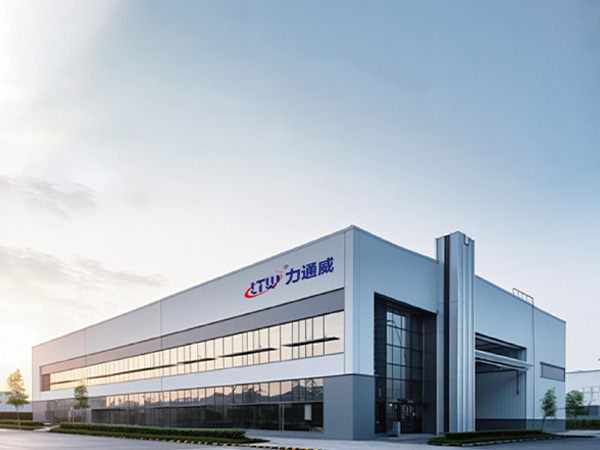
Our infrastructure spans two ultra-modern facilities: a 13,000 square meter high-precision center in Shenzhen and a massive 27,000 square meter high-volume assembly plant in Dongguan Huangjiang. Housing 24 high-speed pick-and-place (SMT) machines and 12 dedicated PCBA lines, we offer unparalleled production flexibility.
We maintain full-process traceability (via our integrated MES system), ensuring that every single component, solder joint, and testing phase is logged for future audit and diagnostic analysis. This level of quality management minimizes field failure rates to less than 100 PPM.
From a local electronics R&D hub to an international leader in intelligent BMS smart manufacturing.
Foundation and Technical Accumulation: Commenced development of digital Battery Management Systems (BMS). Shifted target to power battery management in 2006. Secured ISO9001 and ISO14001 compliance standards by 2009.
Intellectual Expansion: Granted 8 utility and design patents. Founded the Litongwei Technology Research Institute in 2012 to address complex safety microchips. Received the Del New Energy Quality Excellence Award in 2014.
Automation and Standards Integration: Upgraded global standards to IATF16949 for automotive-grade reliability. Fully integrated digital MES system to orchestrate warehouse operations, SMT mounting, and AOI inspection.
Smart Manufacturing+ & IoT: Deployed Bluetooth, CAN, RS485, and Cloud platforms for multi-battery networks. Today, Litongwei drives Industry 4.0 standardizations and exports custom BMS layouts worldwide.
How geographical clustering, advanced engineering talent, and material accessibility benefit overseas buyers.
Proximity to the world's largest semiconductor and passive component hubs (Shenzhen/Huaqiangbei network) allows for rapid prototyping. R&D changes that take weeks elsewhere are executed in days here.
Our cooperative patent development model guarantees that customer-specific circuit designs and algorithms are protected. We actively collaborate to eliminate market infringement and custom-copycat risks.
By using shared board architectures where appropriate, we help clients cut tooling and validation overhead. Economies of scale allow us to supply ultra-reliable products at highly competitive price points.
Versatility is the hallmark of the 4S 40A topology. Discover how different industries deploy this standard.
Due to equivalent voltage windows, a 4S LiFePO4 configuration is widely used to replace heavy SLA (Sealed Lead Acid) batteries in boats, RVs, and solar street lights. A 40A continuous output rating easily supports lighting arrays, small trolling motors, and onboard high-frequency electronics.
Small-to-mid size solar generators (typically 300Wh to 600Wh capacities) utilize a 4S system to supply robust power. Operating at 40A provides a steady 500W load to high-efficiency DC-AC inverters, accommodating smartphones, CPAP machines, and camping devices.
In automated warehouses, Automated Guided Vehicles (AGVs) demand reliable power sources. A 4S 40A BMS offers high efficiency, small sizing, and CAN/Bluetooth telemetry capabilities to report battery charge status and health to central fleet operators.
Backup systems require extreme dependability. Integrated safety features in the BMS monitor voltage, heat, and internal resistance continuously, guaranteeing that medical devices or critical radio transceivers stay powered during primary grid failures.
We work closely with the world's leading brands to ensure seamless system compatibility and supply stability.
Litongwei's partners include Huawei, Lenovo, Desay, Guoguang, Sunwoda, Eve Energy, Guoxuan High-tech, and other industry brand clients who have collaborated for many years.














Technical questions regarding 4S 40A BMS architectures, manufacturing standards, and custom design steps.
The primary difference lies in the nominal and cutoff voltage points. A 4S LiFePO4 configuration operates around 12.8V nominal (3.2V per cell) and cutoffs at 3.65V charging limit. An NMC 4S variant operates at 14.8V nominal (3.7V per cell) with a 4.2V charging ceiling. Using an LFP BMS on NMC batteries (or vice versa) will result in critical over/under-voltage tripping, presenting major fire and damage risks. High-end custom manufacturers provide dedicated PCB microcode for each specific chemistry.
Usually, BMS architectures are designed with either a "common port" or a "separate port" scheme. In a common port configuration, charging and discharging share the same terminals, but charging limits are generally set lower than discharge limits (often 20A for a 40A discharge system) to prevent excessive cell heating. In separate port setups, the charge path is isolated and rated specifically for standard slow/fast charge parameters.
Passive balancing dissipates energy from higher-voltage cells as heat through dump resistors once they cross a specific threshold (e.g., 3.45V for LFP). It is highly cost-effective and perfectly suited for compact 4S systems. Active balancing dynamically transfers energy from stronger cells to weaker ones. While far more efficient, active balance modules are more complex and typically reserved for high-voltage, high-capacity utility packs.
We provide extensive custom optimization capabilities: modifying PCB physical dimensions to fit tight enclosures, adding multi-stage NTC thermistor channels, integrating communication buses (Bluetooth, UART, RS485, CAN), and adjusting charge/discharge voltage and current parameters at the factory firmware level.
Discover additional battery protection PCBAs, smart communication boards, and related high-quality gear manufactured in our Dongguan and Shenzhen complexes.
 Litongwei Electronic