Explore our industrial-grade, custom-engineered battery management systems and micro-inverter technologies trusted by tier-1 brands globally.
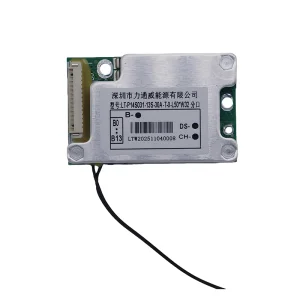
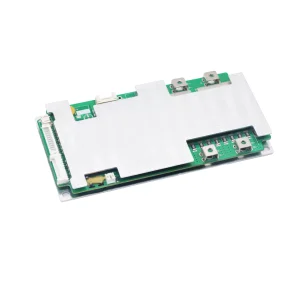
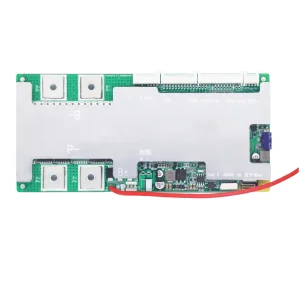
An Industrial Guide to Safety, Scalability, and Global Supply Chain Integration for Next-Generation Lithium Energy Systems
In the rapidly transforming green energy ecosystem, the performance, thermal stability, and overall lifetime of lithium-ion battery packs are inherently bound to the capabilities of their safety controls. Shenzhen Litongwei Electronic Technology Co., Ltd., established in 2005, is a national high-tech enterprise at the forefront of researching, designing, and manufacturing intelligent Lithium-ion Battery Management Systems (BMS). From micro-mobility solutions to heavy-duty industrial vehicles and home energy storage, Litongwei supplies custom-tailored printed circuit board assemblies (PCBA) designed to safeguard assets and unlock optimal pack performance.
As standard, generic BMS boards often fall short of meeting specific spatial constraints, multi-protocol communication frameworks, and challenging thermal environments, custom BMS board manufacturing is no longer a luxury—it is an engineering necessity. We empower global OEMs and system integrators with robust solutions across five critical areas: Intellectual Property Protection, Shared Architecture Efficiency, Component-Level Traceability, Advanced Thermal Control, and Secure Remote Diagnostics.
Litongwei holds over 100 proprietary utility and design patents across hardware, embedded algorithms, and automation platforms. We collaborate deeply with our clients to customize safety circuits, reducing infringement risks and ensuring robust legal and functional compliance in major export destinations across North America and the European Union.
The global Battery Management System market is moving past simple protection circuits. Today, semantic search trends and user inquiries point toward three fundamental transformations in BMS requirements:
Unlike legacy passive balancing which wastes excess energy as heat, modern active balancing transfers energy from high-SOC cells to low-SOC cells, preserving capacity and expanding life cycle counts by up to 25%.
Leveraging built-in Wi-Fi, Bluetooth, or CAN-bus protocols linked to cloud storage, operators can analyze real-time charging cycles, track degradation rates, and predict potential cell failures before they happen.
Compliance with ISO 26262 (ASIL ratings) and UL 1973 standards is becoming standard. A robust BMS design requires redundant analog front-ends (AFE), secondary protection ICs, and galvanic isolation.
Litongwei has consistently invested more than 10% of its annual sales revenue into R&D for five consecutive years to integrate these trends directly into our production lines. Our smart BMS models feature real-time estimation of State of Charge (SOC) and State of Health (SOH) with deviations under 3%, a crucial parameter for high-reliability EV and ESS installations.
Meeting global demand requires not just advanced engineering, but scalable manufacturing capabilities. Litongwei operates two specialized manufacturing hubs:
Our facilities are fully outfitted with 24 high-speed pick-and-place surface mount (SMT) machines, 12 complete PCBA production lines, and automatic optical inspection (AOI) stations. This automated manufacturing infrastructure guarantees high throughput while maintaining strict quality consistency. Operating under IATF 16949 and ISO 9001 certifications, every single board undergoes thorough function testing and automated calibration, keeping our defects-per-million-opportunities (DPMO) rate well within world-class limits.
| BMS Specification / Parameters | Lithium-Ion / LiFePO4 Basic BMS | Smart BMS (UART/RS485/CAN/Bluetooth) | High-Voltage / Energy Storage BMS |
|---|---|---|---|
| Cell Count Range (S) | 3S - 16S | 7S - 24S (Scalable) | 30S - 240S (Modular Master-Slave) |
| Continuous Current Range (A) | 10A - 60A | 40A - 250A | 100A - 500A+ |
| SOC Estimation Accuracy | < 8% (Voltage-based) | < 3% (Coulomb Counting + OCV) | < 1.5% (Extended Kalman Filter) |
| Data Connectivity Protocols | N/A (Analog Output) | Bluetooth BLE, UART, RS485, CAN 2.0B | Modbus RTU, Ethernet, CAN-FD, Cloud IoT |
| Thermal Protection Loops | 1x NTC Sensor | 2x to 4x NTC Sensors | Up to 16x NTC Sensors per module |
| Key Applications | Power Tools, Consumer Electronics | Electric Bikes, Golf Carts, AGVs, Drones | Balcony Inverters, ESS, Off-grid Solar |
Litongwei designs and develops custom battery protection boards that cater to specific operating conditions, voltage profiles, and compliance requirements across these key industrial applications:
Our commitment to tech leadership and operational agility has shaped our steady growth. Review our developmental path since our founding:
Litongwei's customer-centric approach has helped us secure long-term, strategic partnerships with leading brands globally. We collaborate with companies like Huawei, Lenovo, Desay, Guoguang, Sunwoda, Eve Energy, Guoxuan High-tech, and other major players, delivering high-performance protection systems that meet strict corporate standards.













As battery chemistry shifts toward solid-state and silicon-anode cells, we are continuously evolving our technical roadmap. Litongwei's engineering team is actively focusing on three primary R&D targets:
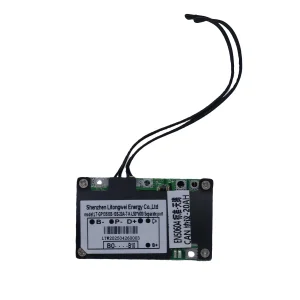
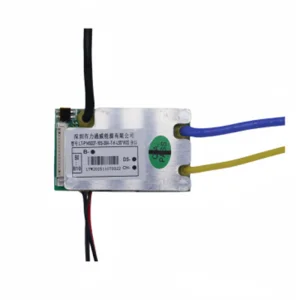
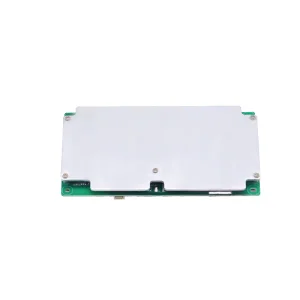
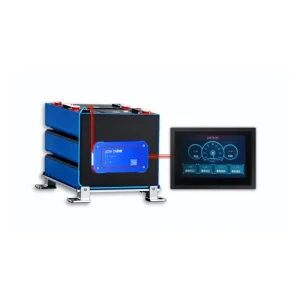
Select from our high-performance communication systems, micro-inverters, and smart protection modules optimized for industrial and residential use.
 Litongwei Electronic