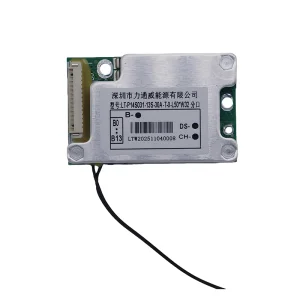
Explore our flagship, enterprise-grade Intelligent BMS modules and high-efficiency micro-inverters developed for diverse high-demand power profiles.
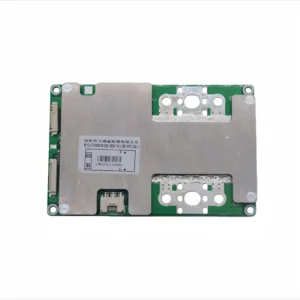
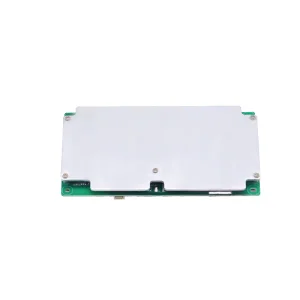
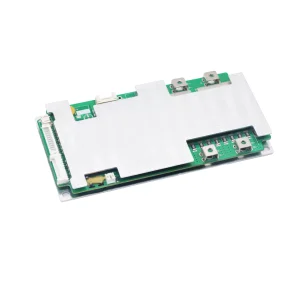
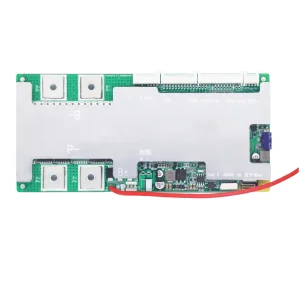
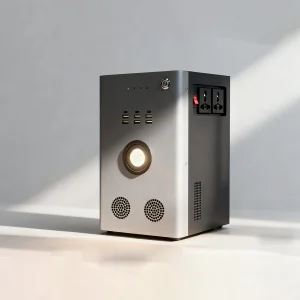
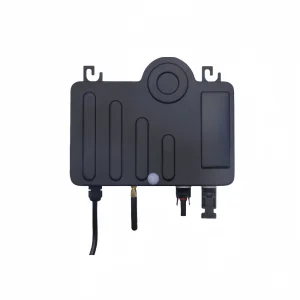
Established in 2005, Shenzhen Litongwei Electronic Technology Co., Ltd. is a national high-tech enterprise specializing in the R&D and manufacturing of lithium-ion safety control systems. Over the course of nearly two decades, we have solidified our status as an industry-leading partner for global developers requiring advanced energy conversion and storage safety systems.
Our core product lines are widely used in 3C digital devices, electric scooters, electric bicycles, electric motorcycles, tricycles, golf carts, automated guided vehicles (AGVs), agricultural and industrial drones, and rugged power tools.
By choosing Litongwei, you select a standard of safety and excellence trusted by the world's largest consumer electronics and hardware developers. Litongwei is committed to collaborating with you to build a brighter, sustainable future.
"LITONGWEI has always adhered to the philosophy of 'Technology as King, Efficient Service' in all aspects of production and operations. Our vision is to become a provider of intelligent green energy management solutions, embracing environmental sustainability. Start with LITONGWEI!"
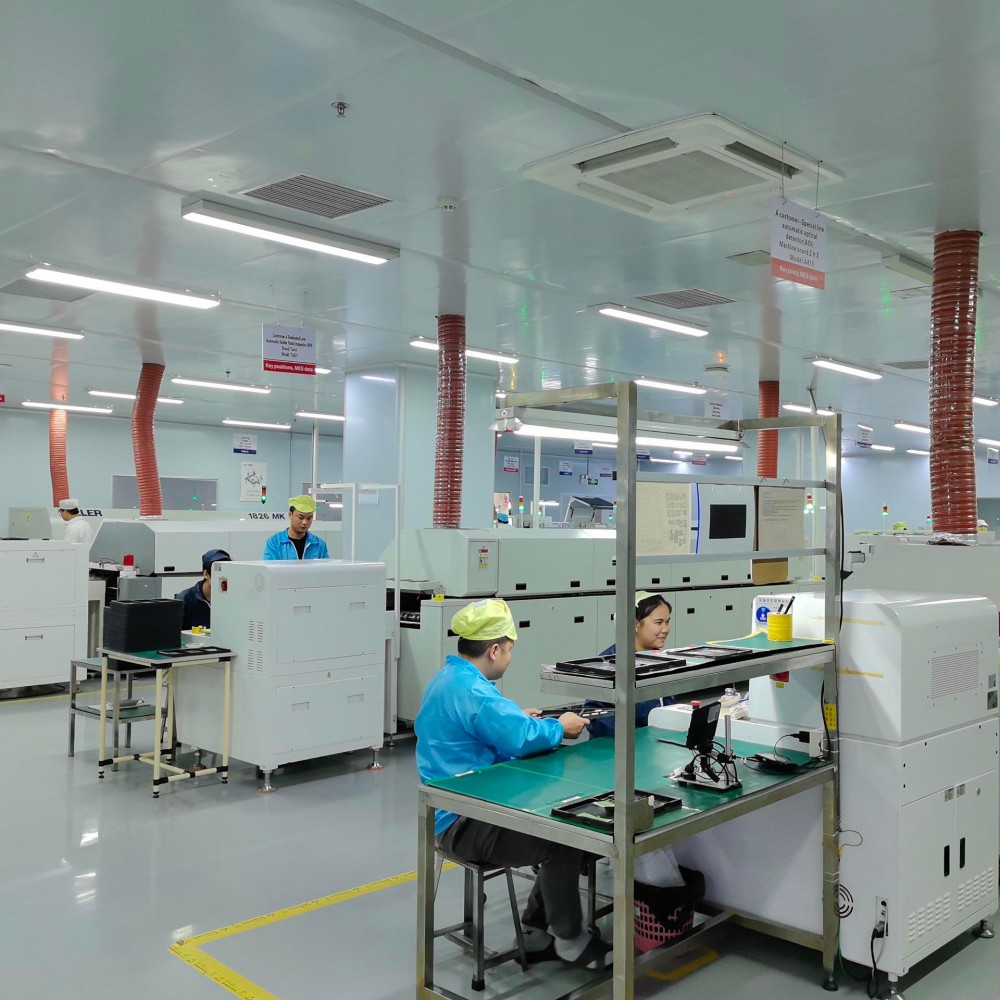
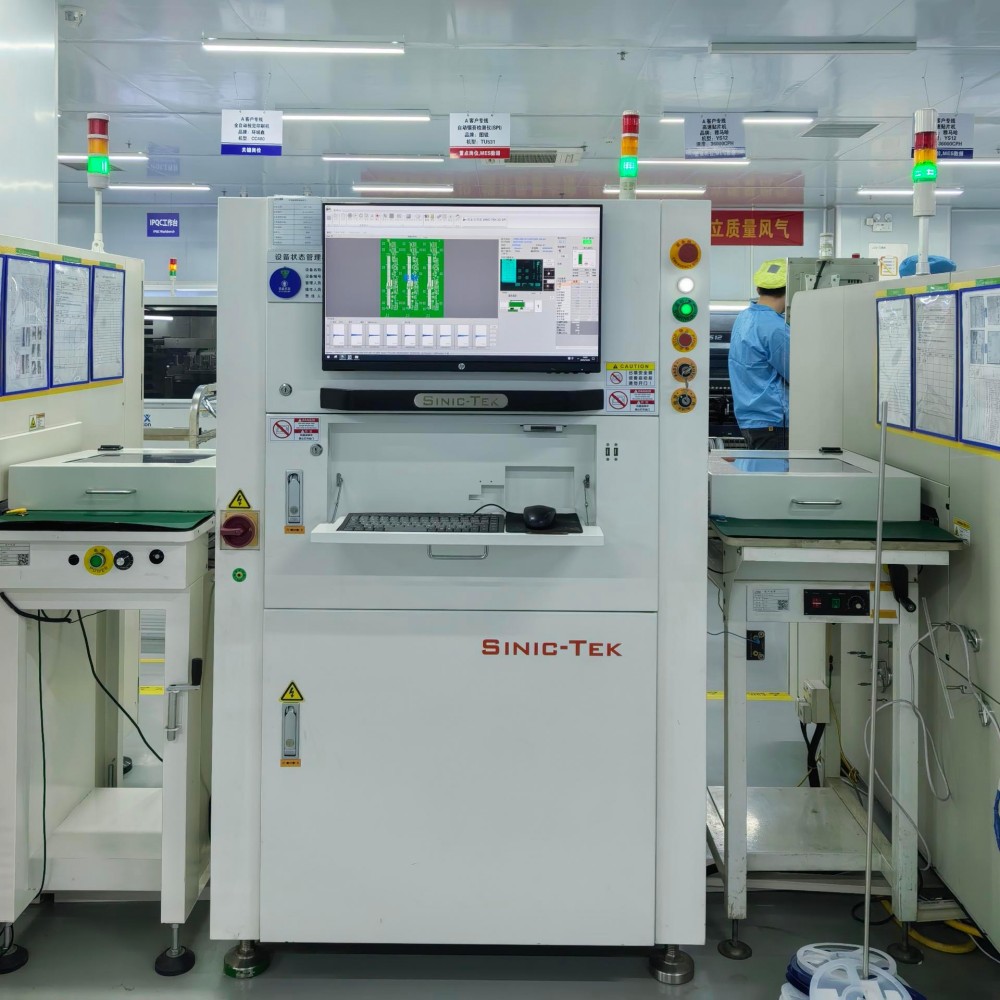

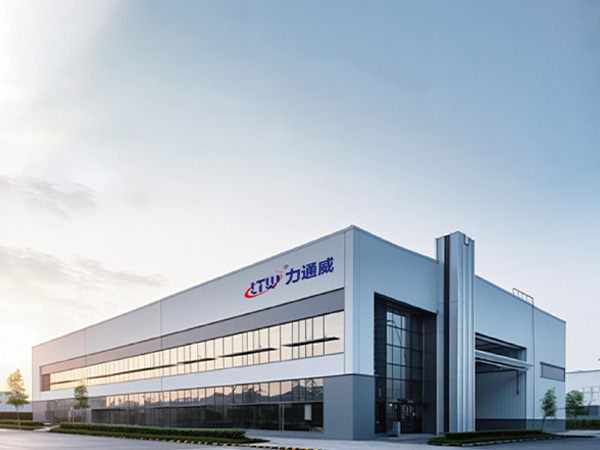
Operating advanced dual-factory nodes in Shenzhen and Dongguan, utilizing AI-driven process tracking and high-speed surface-mount technology.
We operate over 13,000 square meters of highly optimized independent factory space in Shenzhen, complemented by our secondary advanced manufacturing hub in Dongguan Huangjiang spanning 27,000 square meters.
Equipped with 24 advanced pick-and-place machines and 12 active high-speed PCBA production lines, achieving a consistent monthly throughput exceeding 15 million protection units.
To ensure leading-edge technology, our R&D investment has consistently accounted for more than 10% of total annual sales for five consecutive years, keeping us ahead in safety algorithms and structural innovation.
How Litongwei is driving the evolution of battery management through cloud architectures, hardware integration, and intelligent fail-safes.
Integration of IoT chipsets directly onto the protection PCB allows real-time telemetry processing. By connecting local hardware states with our proprietary cloud platform, systems gain access to cloud-based machine learning models that predict aging, track degradation, and optimize charging protocols dynamically.
Transitioning beyond passive resistance dissipation, our next-generation utility-scale BMS platforms support active balancing up to 5A. This transfers energy from higher-voltage cells to lower-voltage cells within a string, recovering lost capacity and lengthening the lifecycle of the battery pack by up to 22%.
Consolidating the BMS and power conversion system (PCS) into a single, unified module reduces footprint, simplifies internal wiring, and cuts thermal dissipation. Our 500W-1000W portable power bank solutions leverage this unified topology for higher reliability and cheaper system assembly.
From clean-room industrial automation to multi-family residential micro-grids, we tailor safety boards for complex environments.
Designed for heavy-vibration, high-current environments such as E-scooters, tricycles, golf carts, and heavy duty AGVs. These protection systems deploy high-reliability CAN and RS485 interfaces to maintain synchronization with vehicle control units while protecting against over-current events up to 200A.
Our weatherproof micro-inverters (IP67 certified, yielding 96.5% CEC efficiency) allow seamless plug-and-play installation for apartment balconies and residential rooftops. Integrated thermal protection, MPPT tracking, and rapid shutdown compliance ensure absolute residential electrical safety.
Unmanned aerial vehicles and industrial power tools demand high power density and weight minimization. Our customized compact BMS boards support instantaneous discharge currents of up to 150A while using ultra-low resistance MOSFETs and precision NTC temperature monitoring.
For global procurement directors, hardware stability is just one part of the equation. Commercial viability, risk management, and regulatory compliance determine long-term success. Litongwei addresses these supply chain priorities:
All manufactured systems comply with UL, CE, FCC, RoHS, and REACH guidelines. Furthermore, our Field Application Engineers (FAE) provide rapid response, assisting your integration team directly with system debugging, software calibration, and validation testing.
With our production base located close to critical logistics ports in Shenzhen and Hong Kong, we offer efficient international shipping options. Our deep integration with major tier-1 cell manufacturers (such as EVE, Sunwoda, and Lishen) ensures battery pack and BMS compatibility with stable lead times.
Tracing our journey from a specialized R&D workshop in 2005 to an automated Industry 4.0 manufacturer today.
In 2005, commenced R&D and manufacturing of digital Battery Management Systems (BMS). By 2006, expanded into power battery management system development. ISO9001 certification was obtained in 2007, followed by ISO14001 certification in 2009.
Secured 8 utility model and design patents in 2011, while expanding mobile power bank manufacturing operations. Established the Litongwei Technology Research Institute in 2012. Received the Del New Energy Quality Excellence Award in 2014 and earned the Gold Partner title from Gaogong Lithium Battery in 2015.
Upgraded ISO 9001 and ISO14001 certifications in 2016. Achieved automotive-grade IATF16949 certification in 2018 and implemented an MES system for warehouse automation. Awarded the Guangdong Battery Industry Association Innovation Award in 2019 and recognized as a leading brand in lithium battery protection board technology for two-wheeled vehicles in 2020.
Deepened technological expertise by embracing IoT and Industry 4.0. Through our "Smart Manufacturing+" strategy, we drive industrial upgrading with active balancing, cloud diagnostics, and micro-inverter solutions.
Litongwei's partners include Huawei, Lenovo, Desay, Guoguang, Sunwoda, Eve Energy, Guoxuan High-tech, and other major industry brand clients who have collaborated for many years.











Get answers to critical design questions from our lead electrical engineers and global supply chain directors.
Shared-board schemes allow customers to use a single physical hardware design across multiple product models. By adjusting firmwares, over-current thresholds, and cell counts programmatically via Bluetooth or serial port interfaces, you can avoid custom development costs (NRE). This reduces design verification testing time, limits component SKU management, and speeds up product launches.
Our automated manufacturing execution system (MES) tracks every production step from initial SMT component reel feed to final functional testing. Barcodes are laser-etched on each board, linking them to specific component lots, reflow oven profiles, and automated optical inspection (AOI) test data. This ensures 100% visibility in our supply chain.
Our smart protection systems support CAN 2.0B, RS485, Modbus, and Bluetooth serial communications. This allows seamless integration with motor controllers, vehicle dashboards, external displays, and telemetry units in applications ranging from industrial AGVs to consumer power banks.
Our micro-inverters use high-frequency planar transformers and gallium nitride (GaN) power switches. This minimizes switching losses and keeps thermal output low. The IP67-rated enclosure provides efficient heat dissipation, allowing full output power even in demanding outdoor conditions without internal fan wear.
We maintain an active portfolio of over 100 patents in circuit topologies, firmware control algorithms, and structural designs. When we collaborate on custom designs, we guarantee that all production schematics and intellectual properties are cleared of patent overlaps. This gives our global clients secure access to worldwide distribution networks.
Standard modifications of existing shared-board firmware configurations take 5 to 7 business days. For complete custom hardware designs (including schematic creation, PCB layout engineering, and prototyping), lead times typically range from 3 to 5 weeks, depending on component availability and the specific testing requirements.
Browse our high-capacity balancing systems and specialized bidirectional power inverters built for harsh operations.
 Litongwei Electronic