Explore our core catalog of intelligent battery protection boards, optimized for home inverter pairing, smart microgrids, and robust high-power battery storage integrations.
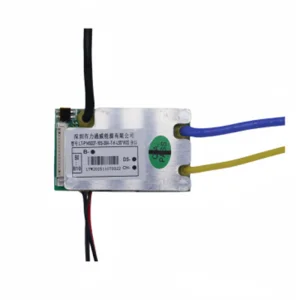
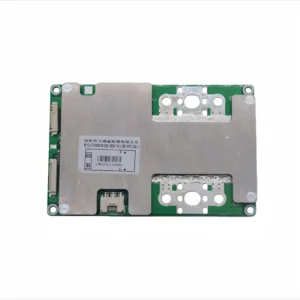
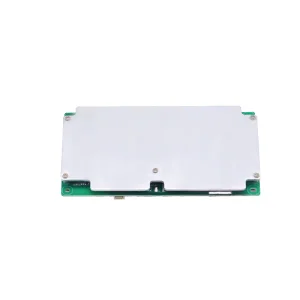
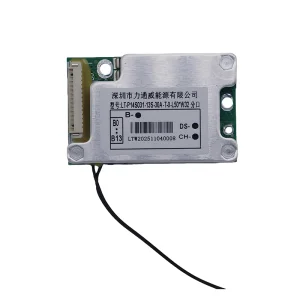
Aligning clean generation with safe electrical distribution requires unmatched precision at the hardware level. The modern hybrid home inverter relies entirely on the efficiency and communication dynamics of its battery management subsystem.
Passive cell balancing is no longer sufficient for massive home storage setups. The next paradigm relies on cloud-connected AI systems predicting cell failures through impedance spectroscopy. Active cell balance circuits redistribute high energy dynamically from strong cells to weaker ones, maximizing total usable storage capacity by up to 15%.
Inverter efficiency depends heavily on high switching frequencies. Transitioning from traditional silicon MOSFETs to Gallium Nitride (GaN) and Silicon Carbide (SiC) switches permits incredibly high-frequency operations, minimizing passive component footprint (inductors, transformers) while boosting efficiency levels beyond 98.5% globally.
Vehicle-to-Home (V2H) will blur the line between EV battery packs and domestic power networks. Smart home inverters of tomorrow must coordinate multi-directional power paths with robust BMS controllers managing vehicle and stationary home batteries concurrently while stabilizing local residential microgrids.
Commercial enterprises, urban developers, and rural microgrids are increasingly demanding centralized and scalable power solutions. Custom home inverter topologies are now adapted into micro-utility systems. These setups require smart sub-circuits capable of handling both sudden high-current discharges and maintaining constant safety parameters under extreme high temperatures.
LITONGWEI provides key structural modules including NTC thermal management arrays, serial heating systems for sub-zero operation, and smart CAN communication ports. This ensures that home inverter installations operating under remote, harsh conditions remain connected to operations centers, feeding status logs and cell temperatures live to maintenance dashboards.
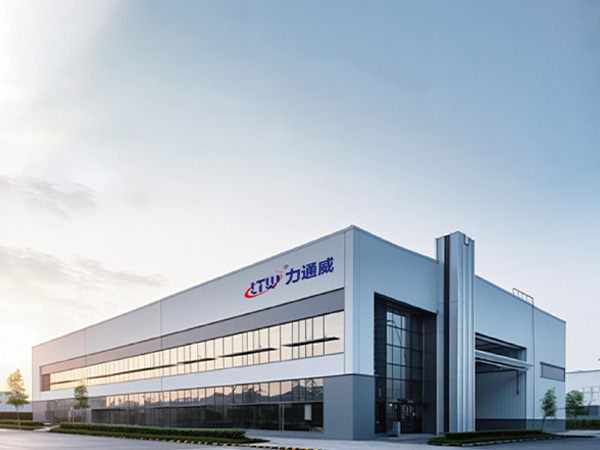
Providing high-performance hardware requires massive investment in automation, testing, and traceability standards. We control every stage of manufacturing across our modern production facilities.
With over 13,000 square meters of independent manufacturing space in Shenzhen, and an additional 27,000 square meters in Dongguan Huangjiang, Litongwei runs 24 high-speed SMT assembly machines and 12 state-of-the-art PCBA lines. This scaling enables a production capacity exceeding 15 million units per month.
To safeguard our global clients, LITONGWEI maintains an active portfolio of over 100 patents in circuit/testing applications, BMS firmware, and protective automation. We collaborate closely with OEM partners to ensure all systems are free of patent infringement risks, facilitating compliant international export.
Quality is not an afterthought; it is engineered. Our manufacturing facilities utilize a central Manufacturing Execution System (MES) to record raw component batches, SMT oven parameters, AOI testing data, and final functional checks, securing a bulletproof quality log for every board shipped.
Standardized specifications often fall short of meeting localized grid requirements or unique battery pack layouts. Follow our professional ODM process to realize your custom power goals.
Define cell configurations (e.g., 10S, 13S, 16S, 20S, 23S) and specify exact chemistry (LFP, NMC, LTO). Determine constant working currents, peak startup loads, and expected transient current durations.
Indicate physical protocol layers (CANbus, RS485, RS232, UART) and high-level protocol maps (Pylontech, Growatt, Victron, or customized registers) for direct integration with home inverter units.
Define low/high-temperature shutoffs, NTC sensor placements, active smart heating mats for sub-zero operations, and dynamic cell balancing parameters to match specific geographic certifications.
Established in 2005, Shenzhen Litongwei Electronic Technology Co., Ltd. is a national high-tech enterprise specializing in the R&D and manufacturing of lithium-ion safety control systems.
LITONGWEI commenced specialized R&D in battery protection boards (BMS) in 2005. The group expanded into power battery management system development in 2006, securing ISO9001 certification in 2007, followed by ISO14001 certification in 2009 to set standard industry precedents.
Secured 8 core utility model and design patents in 2011. Established the Litongwei Technology Research Institute in 2012 to advance complex BMS engineering. Honored with the Del New Energy Quality Excellence Award in 2014, and acknowledged as a Gold Partner by Gaogong Lithium Battery in 2015.
Upgraded ISO 9001 and ISO14001 protocols in 2016. Earned international automotive standards compliance via IATF16949 certification in 2018. Integrated automated MES systems for warehouse operations and won the Guangdong Battery Industry Innovation Award in 2019.
Consolidated Litongwei Smart Manufacturing+ strategy, implementing industrial IoT, cloud management portals for battery arrays, and deep co-development pipelines for global home inverter energy storage suppliers.
Working with leading tech groups and battery cell manufacturers worldwide to maintain robust quality standards.













Get authoritative answers regarding compatibility, compliance, customized BMS architectures, and home inverter system parameters.
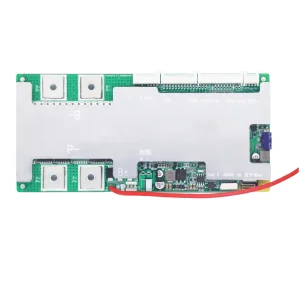
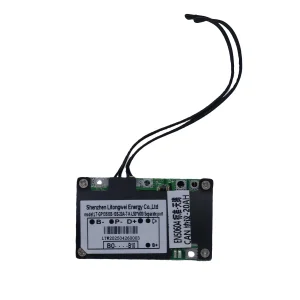
Examine additional product designs, developed to streamline the link between lithium battery chemistry and high-efficiency home inverters.
 Litongwei Electronic