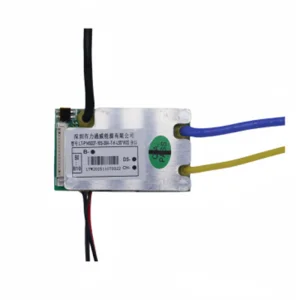
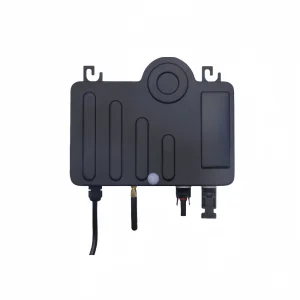
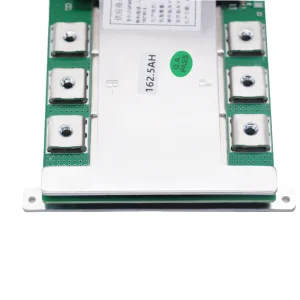
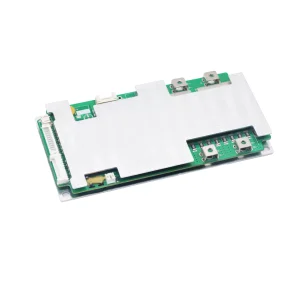
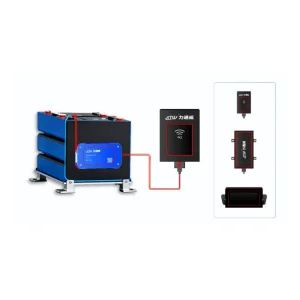
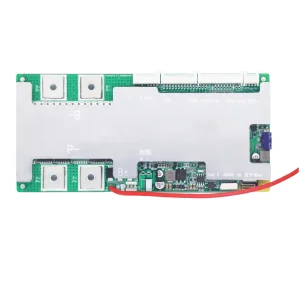
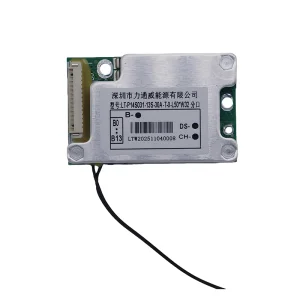
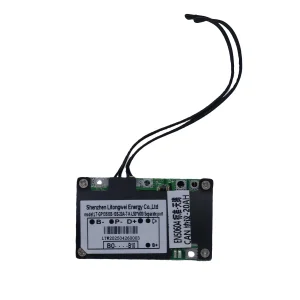
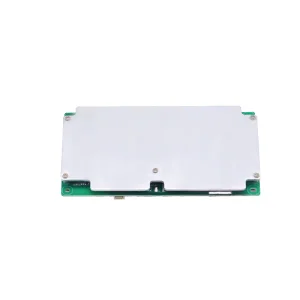
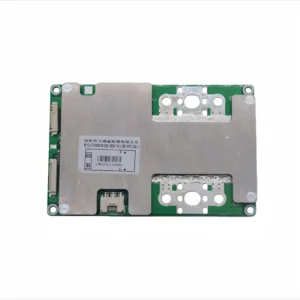
Engineered for telecommunications, energy storage, light electric vehicles, and customized smart hardware applications.
In the modern era of high-capacity electrification, a lithium-ion battery system is only as strong as its weakest cell. During manufacturing, slight variations in chemical composition, internal resistance, and physical configuration are inevitable. As battery packs undergo charge and discharge cycles, these microscopic variances amplify, leading to a state of imbalance. This is where high-precision lithium balancers and battery protection systems become critical to ensuring system longevity, safety, and efficiency.
Lithium balancers generally fall into two architectural topologies: passive (dissipative) balancing and active (non-dissipative) balancing. Choosing the correct topography dictates the cost-efficiency and runtime performance of your final product:
Recent studies in industrial battery failure indicate that a 5°C thermal gradient across a pack can accelerate cell degradation by up to 60%. Advanced custom lithium balancers mitigate this by integrating real-time Thermal Coefficients and NTC thermistor arrays. By dynamically throttle-matching current balancing paths, they prevent localized thermal hotspots from forming in the pack.
What Tier-1 automotive and industrial OEM/ODM buyers demand in the contemporary supply chain environment.
Global procurement teams prioritize vendors with fully-realized Manufacturing Execution Systems (MES). Traceability down to the component batch level ensures compliance and swift root-cause analysis in safety-critical applications.
To optimize bills of materials (BOM), developers prefer modular architectures where a core BMS/balancer layout can be adapted across multiple series configurations (e.g., scalable from 10S to 24S) with minimal firmware adjustments.
With aggressive global market expansion comes the risk of patent disputes. Reliable manufacturers must provide robust intellectual property indemnification and support collaborative patent filings to safeguard proprietary designs.
A national high-tech enterprise established in 2005, pioneering industrial safety and management control systems for lithium battery packs.
Operating out of major manufacturing hubs with 13,000 square meters of high-capacity independent space in Shenzhen and an expansive 27,000 square meters facility in Dongguan Huangjiang, Litongwei stands at the forefront of the BMS market. We have installed 24 ultra-high-speed pick-and-place (SMT) machines and 12 fully automated PCBA lines, enabling us to sustain peak market demand for 3C digital gadgets, electric scooters, golf carts, AGVs, drones, and heavy power tool industries.
Building global leadership in lithium-ion safety controls through strategic technological breakthroughs.
Litongwei began specialized research, development, and manufacturing of digital Battery Management Systems (BMS). By 2006, operations expanded into power battery management system developments, obtaining ISO9001 certification in 2007 and ISO14001 certification in 2009.
Secured 8 utility model and design patents in 2011 while expanding mobile power bank manufacturing. The Litongwei Technology Research Institute was founded in 2012 to address complex balancing systems, winning the Del New Energy Quality Excellence Award in 2014 and the Gold Partner designation from Gaogong Lithium Battery in 2015.
Upgraded to the newest ISO9001 and ISO14001 standards in 2016. Attained the IATF16949 automotive certification in 2018 and fully deployed the MES system for end-to-end warehouse and manufacturing automation. Awarded the Guangdong Battery Industry Association Innovation Award in 2019 and became the leading brand for two-wheeled vehicle protection boards in 2020.
Deepening our technical expertise in high-current active balancers while integrating cloud IoT and Industry 4.0 systems. Our smart manufacturing capabilities enable real-time telemetry, remote calibration, and zero-defect validation on all production runs.
Long-term strategic relationships based on reliable delivery, technological superiority, and strict quality verification.













Our partners include Huawei, Lenovo, Desay, Guoguang, Sunwoda, Eve Energy, Guoxuan High-tech, and other major brand clients who have collaborated for many years.
We design customized management and protection boards tailored to unique operating environments across multiple vertical sectors.
Smart BMS and active balancers designed for electric scooters, golf carts, and electric bicycles (10S to 24S systems). Supports CAN/Bluetooth protocols, allowing users and fleet managers to monitor cell-by-cell performance via local mobile apps.
High-current balancing solutions (up to 200A continous discharge, active balancing current up to 5A) that support high-speed automated guided vehicle operation. Protects lithium chemistry packs against continuous vibrations and micro-impulses.
Optimized with automatic remote maintenance, cloud database tracking, and anti-reverse charge switches. Ideal for unstaffed outdoor stations where operating temperature spikes and reliability are core concerns.
Setting the benchmarks in active charge shuttling and heat-dissipating circuit layouts.
| Parameter / Metric | Passive Balancing (Dissipative) | Active Balancing (Inductive/Capacitive) | Litongwei Intelligent Hybrid Hybrid |
|---|---|---|---|
| Balancing Current Range | 30mA - 150mA | 0.5A - 5A Max | Up to 10A (Dynamically Scaled) |
| Energy Efficiency Rating | Low (Dissipated as ambient heat) | High (Energy transferred, ~92% transfer) | Optimal (~96.5% system-wide efficiency) |
| Operating Conditions | End-of-Charge phase only | Charge, Discharge, Standby states | All states + programmable thresholds |
| Telemetry Interfaces | Hardware Pin Status / I2C | UART / I2C / SMBus | CAN / RS485 / Bluetooth / 4G GPS IoT |
| Ideal Applications | 3C Consumer Goods, Power tools | Large Scale ESS, EV drivetrains | AGV Fleets, Smart Micro-Inverters, Heavy ESS |
Our R&D Institute is actively prototyping next-generation architectures including Solid-State Battery Management Systems and AI Edge Prognostics. By analyzing state-of-health (SOH) using cloud-trained neural networks, our upcoming software updates will predict cell anomalies 100 cycles before failure, prompting automated balancing current redistribution to isolate failing cells safely.
Expanding products into North American, European, and Asian markets requires absolute alignment with stringent local laws and compliance structures. Litongwei guarantees peace of mind for engineering teams through extensive pre-testing and localized certification workflows:
Our FAE (Field Application Engineering) teams in major tech corridors offer 24-hour remote debugging support. We collaborate directly on custom firmware configurations to optimize the interface between your balancer, inverter, and central motor controller.
Get professional, engineering-focused answers to the industry's most common design questions.
Large battery packs containing multiple parallel and series branches amplify slight discrepancies in cell capacity and internal resistance. Over time, passive balancing fails to correct massive state-of-charge (SOC) disparities due to limited dissipating rates. High-efficiency active balancing continuously moves energy from strong cells to weak cells, retaining total pack capacity, minimizing thermal stress, and extending battery cycle life by up to 30% compared to basic protection boards.
We maintain complete control over our intellectual property portfolio, holding more than 100 patents in circuit layouts, test programs, and assembly automation. When handling custom client projects, our internal compliance team conducts rigorous Freedom to Operate (FTO) searches. We collaborate with clients to file defensive patents, safeguarding customized BMS features against copying or external liability claims.
Yes, our protection systems feature multi-interface hardware architectures that support CAN, RS485, SMBus, I2C, and Bluetooth communication. Clients can customize boards to interface seamlessly with micro-inverters, automotive CAN buses, or cloud-based IoT tracking platforms for real-time mobile app and remote monitoring systems.
Every single PCBA batch at our Shenzhen and Dongguan factories undergoes high-precision automated optical inspections (AOI), in-circuit testing (ICT), and functional verification tests (FVT). We apply dynamic load profiling, simulating high charge/discharge rates, thermal stress testing, and anti-reverse charge protection safety validations before modules leave our ISO9001/IATF16949 certified facilities.
Discover our comprehensive collection of safe micro-inverters, smart protection boards, and active balancing platforms.
 Litongwei Electronic