Explore our leading-edge smart BMS platforms and innovative integration components for global utility, industrial, and consumer markets.
In the rapidly evolving landscape of clean energy and smart devices, the demand for high-efficiency safety controls, flexible charging topologies, and integrated management systems has reached unprecedented heights. Modern applications—ranging from light electric vehicles (LEVs) and high-rate industrial automated guided vehicles (AGVs) to portable micro-inverters and compact consumer storage devices—require intelligent interfaces. Custom Nimble Chargers represent the confluence of smart power routing, advanced communication protocols, and industrial-grade battery protection.
By leveraging advanced Battery Management Systems (BMS) with high cell integration (such as 20S to 23S topologies), smart communication bridges (Bluetooth Low Energy, CAN bus, RS485), and specialized thermal configurations (integrated heater elements and NTC multi-point monitoring), Litongwei has set a benchmark for industrial reliability. Our focus centers on driving down execution latencies, mitigating thermal bottlenecks, and providing turnkey solutions that prevent safety failures in complex consumer and industrial environments.
To serve global markets, we divide our hardware and software architectures into three core pillars: Protection & Diagnostics, Grid Conversion, and Specialized Lifestyle Integration. The hardware matrix below details our systems' capabilities:
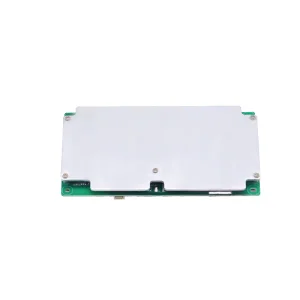
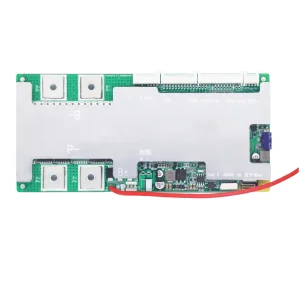
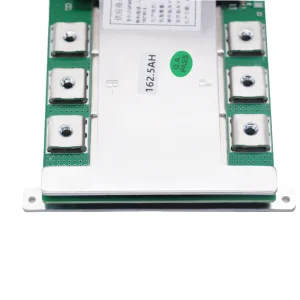
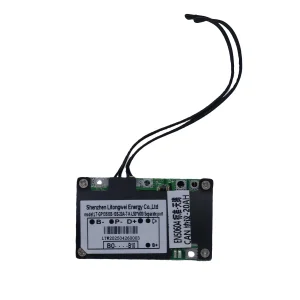
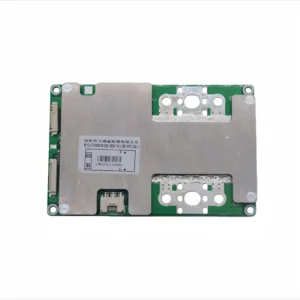
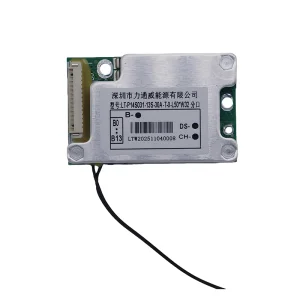
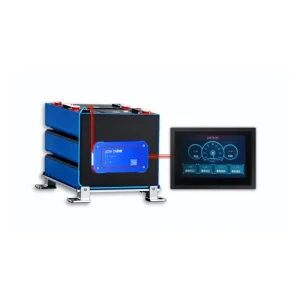
Our 20S to 23S protection configurations with up to 200A continuous current handling serve as the central safety node. Featuring active thermal regulation via heating film controls, dual communication channels (CAN and BLE), and high-resolution status displays, these systems protect against overcharge, over-discharge, short-circuits, and cell imbalances.
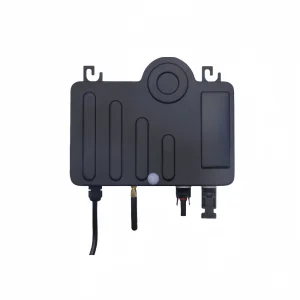
The LTWSmart Micro Inverter series operates at 96.5% peak efficiency, designed specifically for balcony power stations and distributed solar installations. Encapsulated to IP67 ingress protection standards, it withstands extreme weathering while integrating grid-tied bidirectional power flow with high-efficiency MPPT tracking.
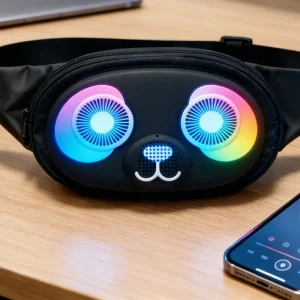
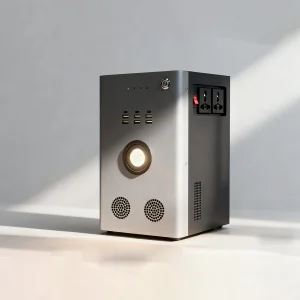
Supporting bidirectional PV charging, our 1kWh portable energy storage units leverage integrated BMS platforms with single-cell diagnostics. Ideal for utility work crews, outdoor lifestyle systems, and residential backup, these units provide seamless plug-and-play operations with smart status display panels.
Established in 2005, Shenzhen Litongwei Electronic Technology Co., Ltd. (LITONGWEI) has solidified its position as a national high-tech enterprise at the forefront of lithium-ion safety control systems and smart charging development. For two decades, our core mandate has been the continuous research, development, and high-volume manufacture of state-of-the-art Battery Management Systems (BMS) and intelligent energy distribution hubs. Our products are trusted globally across diverse sectors, including 3C consumer electronics, electric scooters, electric bikes, electric motorcycles, utility golf carts, industrial AGVs, specialized drones, and heavy-duty power tools.
We provide our business partners with a robust four-fold operational guarantee: Intellectual Property Protection (through proactive, collaborative patent filings), Cost-Saving Standardized Shared Boards, Full-Process Quality Traceability, and Cloud-Based Remote Maintenance capabilities. By prioritizing these structural assets, we help OEM and ODM clients resolve operational bottlenecks and minimize design and liability risks.
To maintain an agile and resilient supply chain, Litongwei has established two primary manufacturing and R&D hubs in China's leading technology zones. Our Shenzhen facility spans over 13,000 square meters, focusing on high-precision engineering, quick-turn prototyping, and advanced R&D. To accommodate high-volume global demand, our Dongguan Huangjiang production base adds another 27,000 square meters of highly automated space. Together, these facilities operate 24 high-speed pick-and-place (SMT) assembly systems and 12 automated PCBA production lines, allowing us to exceed a monthly capacity of 15 million units.
Our enterprise solutions are backed by rigorous quality assurance platforms, including an automated MES (Manufacturing Execution System) that tracks every individual component from material receipt through placement, testing, and final packaging. This level of traceability is why leading global brands rely on Litongwei for key product integrations.
We maintain long-term partnerships with brand clients who trust our components for their end-user ecosystems:
Smart power distribution and nimbler, safer charging systems are not one-size-fits-all. Our portfolio is engineered to solve localized operational challenges under diverse conditions:
In regions like Northern Europe and North America, sub-zero temperatures can cause permanent capacity loss during charging. Our BMS boards, equipped with intelligent heating loops and Bluetooth communication, dynamically pre-heat the battery cells to optimal temperatures before allowing charging currents to flow, protecting long-term battery health.
As high-density apartments adopt balcony solar setups, space constraints make large inverters impractical. Our IP67 LTWSmart Micro Inverter provides a safe, direct grid connection for home balconies, offering a high-efficiency green energy solution that integrates seamlessly into modern smart-home ecosystems.
Continuous operation requires high-power rapid charging with constant telemetry. Our high-current custom BMS boards with built-in CAN bus interfaces let fleet control units monitor real-time charge rates, cell voltages, and thermal states, ensuring uninterrupted logistics cycles.
To serve global markets, compliance and rapid localized support are vital. Litongwei's products conform to international testing and environmental directives. Our design, sourcing, and assembly workflows strictly adhere to ISO 9001 and ISO 14001 management frameworks. For automotive and high-reliability industrial products, our operations are certified under the stringent IATF 16949 quality system.
We provide full engineering support to help you achieve local regulatory markings, such as CE, FCC, UL, and UN38.3 certifications. Additionally, our cloud diagnostics platform enables remote maintenance, allowing engineering teams to monitor battery health indicators and troubleshoot firmware from anywhere in the world.
Over two decades of pioneering innovation, transitioning from a localized R&D lab into an industry-recognized global smart energy supplier.
Litongwei commenced R&D and manufacturing of digital Battery Management Systems (BMS) in 2005. Rapidly expanded into power battery management system development by 2006. Achieved ISO9001 quality certification in 2007 and ISO14001 environmental certification in 2009.
Secured 8 utility model and design patents by 2011, alongside mobile power manufacturing expansions. Established the dedicated Litongwei Technology Research Institute in 2012. Earned the Del New Energy Quality Excellence Award in 2014 and the Gold Partner title from Gaogong Lithium Battery in 2015.
Upgraded ISO standards in 2016 and secured automotive-grade IATF16949 certification in 2018. Implemented a plant-wide MES system for automated assembly tracking. Recognized with the Guangdong Battery Industry Association Innovation Award in 2019 and named a leading brand for two-wheeled vehicle BMS in 2020.
Embracing IoT and Industry 4.0 paradigms. Litongwei continues to innovate in high-density smart charging interfaces and grid-connected micro-inverters. Our operations drive digitalization, safety compliance, and green energy management for clients worldwide.
As we look toward 2030, Litongwei's R&D is focused on three key technological areas to maintain our competitive edge and deliver high information gain for our clients:
We are integrating Gallium Nitride (GaN) and Silicon Carbide (SiC) switches directly into our micro-inverter and charger topologies. This transition will yield higher switching frequencies, reduce thermal footprints, and increase efficiency beyond the current 96.5% standard.
Moving beyond simple voltage thresholds, our next-generation smart BMS units will run localized electrochemical models. These edge algorithms will predict thermal runaway risks and estimate State of Charge (SoC) and State of Health (SoH) with less than 1% variance.
Working closely with research partners, we are designing protection circuits configured for solid-state electrolyte battery profiles. These configurations will support higher nominal charge cut-off voltages and accommodate pressure-sensor feedback loops.
Here, we address key technical questions from system engineers, product designers, and procurement managers concerning BMS architecture, smart charging, and system safety.
A: High-series configurations (such as 20S and 23S) allow batteries to operate at higher nominal system voltages (72V to 84V nominal). This significantly reduces current draw for the same power output, lowering heat generation in wiring and connectors, reducing resistive losses (I²R), and enhancing overall system efficiency. This is particularly critical for high-demand LEVs, golf carts, and light machinery.
A: Negative Temperature Coefficient (NTC) thermistors provide precise localized temperature feedback. By placing multiple NTC sensors across the battery pack, the BMS can detect localized hotspots before they spread. This prevents localized thermal runaway and allows the BMS to shut down or throttle charging currents, protecting the system from catastrophic failure.
A: Charging a lithium battery below freezing can cause lithium plating on the anode, resulting in permanent capacity loss and internal short-circuits. When a charge input is detected in cold conditions, the BMS routes power to dedicated heating films within the pack first. Once the sensors report an internal cell temperature above 5°C, charging begins safely.
A: Controller Area Network (CAN) bus is a highly reliable industrial standard that allows the BMS to communicate directly with the vehicle's central computer, motor controller, and charging station. Real-time metrics—including state of charge, voltage levels, temperature, and fault status—enable automated dispatch and precise battery management.
A: This efficiency is achieved through soft-switching topologies, optimized Maximum Power Point Tracking (MPPT) algorithms, and low-resistance MOSFETs. Minimizing switching losses ensures that power harvested from solar panels is transferred directly to the home grid with minimal thermal dissipation.
A: Our Manufacturing Execution System (MES) records production data at every step. Each circuit board is marked with a unique tracking code linked to component batches, solder reflow logs, optical inspection (AOI) results, and functional tests. This allows us to trace any field issue back to the exact manufacturing point, enabling rapid resolution.
Review more of our safety control hardware, designed for durable operation in industrial and personal mobility ecosystems.
 Litongwei Electronic