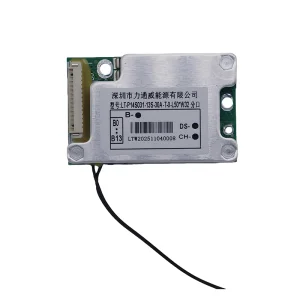
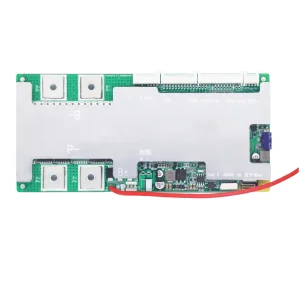
Explore our industrial-grade components designed to drive power density, safety, and operational efficiency across consumer and commercial grids.
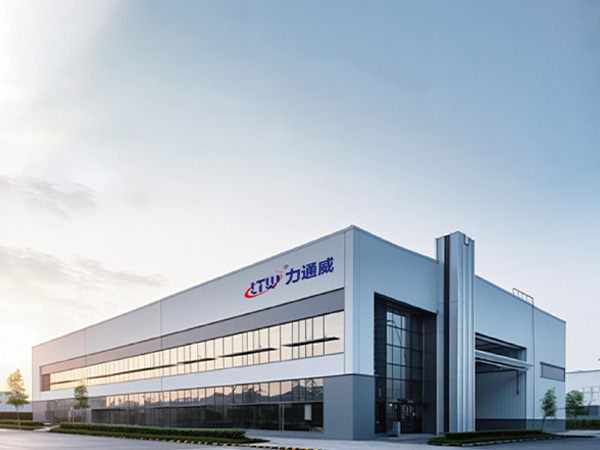
Established in 2005, Shenzhen Litongwei Electronic Technology Co., Ltd. is a national high-tech enterprise at the forefront of the R&D and high-precision manufacturing of lithium-ion safety control systems. Over two decades, we have committed our engineering capabilities to solving the most complex thermal management, charge regulation, and telemetry challenges faced by industrial, commercial, and consumer battery storage applications.
Our solutions form the technological core for an expansive suite of applications, including 3C digital devices, micro-mobility solutions (electric scooters, bicycles, motorcycles, tricycles), electric golf carts, Automated Guided Vehicles (AGVs), agricultural drones, and heavy-duty power tools. By offering robust IP protection, custom component design, shared board architectures, and comprehensive IoT remote diagnostics, we empower system integrators and distributors to mitigate engineering barriers and accelerate time-to-market.
An in-depth whitepaper analysis of portable power solutions, industrial BMS, and the micro-grid revolution.
The global transition towards decentralized, off-grid power has reshaped commercial, medical, and emergency infrastructure. Legacy combustion generators are rapidly being replaced by advanced lithium-ion and lithium iron phosphate (LiFePO4) portable power networks. The modern industry demands not just cells, but smart, adaptive power architectures capable of managing dynamic loads, environmental extremes, and seamless grid-tie integrations.
In this ecosystem, the core value proposition has shifted from raw battery capacity to the sophistication of the Battery Management System (BMS) and power conversion electronics. As a specialized OEM/ODM, Litongwei answers this demand by engineering intelligent safety control systems that prevent thermal runaway, optimize cell balancing, and support remote monitoring networks via Bluetooth, RS485, CAN bus, and custom IoT interfaces.
A multi-cell battery pack is only as strong as its weakest cell. Without precise balancing and multi-point temperature detection, high-capacity systems suffer from accelerated capacity fade, limited cycle life, and thermal vulnerability.
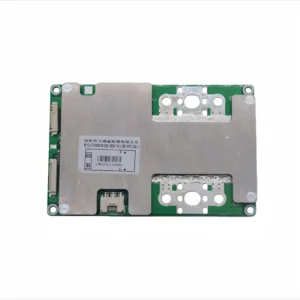
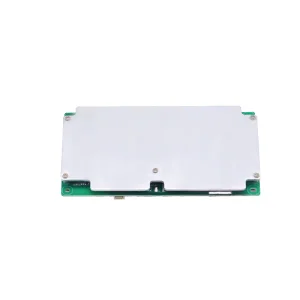
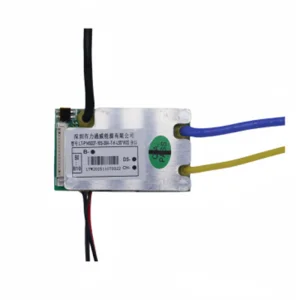
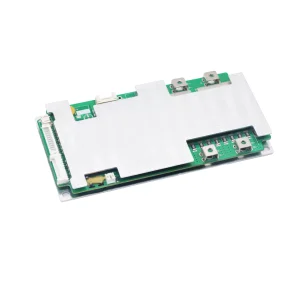
Our 20S 100A and 23S 60A protection boards incorporate multiple Negative Temperature Coefficient (NTC) thermistors. These sensors are strategically positioned to monitor junction temperatures of power MOSFETs and critical cell clusters. If local temperatures exceed preset thresholds, the BMS initiates safety shutdowns or limits current to safeguard the system.
To maximize total energy delivery (Wh), our systems employ advanced balancing algorithms. Passive balancing channels excess charge away from high-voltage cells during the top-off phase. For larger energy storage systems, active balancing solutions dynamically transfer energy between cells, minimizing thermal output and maximizing cycle-life longevity.
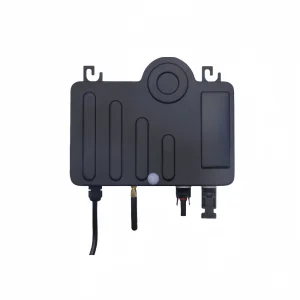
Transitioning stored DC power to grid-ready AC utility requires highly efficient inverters. The OEM LTWSmart Micro Inverter MINV500S achieves a peak conversion efficiency of 96.5% under harsh operational demands. Housed in an IP67-rated, all-weather enclosure, this micro-inverter is designed to operate seamlessly under extreme environmental stresses, from sub-zero temperatures to intense tropical humidity. Its robust architecture makes it an ideal fit for localized home energy setups and emergency portable power deployment.
Why Tier-1 global brands and industrial enterprises trust Litongwei for energy management and safety control.
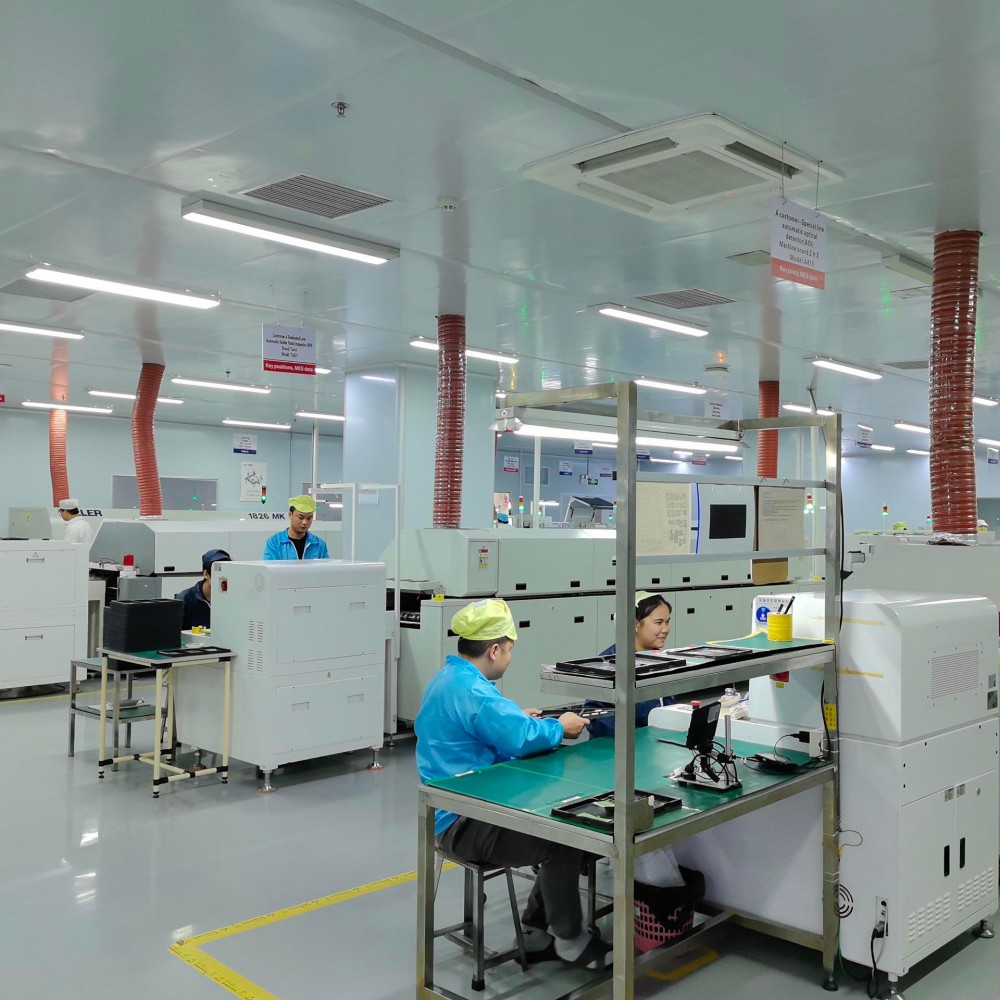
Equipped with 24 high-speed SMT assembly machines and 12 dedicated PCBA lines across Shenzhen (13,000 sqm) and Dongguan (27,000 sqm) facilities. We produce over 15 million control boards monthly under strict ERP and MES control.
We mitigate international regulatory risks for our clients by providing solid patent-backing. Holding over 100 industry patents, we offer custom design modifications that prevent market patent infringement issues.
Quality assurance is backed by our full-process MES database tracking. Every protection board and smart component is tracked from raw silicon wafer procurement through SMT placement down to individual functional testing.
At the center of Litongwei's corporate core is the ongoing pursuit of green, sustainable energy orchestration. Guided by our standard operating philosophy of "Technology as King, Efficient Service", we design systems that enhance energy conversion efficiency, lengthen the operational lifecycle of lithium resources, and eliminate unnecessary electrical waste.
Through our comprehensive R&D efforts in BMS active balancing and micro-inverter architectures, we contribute directly to lowering global carbon emissions. We enable regional energy independence and green micro-grid implementations for remote residential areas, emergency communication outposts, and light industrial networks worldwide.
From a localized design workshop to a global leader in high-performance lithium protection and system integration.
Commenced R&D and manufacturing of digital Battery Management Systems (BMS) in 2005. Expanded into power battery management systems in 2006. Achieved ISO9001 and ISO14001 compliance standards to lay the foundation for scalable enterprise quality.
Secured 8 core utility model and design patents by 2011. Established the Litongwei Technology Research Institute in 2012. Honored with the Del New Energy Quality Excellence Award in 2014 and named Gold Partner of Gaogong Lithium Battery in 2015.
Upgraded certifications to IATF16949 standards in 2018. Integrated automated MES systems for end-to-end component level tracking. Awarded the Innovation Award from the Guangdong Battery Industry Association in 2019.
Deepening technology platforms with Cloud-connected BMS, dynamic active-balancing algorithms, and multi-protocol IoT architectures. Scaling manufacturing capabilities to service international green power grids.
We work closely with global industry brands to implement secure, reliable energy solutions across worldwide markets.













Ensuring absolute protection and optimal deployment parameters across distinct global jurisdictions.
Bringing high-capacity lithium battery solutions to market requires navigating a complex web of global regulatory standards. Different regions enforce distinct compliance parameters to ensure electrical safety and environmental responsibility.
As an international OEM/ODM, Litongwei has built its quality system to align with these requirements. Our manufacturing facilities are certified under ISO 9001:2015 for quality management, ISO 14001:2015 for environmental preservation, and IATF 16949:2016 for automotive supply chain standards. This ensures that every BMS, protection board, and micro-inverter leaving our factory is fully ready to pass critical international safety audits, reducing regulatory barriers for our global clients.
An automated warehouse operation in Germany required high-current lithium packs capable of 24/7 opportunity charging. Standard BMS boards lacked the thermal resilience needed for continuous high-current cycles. We customized our 20S 100A balanced protection boards to include targeted liquid-cooling interface support and Bluetooth telemetry. The resulting system logged zero safety incidents over 18 months and improved battery fleet lifespan by 18%.
A rural infrastructure developer in Indonesia implemented distributed home solar networks. High ambient humidity and high temperatures caused frequent inverter failures. By deploying our IP67-rated, all-weather LTWSmart Micro Inverters (96.5% efficiency), the project realized a 30% drop in replacement costs and stabilized local energy distribution through varying weather conditions.
Looking ahead, Litongwei is transitioning from local component control to edge-cloud safety coordination. Our development pipeline centers on introducing machine learning algorithms directly into the BMS micro-controller to predict cell failure and detect dendrite growth before it compromises safety. Furthermore, our upcoming Cloud BMS platform will enable operators to manage large-scale energy storage assets remotely, maximizing system uptime and safety.
Addressing the fundamental design queries raised by power system engineers and procurement officers.
Complete your deployment with our range of high-efficiency energy storage solutions and smart accessories.
 Litongwei Electronic