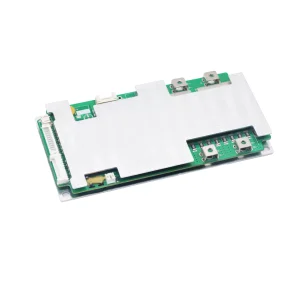
Explore our state-of-the-art power conversion and BMS systems engineered for high efficiency and ultra-compact form factors.
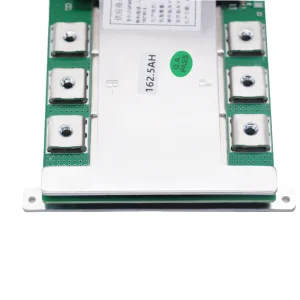
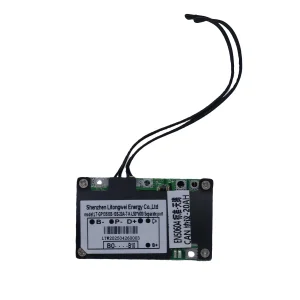

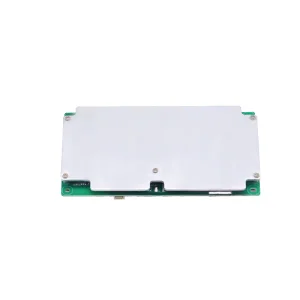
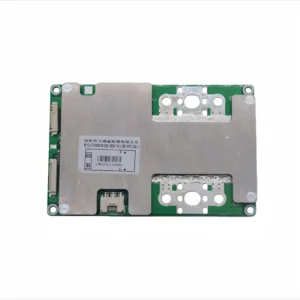
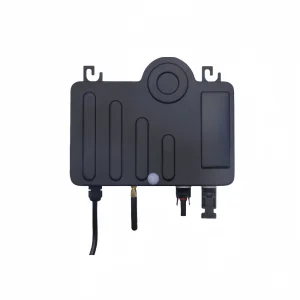
In the landscape of modern power electronics, the demand for miniaturization has transcended beyond consumer electronics into macro-industrial infrastructure, mobile medical units, and intelligent off-grid platforms. Developing the smallest power inverter is not merely a challenge of spatial reduction; it is an intricate exercise in balancing high-frequency topologies, thermal aerodynamics, and electromagnetic compliance.
At Litongwei Electronic Technology, we leverage nearly two decades of proprietary R&D to create custom, ultra-compact micro-inverters and bidirectional inverter systems. By integrating advanced semiconductor substrates, such as Gallium Nitride (GaN) and Silicon Carbide (SiC), we bypass the spatial constraints of traditional silicon-based architectures, allowing industrial and commercial clients to achieve unprecedented energy density.
Decentralized power conversion, microgrids, and the surge in ultra-portable energy storage systems are reshaping global manufacturing requirements.
Traditional setups waste up to 15% of cabinet volume on inactive cooling systems and large wound components. Modern layouts mandate direct board integration, creating the market for sub-liter, high-capacity bidirectional inverters.
Global grids demand instant synchronization. Developing smallest power inverters requires balancing miniaturization with stringent UL, CE, and RoHS standards to guarantee safe operation across all international voltage systems.
Modern micro-inverters are no longer passive power pipelines. They must interact with local smart home networks, industrial clouds, and dynamic load-management arrays using integrated Bluetooth, WiFi, and CAN interfaces.
Backed by decades of operational excellence, Litongwei supplies massive production capacity combined with top-tier R&D investment.
An authoritative analysis of high-frequency engineering, semiconductor developments, thermal modeling, and system architectures in micro-inverter development.
The core bottleneck in decreasing power inverter volume has historically been the passive components (capacitors, inductors, and magnetic cores). Since the size of these elements is inversely proportional to the switching frequency, pushing the frequency higher is the primary mechanism for miniaturization. Silicon-based MOSFETs and IGBTs exhibit extreme switching losses when operated above 100 kHz, producing prohibitive heat.
By transitioning to Gallium Nitride (GaN) and Silicon Carbide (SiC) power switches, Litongwei engineers achieve switching frequencies ranging from 300 kHz to over 1 MHz. GaN’s high electron mobility allows for nearly instantaneous state transitions. This minimizes switching energy losses, allowing us to drop thermal management footprints by up to 50% while scaling conversion efficiency to 96.5% peak performance.
Operating a high-power inverter in a micro-enclosure creates extreme localized heat fluxes. Standard convection cooling is impossible in space-constrained micro-inverters. Litongwei implements custom planar transformers integrated directly into the multilayer PCB layout. The large surface area of planar magnetics allows heat to conduct efficiently through the PCB substrate into the outer aluminum chassis, which acts as a passive heatsink.
Furthermore, our designs employ high-thermal-conductivity potting compounds (silicone or epoxy resins with thermal conductivities exceeding 3.0 W/mK). This potting protects internal components from water entry (meeting IP67 all-weather standards) while distributing heat evenly, preventing localized thermal stress on critical components like capacitors and control microchips.
For modern mobile energy products, such as portable power banks and microgrid reserves, keeping the inverter and the Battery Management System (BMS) separated creates excess wiring, bulky connectors, and higher points of failure. Our core breakthrough is the BMS-Inverter co-design. By combining the power conversion stage and the smart lithium-ion safety controls onto a unified physical substrate, we eliminate unnecessary cable layouts and dramatically improve structural efficiency.
Under this unified paradigm, the BMS relays real-time cell parameters (temperature, voltage, internal resistance) directly to the inverter's control loop. The inverter can then dynamically adjust its peak draw and duty cycle to match the battery cell's exact state, extending the system's runtime and overall lifecycle.
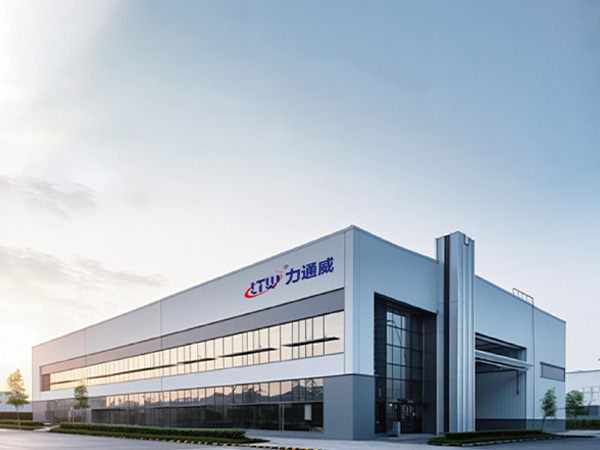
At Shenzhen Litongwei Electronic Technology Co., Ltd., we operate under the core philosophy of "Technology as King, Efficient Service". Our goal is to drive the green transition by engineering the world’s most efficient, reliable, and compact intelligent power conversion systems.
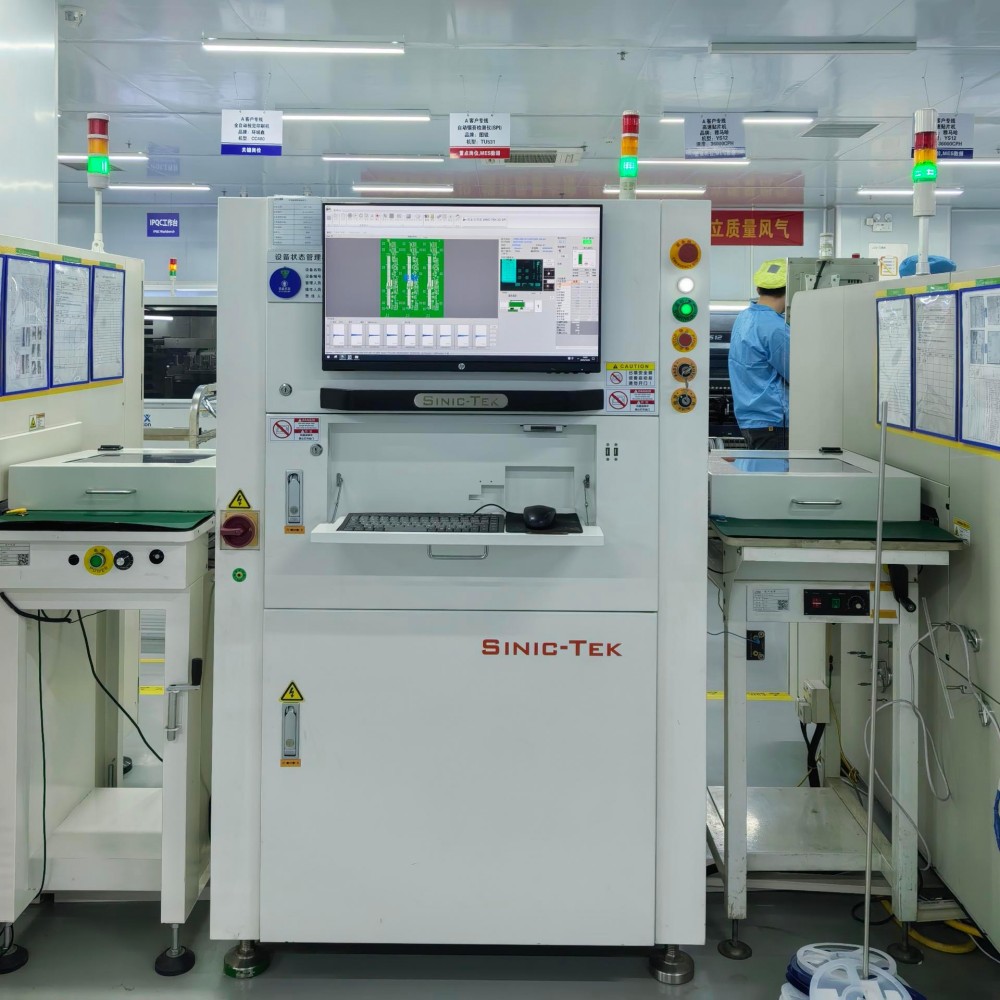
Our dual production campuses in Shenzhen (13,000 sqm) and Dongguan (27,000 sqm) are fully optimized for Industry 4.0 production. Integrating computerized Manufacturing Execution Systems (MES) guarantees full assembly-line traceability for all micro-BMS and micro-inverter units, from basic components to finished products.
Over 18 years of pioneering development in safe power management, battery control boards, and integrated smart inverters.
Commenced development of digital Battery Management Systems (BMS) in 2005. Achieved ISO9001 certification in 2007 and ISO14001 certification in 2009, expanding rapidly into safety control system integration.
Secured 8 core utility model and design patents in 2011. Established the Litongwei Technology Research Institute in 2012. Won the Del New Energy Quality Excellence Award in 2014.
Upgraded certifications in 2016. Earned the stringent IATF16949 automotive quality standard in 2018. Integrated automated MES trace systems, earning the Guangdong Battery Industry Association Innovation Award in 2019.
Deepening IoT integrations, industrial smart manufacturing, and the roll-out of high-efficiency micro-inverters, all-weather off-grid power units, and intelligent bidirectional inverters for international markets.
How our customized, ultra-compact inverters solve technical problems in real-world environments.
In modern agriculture, cargo and pesticide-spraying drones require rapid battery replacement cycles and lightweight power setups. Working with commercial drone manufacturers in the APAC region, Litongwei designed a custom, ultra-lightweight power conversion controller that acts as a step-up and inverter stage in one. By reducing the converter weight by 35% compared to off-the-shelf industrial parts, flight durations were successfully increased by 12% per battery charge.
Telecom infrastructure in remote areas requires modular, highly efficient solar arrays. Litongwei's IP67 all-weather micro-inverters (designed to handle extreme heat and humidity) were deployed across rural communication towers. Integrated CAN and Bluetooth communications allowed field teams to diagnose system health without accessing high-voltage lines, reducing local maintenance calls by 45%.
Electric scooters and bikes require decentralized fleet charging stations. Litongwei's custom 500W and 1kWh bidirectional inverter boards allowed charging hubs to feed excess energy from parked scooters back into localized commercial grids during peak pricing. The ultra-compact footprint allowed controllers to fit directly into the frame post of charging docks, saving valuable urban sidewalk space.
Military, scientific, and medical crews operating in extreme environments rely on compact equipment. Litongwei’s custom bidirectional inverter units enable field generators, solar units, and storage packs to operate together in unified mini-grids. Fast-switching GaN topologies ensure a stable pure sine-wave output, protecting sensitive medical sensors and field communication computers.
Over the years, Litongwei has partnered with major global brands to integrate high-security battery electronics and compact power platforms.














Detailed answers regarding custom smallest power inverter design, production limits, thermal options, and testing setups.
Our micro-inverters use wide-bandgap (WBG) semiconductors like Gallium Nitride (GaN) and Silicon Carbide (SiC). These materials can handle switching frequencies past 300 kHz, allowing us to use much smaller planar transformers and PCB inductors. This drops overall dimensions while keeping conversion efficiency high at up to 96.5% peak performance.
We use planar magnetics built directly into multi-layer PCBs, high-conductivity potting compounds (exceeding 3.0 W/mK), and advanced structural design where the outer aluminum casing acts as a heatsink. This avoids the need for noisy, bulky physical fans.
Yes. Our engineering division works with custom firmware and hardware. We support serial communications including CAN bus, RS485, Modbus, Bluetooth Low Energy (BLE), and direct cloud/IoT APIs through our integrated systems.
Yes. Many of our compact designs (such as the LTWSmart series) feature IP67 all-weather protection. Vacuum-pressure potting protects sensitive electronics from moisture, dirt, dust, and physical shocks.
Litongwei products are manufactured under ISO9001, ISO14001, and IATF16949 quality standards. Depending on the product specification, we assist in securing UL 1741, IEEE 1547, CE, FCC, and RoHS certifications for global compliance.
Initial design and prototyping phase takes 4 to 6 weeks. Mass production starts once samples are verified, using our high-speed SMT assembly lines (capable of producing over 15 million units monthly).
Check our full catalog of smart protection devices, bidirectional power modules, and compact power banks.
 Litongwei Electronic