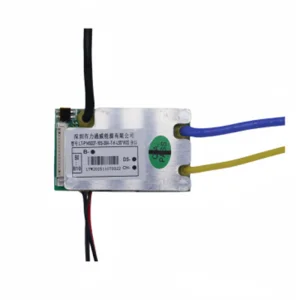
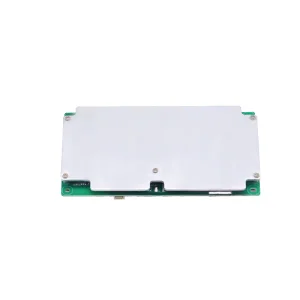
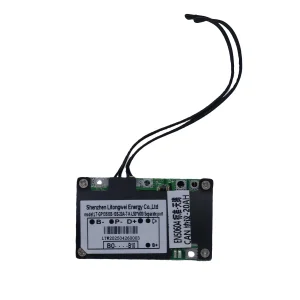
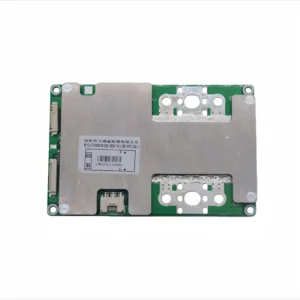
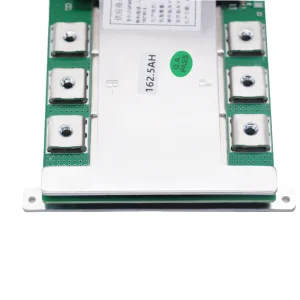
OEM 24s Bms Manufacturers & Factory

Industrial-Grade Smart Battery Management Solutions: Engineering the Future of Safe High-Voltage Energy Systems

Industrial Whitepaper: Elevating 24S BMS Engineering & Global Supply Chain Strategies

An in-depth analysis of high-voltage battery management systems, manufacturing parameters, global markets, and technical standards.

1. Executive Summary & The Crucial Role of 24S BMS

As the global transition to clean energy intensifies, battery systems are migrating to higher voltages to achieve greater efficiency, minimize resistive losses, and reduce thermal stress. The 24S (24 Series) Battery Management System is at the core of this transition. Typically running at a nominal voltage of 76.8V for Lithium Iron Phosphate (LFP) chemistry or 88.8V for Nickel Manganese Cobalt (NMC) cells, 24S platforms act as the critical threshold separating low-voltage consumer electronics from high-voltage light electric vehicles (LEVs), industrial Automated Guided Vehicles (AGVs), solar micro-grid installations, and backup telecom power infrastructures.

For enterprise procurement officers, choosing a reliable OEM 24S BMS manufacturer is not merely a matter of component sourcing; it is a strategic partnership that impacts system lifetime, field reliability, liability, and functional safety compliance. This whitepaper analyzes the global industrial landscape, China's manufacturing efficiencies, smart BMS innovations, and specific sourcing parameters critical for corporate buyers.

2. Technical Architecture: Inside a High-Grade 24S Smart BMS

An industrial-grade 24S BMS must manage severe voltage variations and ensure cell-to-cell uniformity across 24 cells in series. Key architectural elements include:

  • High-Accuracy Analog Front End (AFE): Measures voltage levels down to millivolt-level accuracy (±1.5mV). This is essential for LFP chemistries where the discharge curve is extremely flat, and small voltage changes represent major shifts in State of Charge (SoC).
  • Advanced SoC and SoH Algorithms: Incorporates Kalman filtering models and real-time resistance tracking to estimate capacity and predict battery health accurately.
  • Thermal Management via Multi-Point NTCs: Utilizes NTC thermistors strategically placed throughout the pack to monitor temperatures. Litongwei's systems offer multi-channel temperature monitoring to detect local hot spots before they lead to thermal runaway.
  • Communication Protocols: Supports robust industrial buses including CAN 2.0B, RS485, Modbus, and modern wireless interfaces like low-energy Bluetooth (BLE) for real-time app diagnosis.
±1.5mV
Voltage Sensing Accuracy
24S LFP/NMC
Chemistry Compatibility
Up to 300A
Continuous Current Support
IP67 / IP68
Ingress Protection Grade

3. Global Business & Industrial Applications

The 24S BMS format is highly requested across multiple industries globally:

  • Micro-Mobility and Last-Mile Delivery: Heavy-duty e-scooters, electric motorcycles, cargo e-bikes, and e-rickshaws require 72V to 84V systems to deliver high torque under load.
  • Industrial Material Handling: Automated Guided Vehicles (AGVs), Autonomous Mobile Robots (AMRs), and warehouse forklifts run continuously. They require intelligent BMS with active cell balancing to minimize recharge down-time.
  • Telecom and UPS Backup Power: Base transceiver stations (BTS) rely on 24S LFP racks to supply consistent backup power during grid blackouts.
  • Residential Solar Energy Storage Systems (ESS): Modern home energy storage modules, such as 48V systems, can be scaled up to 72V/96V systems using 24S configurations to match higher-efficiency bidirectional hybrid inverters.

4. The China Factory Advantage: SMT, Scale, and Quality Ecosystem

Sourcing from an established China BMS factory like Litongwei Electronic Technology Co., Ltd. provides clear advantages in cost efficiency, supply chain responsiveness, and engineering scale:
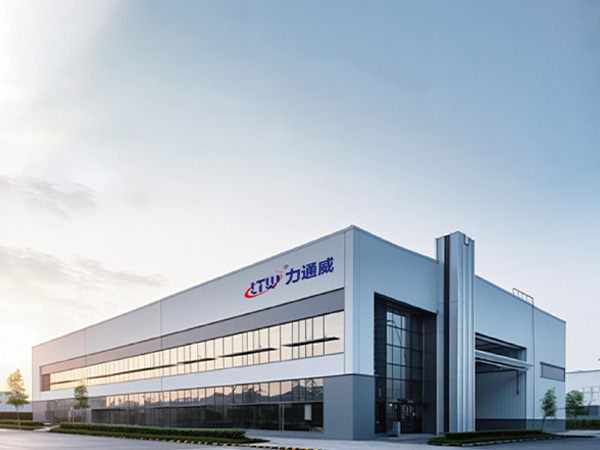
  • Complete Electronic Ecosystem: Located in the heart of Shenzhen and Dongguan, we benefit from immediate proximity to leading chipmakers, passive component suppliers, high-density PCB manufacturers, and premium MOS tube providers.
  • Automated SMT Production Lines: Operating 24 advanced high-speed surface mount technology (SMT) lines and 12 PCBA assembly lines across 40,000 square meters of total production space, ensuring quality consistency and a monthly output capacity exceeding 15 million units.
  • Rigorous Testing Protocols: Every single BMS unit undergoes automated optical inspection (AOI), in-circuit testing (ICT), functional testing (FCT), and high-voltage isolation tests. Furthermore, environmental chambers subject sample batches to thermal cycling (-40°C to +85°C) and vibration testing to simulate real-world operations.
Litongwei Corporate Factory

Corporate Vision

LITONGWEI has always adhered to the philosophy of "Technology as King, Efficient Service" in all aspects of production and operations. Our vision is to become a provider of intelligent green energy management solutions, embracing environmental sustainability. Start with LITONGWEI!

Our R&D efforts focus on optimizing active balance control, high-current heat dissipation structures, smart communication integrations, and IoT cloud services to meet the standards of international markets.
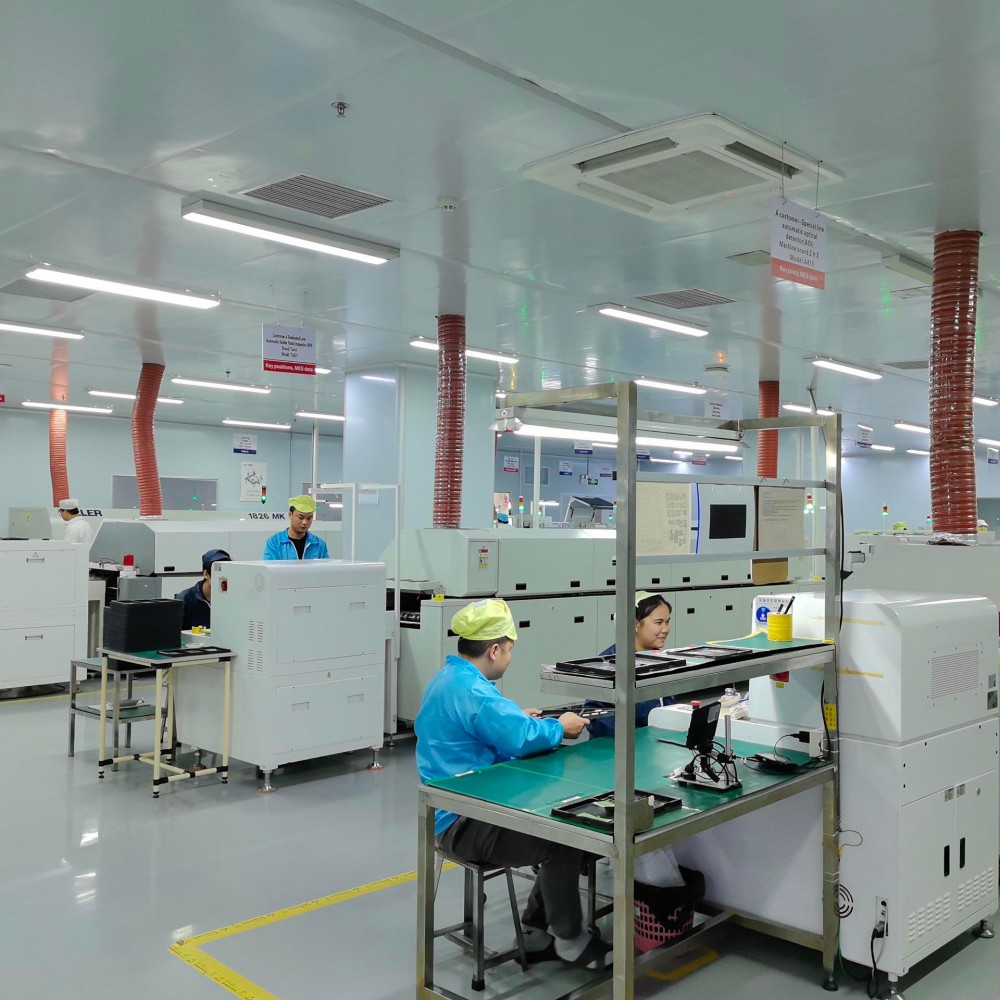
Litongwei R&D Center

About Shenzhen Litongwei Electronic Technology Co., Ltd.

Established in 2005, we are a national high-tech enterprise specializing in the R&D and manufacturing of lithium-ion safety control systems. Our products are widely used in 3C digital devices, electric scooters, bicycles, motorcycles, tricycles, golf carts, AGVs, drones, and power tools.

We provide intellectual property protection (patent collaboration to prevent infringement), industry-standard shared boards (cost reduction and efficiency improvement), full-process traceability (quality control), and remote maintenance (cloud platform support) to help you address technical, cost, and operational challenges. By choosing us, you'll receive top-tier products and services. Litongwei is committed to collaborating with you to build a brighter future together.

Why Choose Litongwei for Your 24S BMS OEM Sourcing

Combining manufacturing capabilities with R&D investment to deliver reliable protection systems.

Production Capacity

Shenzhen features over 13,000 square meters of independent factory space, and Dongguan Huangjiang houses 27,000 square meters. The company is equipped with 24 high-speed SMT assembly machines and 12 PCBA production lines, with monthly output reaching over 15 million units.

R&D Investment

Litongwei's R&D investment has consistently accounted for more than 10% of the company's sales for five consecutive years. This funding supports our technology institute, test lab, and high-voltage BMS research projects.

Technological Innovation

The company holds over 100 patents in the lithium-ion battery protection board industry, along with multiple patents in circuit/testing programs and automation. We provide enhanced intellectual property protection for clients and collaborate with them to mitigate infringement risks.

Our Corporate Development Timeline

Over 18 years of technical progress in battery management safety and manufacturing scaling.

2005

Establishment and Foundations

Technology-driven growth. In 2005, the company commenced R&D and manufacturing of digital Battery Management Systems (BMS). By 2006, it expanded into power battery management system development. ISO9001 certification was obtained in 2007, followed by ISO14001 certification in 2009.

2010

Technological Expansion & Patented Innovations

Technological advancement. The company secured 8 utility model and design patents in 2011, while expanding its mobile power bank manufacturing operations. The Litongwei Technology Research Institute was established in 2012. It received the Del New Energy Quality Excellence Award in 2014 and earned the Gold Partner title from Gaogong Lithium Battery in 2015.

2015

Digital Transformation & Quality Certifications

Digital transformation. The company upgraded its ISO 9001 and ISO14001 certifications in 2016, achieved IATF16949 certification in 2018, and implemented an MES system for warehouse automation. It was awarded the Guangdong Battery Industry Association Innovation Award in 2019 and recognized as a leading brand in lithium battery protection board technology for two-wheeled vehicles in 2020.

2020

Smart Manufacturing+ and Industry 4.0

Smart Manufacturing+. Litongwei Electronics continues to innovate, deepening its technological expertise while embracing IoT and Industry 4.0. Through its Smart Manufacturing+ strategy, the company drives industrial transformation and upgrading.

Authorized OEM Partners

We maintain long-term partnerships with leading companies across the energy and technology sectors.

Litongwei's partners include Huawei, Lenovo, Desay, Guoguang, Sunwoda, Eve Energy, Guoxuan High-tech, and other industry clients who have collaborated for many years.

Frequently Asked Questions: OEM 24S BMS Sourcing

Answers to common technical, manufacturing, and procurement inquiries regarding our battery management safety systems.

Q1: What nominal voltage ranges do 24S BMS boards support?
A 24S (24 cells in series) BMS supports nominal voltages based on cell chemistry. For Lithium Iron Phosphate (LiFePO4/LFP) chemistry with a nominal voltage of 3.2V per cell, the pack nominal voltage is 76.8V, with a maximum charge voltage of 87.6V. For Lithium Nickel Manganese Cobalt (NMC) or LTO chemistries, the nominal voltage is approximately 88.8V, with charging peaks up to 100.8V. Litongwei's 24S systems are programmable to support multiple chemistries.
Q2: Can the communication protocols be customized for vehicle integrations?
Yes, communication protocol customization is a core part of our OEM services. We offer custom CAN bus (CAN 2.0B / J1939), RS485, Modbus, and UART protocol profiles to integrate with various electric vehicle motor controllers, vehicle ECUs, and industrial PC interfaces.
Q3: How does the factory handle IP protection for custom OEM designs?
At Litongwei, intellectual property protection is a key aspect of our client partnerships. We secure custom firmware, hardware layouts, and mechanical casing designs under strict Non-Disclosure Agreements (NDAs). We also collaborate with clients on patent registrations to prevent market copycats and legal risks.
Q4: What is the typical lead time for custom 24S Smart BMS development?
For standard hardware platforms modified with custom wiring configurations, the lead time is generally 2 to 3 weeks. Full custom hardware layout design (schematic design, PCB layout, prototype run, functional validation) typically takes 6 to 8 weeks, depending on design complexity.
Q5: What certifications do Litongwei BMS systems hold for global distribution?
Our manufacturing facilities operate under IATF 16949 (Automotive Quality Management System), ISO 9001, and ISO 14001 certifications. Our BMS products can be certified to meet international compliance standards including CE, FCC, RoHS, UL, and UN38.3, depending on the requirements of your target market.
Q6: How does the factory ensure production line quality control?
We utilize a cloud-connected Manufacturing Execution System (MES) that tracks every individual PCBA board throughout the production cycle. From SMT pick-and-place, manual component insertion, reflow soldering, AOI (Automated Optical Inspection), ICT (In-Circuit Testing), and final functional FCT testing, each step is logged to ensure full quality traceability.
Q7: Is active balancing supported on your high-voltage BMS systems?
Yes, we supply both cost-effective passive balancing models and high-efficiency active balancing systems. Our active balancing circuits transfer energy from higher-voltage cells to lower-voltage cells (rather than dissipating it as heat), which helps maintain cell balance and extends the run time of high-capacity 24S battery packs.
Q8: How is thermal management handled under high continuous currents?
Our high-current boards (up to 300A continuous) are built on heavy copper PCBs (up to 3oz or 4oz) to reduce resistive heating. They feature aluminum heat sinks, thermal interface materials (TIMs), and up to 4 external NTC thermistors. These thermistors allow the micro-controller to dynamically lower current limits or disconnect the load if temperatures exceed safe limits.