Explore our high-performance power bank assemblies and smart Battery Management Systems designed for industrial, domestic, and outdoor applications.
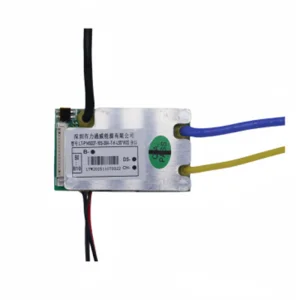
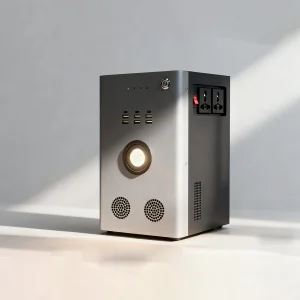
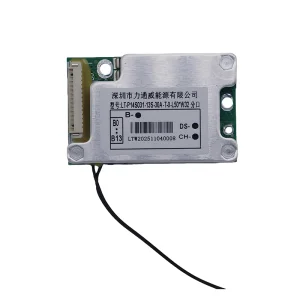
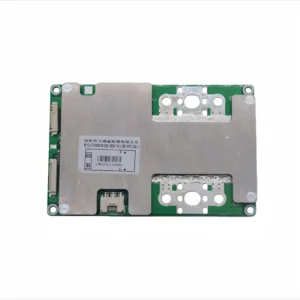
In modern battery design, achieving high capacity, safety, and longevity is no longer simply about using high-quality lithium cells. The core differentiator lies in the execution of the Battery Management System (BMS). As a leading OEM Active Balancing BMS Supplier, Shenzhen Litongwei Electronic Technology Co., Ltd. has witnessed firsthand the transition from passive energy dissipation systems to active energy transfer mechanisms.
Traditional BMS solutions utilize passive balancing, a process where excess energy from the highest-charged cells is released as heat across resistor elements. While simple and cost-effective, this approach introduces localized heat within the battery enclosure, accelerates thermal aging, and limits system runtime to the performance of the weakest cell in the pack.
In contrast, Active Balancing BMS acts as an intelligent dynamic energy router. Rather than wasting excess energy as heat, active balancing transfers current from the high-voltage cells to the lower-voltage cells within the pack. This dynamic redistribution maximizes overall usable energy, controls thermal accumulation, and extends battery pack life cycles by up to 30%.
Utilizes capacitive or inductive energy transfer topologies to dynamically shift current between series-connected cells, achieving efficiency ratings exceeding 92% compared to zero-efficiency passive dissipation.
By eliminating high-wattage bleed resistors, active balancing keeps the BMS operating temperature lower, minimizing thermal runaway risks in enclosed polymer or lifepo4 battery packs.
By actively compensating for cell aging differences and internal resistance degradation, active balancing delays the onset of early capacity loss in large industrial setups.
Founded in 2005, Shenzhen Litongwei Electronic Technology Co., Ltd. has established itself as a premier national high-tech enterprise. Our core specialty lies in the engineering, software development, and large-scale manufacturing of lithium-ion safety control systems.
Our manufacturing scale is engineered to meet the aggressive delivery schedules and strict quality thresholds demanded by Fortune 500 companies. With over 13,000 square meters of independent manufacturing space in Shenzhen and a secondary, state-of-the-art 27,000 square meter facility in Huangjiang, Dongguan, we ensure uninterrupted global delivery capability.
Our manufacturing floors house 12 fully automated PCBA production lines, integrated high-speed Panasonic SMT machines, automatic visual inspection (AOI) stations, and end-of-line functional testers. This level of automation ensures that every active balancing BMS circuit assembly adheres to micro-millimeter tolerance requirements and high product yield goals.
International B2B procurement managers face multiple risk points: intellectual property infringement, long integration delays, communication gaps, and inconsistent product quality. At Litongwei, we have developed a collaborative customer framework to address these specific paint points:
We work closely with client engineering departments, offering patent collaboration and joint utility model applications to completely mitigate infringement risks in Western markets.
To reduce R&D cycles and initial tooling costs, we offer pre-engineered standard shared-board layouts. These layouts are easily customizable for parameters like voltage ranges and communication protocols.
Every active balancing BMS board manufactured is logged within our Manufacturing Execution System (MES). From raw component batches to final calibration tests, we guarantee complete transparency.
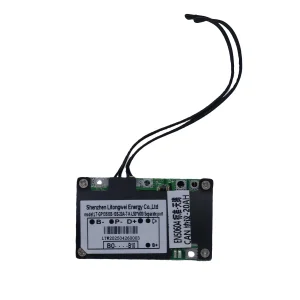
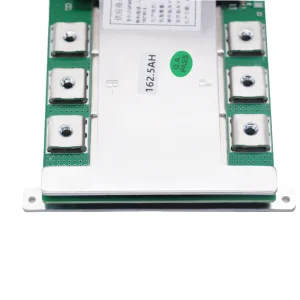
Whether you are seeking custom 10S 20A boards with CAN communication for shared micro-mobility networks or a robust 20S 200A active balancing BMS board for backup power banks, we provide tailor-made options. These options feature active heating elements, Bluetooth transceivers, high-accuracy NTC thermal probes, and custom Android/iOS monitoring application integrations.
Selling battery-powered electronics or industrial energy storage systems (ESS) in regions like North America, Europe, and Asia-Pacific requires strict adherence to regulatory standards. A standard BMS without appropriate testing certificates can lead to import rejections, insurance voids, or legal issues.
Litongwei has invested in securing international certifications. Our manufacturing facilities are certified to ISO 9001:2015, ISO 14001:2015, and IATF 16949—the highest automotive standard for quality control and system safety.
Complete compliance with EN 61000 standards, ensuring low electromagnetic emissions and hazardous materials elimination in accordance with European Green regulations.
Designed to support residential and industrial grid energy storage projects passing strict fire propagation and safety testing regulations.
Ensuring compliance for battery transportation, storage, and mechanical shock protection under extreme global shipping conditions.
Adherence to strict automotive quality management processes, covering failure modes and effects analysis (FMEA) to ensure reliability.
The energy management sector is evolving rapidly. The traditional offline BMS is transforming into a connected IoT smart node. We are leading this transformation by integrating cloud-connectivity interfaces, Edge AI logic, and high-frequency power electronics into our next-generation designs.
By combining our Smart Bluetooth & CAN BMS solutions with a cloud platform, fleet operators can monitor the health, capacity, and temperature of hundreds of mobile assets (such as electric cargo bikes or delivery AGVs) in real-time. Dynamic state-of-charge (SOC) and state-of-health (SOH) predictive algorithms alert maintenance teams before a cell fails, minimizing downtime and replacement costs.
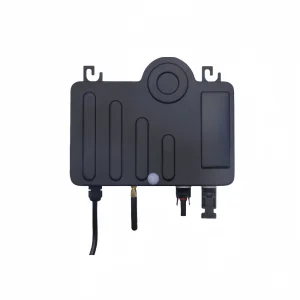
Furthermore, our advanced R&D efforts have led to products like the LTWSmart Micro Inverter. Offering 96.5% efficiency and an IP67 all-weather rating, these units convert residential solar panel energy directly at the balcony level, integrating with active balancing BMS networks to manage green energy storage with minimal conversion losses.
Over two decades of technology advancements, structural upgrades, and global market expansion.
In 2005, the company commenced R&D and manufacturing of digital Battery Management Systems (BMS). By 2006, it expanded into power battery management system development. ISO9001 certification was obtained in 2007, followed by ISO14001 certification in 2009.
The company secured 8 utility model and design patents in 2011, while expanding its mobile power bank manufacturing operations. The Litongwei Technology Research Institute was established in 2012. It received the Del New Energy Quality Excellence Award in 2014 and earned the Gold Partner title from Gaogong Lithium Battery in 2015.
The company upgraded its ISO 9001 and ISO14001 certifications in 2016, achieved IATF16949 certification in 2018, and implemented an MES system for warehouse automation. It was awarded the Guangdong Battery Industry Association Innovation Award in 2019 and recognized as a leading brand in lithium battery protection board technology for two-wheeled vehicles in 2020.
Litongwei Electronics continues to innovate, deepening its technological expertise while embracing IoT and Industry 4.0. Through its Smart Manufacturing+ strategy, the company drives industrial transformation and upgrading.
We maintain long-term partnerships with leading consumer electronics and battery manufacturers, including Huawei, Lenovo, Desay, Guoguang, Sunwoda, Eve Energy, Guoxuan High-tech, and other industry brands.












Technical answers from our engineering team regarding design, safety parameters, and custom ordering processes.
Discover our industrial series of battery protection systems, smart bluetooth interfaces, and high-efficiency microinverters.
 Litongwei Electronic