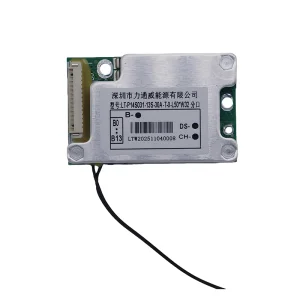
Explore our advanced battery protection boards and diagnostic hardware modules configured for international utility and enterprise scale deployment.
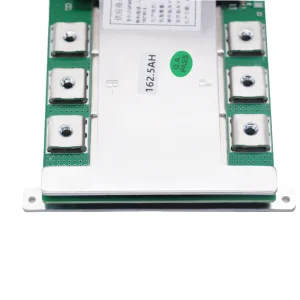
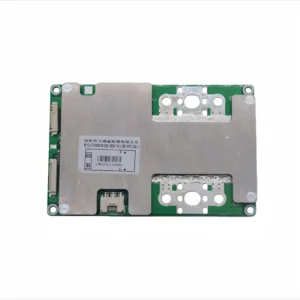
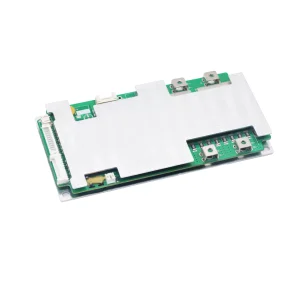

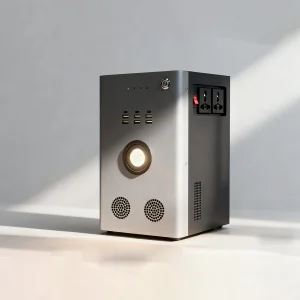
The global transition toward battery-powered technologies is fundamentally altering the standards of battery safety, diagnostic efficiency, and longevity. Today, a Battery Monitoring System (BMS) is no longer just a passive circuit breaker. It serves as the primary intelligence hub of the entire battery pack—critical for maintaining safety, evaluating State of Charge (SoC), estimating State of Health (SoH), and executing precise thermal management protocols.
As a premier OEM Battery Monitoring System Manufacturer, Litongwei Electronics delivers state-of-the-art architectures designed to mitigate risk while optimizing total cost of ownership. Whether managing LiFePO4 cells for electric golf carts or ternary lithium chemistries for high-speed delivery scooters, our custom hardware designs integrate seamlessly with external controller area networks (CAN bus) and IoT cloud portals. This comprehensive document analyzes the technical trends, procurement demands, and regulatory environments shaping the design and implementation of modern BMS systems.
Integrating highly accurate Analog Front Ends (AFEs) with low-temperature coefficient shunt resistors ensures voltage sensing accuracy within ±1mV. Our designs incorporate precision NTC sensors to monitor localized thermal profiles across high-voltage modules.
By leveraging Extended Kalman Filter (EKF) algorithms and neural-network-backed digital twin frameworks, Litongwei systems track dynamic resistance shifts and capacity degradation models, outputting unmatched SoC and SoH analytics.
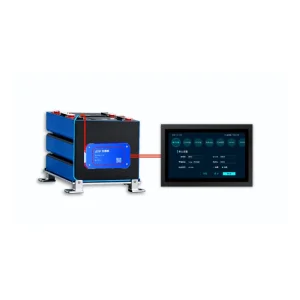
We deploy multi-bus configurations utilizing CAN2.0B, RS485, and UART interfaces parallel to low-energy Bluetooth (BLE) and Wi-Fi chipsets. Users can seamlessly cross-examine cell metrics on local displays and remote telemetry platforms.
Established in 2005, Shenzhen Litongwei Electronic Technology Co., Ltd. is a recognized national high-tech enterprise dedicated to the research, development, and advanced manufacturing of lithium-ion safety control systems. Over two decades, we have scaled our solutions to serve diversified verticals including 3C digital devices, electric scooters, electric bicycles, motorcycles, tricycles, golf carts, Autonomous Guided Vehicles (AGVs), agricultural drones, and high-drain power tools.
Our facilities span across a 13,000-square-meter campus in Shenzhen and a massive 27,000-square-meter specialized assembly facility in Dongguan Huangjiang. Outfitted with 24 high-speed pick-and-place SMT machines and 12 dedicated PCBA production lines, we guarantee consistent output and rapid turnaround times.
Litongwei prioritizes patent collaboration. We design and manufacture proprietary BMS designs that safeguard our customers from third-party IP infringements. By providing tailored hardware topologies and dedicated testing configurations, we secure our clients' unique market positioning.
We deploy an enterprise Manufacturing Execution System (MES) to monitor every phase of our manufacturing lifecycle. From incoming component inspection to final AOI testing and automated functional testing (FCT), every BMS is registered with a unique trace code, enabling cloud-based quality audits.
For system integrators, heavy industries, and mobility providers, sourcing an OEM Battery Monitoring System involves evaluating key parameters that directly influence financial viability, risk reduction, and hardware integration.
By engineering highly standardized base platforms (Shared Boards) that support customizable firmware parameters, Litongwei minimizes tooling fees, component variants, and NRE expenses, accelerating time-to-market.
Our IoT integration supports remote monitoring and over-the-air (OTA) firmware updates. This drastically reduces field service costs, allowing fleet managers to inspect cell voltages, balance statuses, and histories without physical interventions.
Global trade mandates stringent regulatory clearances. Litongwei's manufacturing systems operate under ISO9001, ISO14001, and IATF16949 standards, ensuring every unit complies with CE, FCC, RoHS, and UL safety directives.
Different applications present unique operational environments and battery behaviors. Litongwei designs specialized hardware variants tailored for distinct operational stress profiles:
Optimized for space-constrained battery packs in e-bikes, e-scooters, and motorcycles. Integrates Bluetooth monitoring, dynamic smart heating elements for sub-zero operations, and robust shock/vibration tolerance.
Engineered for golf carts, utility trucks, and Autonomous Guided Vehicles (AGVs). These modules utilize active cell balancing (up to 5A) to sustain multi-shift operations, and support high continuous discharge currents (200A+).
Designed to interface with bidirectional inverters for portable power banks ranging from 500W to 5kW. Features precise state-of-health tracking, integrated display interface controls, and multi-tier short circuit protection.
Ultra-lightweight architectures supporting high-voltage series (12S to 24S) with ultra-high discharge rates. Includes real-time flight control telemetry transmission and diagnostic logging.
Our continuous technological evolution and industrial expansion over the past two decades highlight our commitment to pioneering battery safety.
Commenced intensive R&D on digital Battery Management Systems (BMS) in 2005, expanding rapidly into power battery management system developments by 2006. Secured ISO9001 certification in 2007, followed by ISO14001 certification in 2009.
Secured 8 key utility model and design patents in 2011 while expanding mobile power bank manufacturing. Founded the Litongwei Technology Research Institute in 2012. Earned the Del New Energy Quality Excellence Award in 2014 and became a Gold Partner of Gaogong Lithium Battery in 2015.
Upgraded ISO certifications in 2016 and attained IATF16949 certification in 2018. Integrated automated MES systems for end-to-end warehouse and manufacturing tracking. Recognized as a market leader in two-wheeler protection boards in 2020.
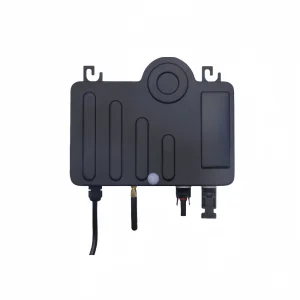
Implemented our Smart Manufacturing+ strategy, integrating IoT and cloud data platforms for online battery health diagnosis. We continue to innovate new industrial micro-inverters and large-scale utility BMS architectures.
Litongwei is honored to maintain long-term, collaborative partnerships with leading global enterprises, technology companies, and battery manufacturers, including: Huawei, Lenovo, Desay, Guoguang, Sunwoda, Eve Energy, Guoxuan High-tech, and other industry brand clients.














As battery chemistries transition toward solid-state and high-silicon anodes, the demands on Battery Monitoring Systems will grow exponentially. Litongwei's research center is currently developing next-generation architectures designed to tackle tomorrow's energy storage challenges:
Integrating neural network accelerators directly onto our BMS microcontrollers. This allows real-time execution of complex electrochemical models, ensuring precise capacity predictions even under extreme dynamic loads and rapid thermal spikes.
Eliminating up to 90% of the internal wire harness from battery packs. Our upcoming wBMS platforms utilize secure, proprietary RF protocols to transmit cell status data from localized module monitors directly to the main pack controller, improving reliability and reducing total pack weight.
Scaling our active balancing topologies to support 400V and 800V architectures. Energy is actively transferred from higher-capacity cells to lower-capacity ones during both charge and discharge cycles, maximizing energy efficiency.
Here are detailed answers to key technical questions from procurement departments, safety engineers, and battery pack designers.
Passive BMS systems dissipate excess energy from higher-voltage cells as heat through bleed resistors during the end of the charge cycle. Active BMS architectures transfer charge dynamically from higher-capacity cells to weaker ones. While passive designs are highly cost-effective and suitable for smaller packs, active balancing is ideal for large capacity battery packs (such as in AGVs and Golf Carts) because it minimizes energy waste and extends overall cycle life.
IATF16949 is the global quality management standard for the automotive industry. For a BMS manufacturer, it certifies that the design, component sourcing, production, and testing processes meet automotive-grade safety, risk mitigation, and stability requirements. Litongwei attained this certification in 2018, ensuring our electronic assemblies meet rigorous long-term reliability standards.
Integrating Bluetooth allows maintenance technicians to connect securely via smartphone applications to check real-time cell parameters, balance status, temperature readings, and history logs. This local wireless access simplifies system testing and troubleshooting, eliminating the need to disassemble waterproof battery enclosures in the field.
Our Shared Boards are designed to allow software customization of overcharge and overdischarge protection thresholds, overcurrent protection limits, temperature protection values, balancing start voltages, and communication protocols (such as CAN, RS485, and UART). This structure provides our clients with custom-tailored functionality while avoiding the high costs and long development timelines of completely custom hardware design.
Every smart BMS platform we design includes multi-tiered safety systems: overvoltage protection (OVP), undervoltage protection (UVP), overcurrent charge/discharge protection (OCP), short circuit protection (SCP), and high/low temperature protection (OTP/UTP). Additionally, our heating-configured models support automated smart heating to protect cells from damage during freezing charging environments.
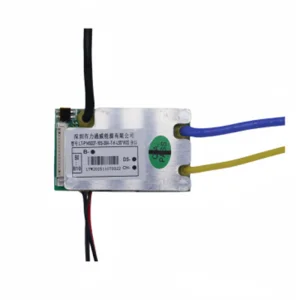
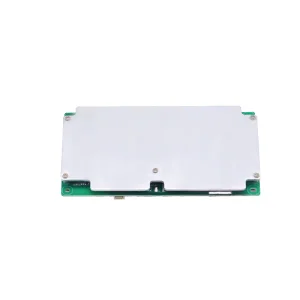
Below is the remainder of our specialized safety control boards and micro-inverter designs, manufactured under strict quality standards.
 Litongwei Electronic