Explore our industrial-grade smart inverters and multi-cell battery management systems built for high-performance safety.
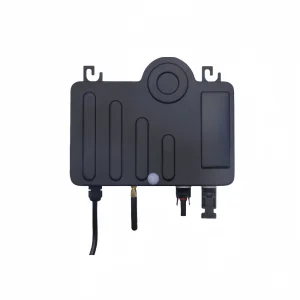
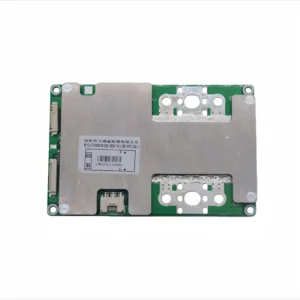
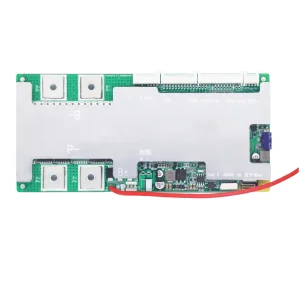

In the rapidly changing landscape of battery technology, the demand for 15S Battery Management Systems (BMS) has surged. Operating at a nominal voltage of 48V (typically using 15 cells of Lithium Iron Phosphate (LiFePO4) in series, or 14S-15S configurations of Nickel Manganese Cobalt (NCM)), this voltage architecture represents the sweet spot for modern light electric vehicles (LEVs), telecommunications backup storage, and heavy-duty industrial machinery.
As a premier OEM BMS 15S manufacturer, Shenzhen Litongwei Electronic Technology Co., Ltd. has stood at the forefront of this industrial shift since 2005. The transition from legacy lead-acid batteries to 48V lithium systems requires highly sophisticated protection topology. A basic hardware-level cut-off is no longer sufficient. Modern industrial infrastructure demands intelligent BMS platforms capable of real-time cell balancing, complex state-of-charge (SoC) estimation, state-of-health (SoH) diagnostics, and integrated communication buses like CAN, RS485, and Bluetooth.
The global movement toward carbon neutrality has accelerated the replacement of internal combustion engines and lead-acid backup systems. A 48V 15S setup delivers optimal efficiency by reducing resistive power losses during high-discharge operations while remaining under the safety-extra-low-voltage (SELV) threshold of 60V DC. This specific design paradigm minimizes safety certification complexities for system designers while ensuring highly reliable, long-lifecycle power distribution.
Modern applications require distinct topologies, customized firmware settings, and communication interfaces.
48V standard backup power utilizes 15S LiFePO4 cells to replace toxic lead-acid blocks, offering a tenfold lifecycle increase, higher power density, and remote cloud monitoring capabilities for telecom operators.
Automated Guided Vehicles (AGVs) operating in logistics terminals require fast charging, high transient currents, and high-frequency communication protocols with the machine's central control unit via CANopen.
Electric delivery bikes, cargo trikes, and smart scooters benefit from 15S systems because they provide stable torque, reliable high-discharge protection under variable thermal conditions, and Bluetooth-enabled APP diagnostics.
Leveraging massive production footprints and sustained R&D investments to drive lithium management safety.
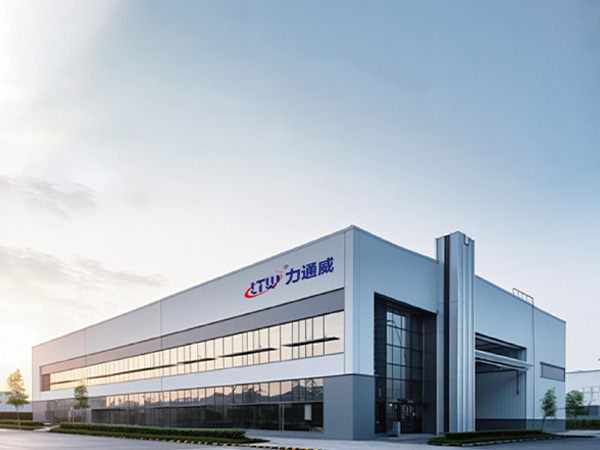
Shenzhen Litongwei Electronic Technology Co., Ltd. was established in 2005. As a state-level High-Tech Enterprise, our core mission is protecting the integrity of lithium battery configurations. Our Dongguan Huangjiang factory features 27,000 square meters of precision manufacturing, complemented by a 13,000 square meter facility in Shenzhen.
Through our robust ERP, WMS, and MES (Manufacturing Execution System) tracking networks, we deliver full-process quality control. Every single 15S BMS board is completely traceable, from the raw component pick-and-place stages to final automatic circuit board inspection (AOI) and operational burn-in tests.
Furthermore, our cooperative patent development programs enable international OEMs to safely design, scale, and sell custom lithium battery packs worldwide, effectively eliminating the risk of intellectual property infringement in highly competitive markets.
A proven timeline of technical excellence, structural growth, and strict quality certification standards.
Commenced advanced research, development, and manufacturing of digital Battery Management Systems (BMS). By 2006, operations expanded to power battery pack management systems. Successfully attained ISO9001 certification in 2007, and ISO14001 certification in 2009.
Secured 8 core utility model and design patents in 2011, establishing our competitive moat. The Litongwei Technology Research Institute was founded in 2012 to research advanced active cell balancing. Earned the prestigious Del New Energy Quality Excellence Award in 2014, and named Gold Partner of Gaogong Lithium Battery in 2015.
Upgraded our ISO 9001 and ISO 14001 frameworks in 2016. Attained the automotive-grade IATF16949 certification in 2018, launching an advanced MES system for warehouse automation. Honored with the Guangdong Battery Industry Association Innovation Award in 2019, and recognized as a leading brand in lithium battery protection board technology for two-wheeled vehicles in 2020.
Pioneering smart lithium solutions through cloud telemetry, IoT-based remote maintenance, and deep implementation of Industry 4.0 automation architectures across our primary Dongguan and Shenzhen production facilities.
Design engineers working with 48V battery systems often face challenges related to cell balancing, transient thermal loads, and communication system noise. Standard lithium protection boards can suffer from premature capacity degradation due to minor variations in cell internal resistance. In a 15S system, if one cell drops out of balance, the entire pack capacity is limited to that single weak cell.
Litongwei's custom 15S BMS platform addresses cell degradation with active and high-efficiency passive cell-balancing topologies. By integrating high-precision microcontrollers, our BMS registers voltage discrepancies down to ±5mV. Active balancing relocates energy from high-voltage cells to low-voltage cells, rather than wasting energy as heat. This design reduces thermal stress within the pack enclosure, which is a major factor in premature degradation.
Temperature is the primary driver of lithium thermal runaway. Litongwei's 15S BMS configurations feature multiple NTC thermistor channels to monitor critical locations, including the cell core, charge/discharge MOSFETs, and ambient air inside the casing. If local temperatures rise above safe limits, the BMS communicates with the host system or engages integrated heating elements. This process helps ensure safe operation in sub-zero or high-temperature environments.
Modern industrial applications require direct integration with external controllers. Our smart 15S BMS products feature isolated CANbus and RS485 interfaces, protecting internal electronics from high-voltage spikes on the vehicle's electrical system. System operators can monitor live parameters (such as individual cell voltages, current, temperature, and battery cycles) via custom Android/iOS applications or cloud dashboards.
Litongwei collaborates with industry leaders to design, verify, and scale high-reliability lithium systems.
Expert answers to common engineering, supply chain, and certification questions.
The choice depends on the specific battery chemistry used. For Lithium Iron Phosphate (LiFePO4) chemistry, a 15S configuration provides a nominal voltage of 48.0V (using 3.2V per cell), while a 16S configuration yields 51.2V. 15S configurations are often preferred in systems that require strict compatibility with existing 48V lead-acid charging equipment, as the maximum charging voltage aligns closely with legacy telecom standards.
We collaborate with clients through formal joint development agreements, patent sharing, and non-disclosure contracts. By protecting customized hardware schematics and proprietary firmware code, we ensure our clients can deploy their battery systems globally without risking infringement of third-party IP.
IATF16949 is a rigorous global quality standard for the automotive industry. It requires strict process controls, automated SMT inspection, and failure mode effects analysis (FMEA). For industrial clients purchasing our 15S BMS, this standard translates to lower field failure rates, high component traceability, and reliable operation under harsh conditions.
Yes, our engineering team offers customization options for communication protocols. We support standard interfaces, including CANbus (such as CANopen and J1939), RS485 (Modbus RTU), UART, and Bluetooth BLE. This versatility allows easy integration with different motor controllers, industrial PCs, or solar inverters.
For smart battery systems, our BMS modules can connect to our cloud platform via cellular or local IoT gateways. This link allows operators to monitor real-time battery diagnostics, track charge cycles, predict cell failures, and update BMS firmware over-the-air (OTA). This capability helps reduce on-site maintenance costs and extends the operating life of remote equipment.
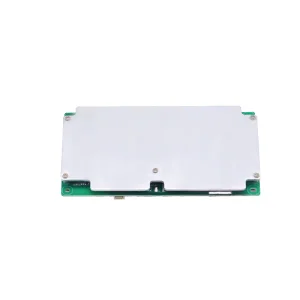
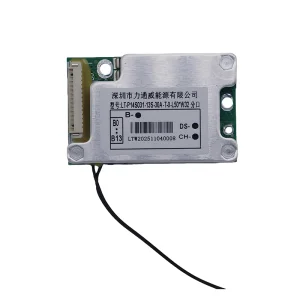
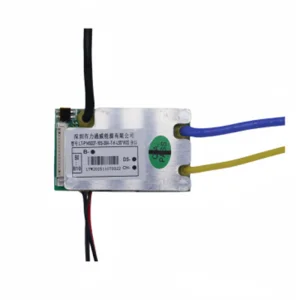
Explore our advanced multi-channel protection configurations, built for high current tolerance and thermal stability.
 Litongwei Electronic