Explore our state-of-the-art power protection boards and green energy hardware engineered by Litongwei.
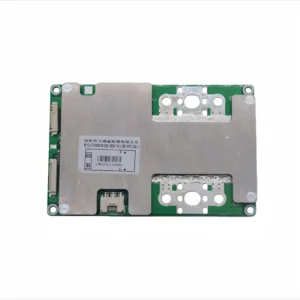

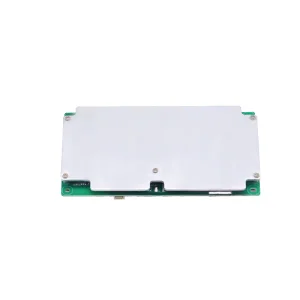
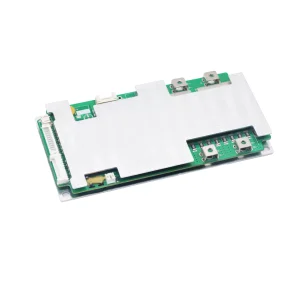
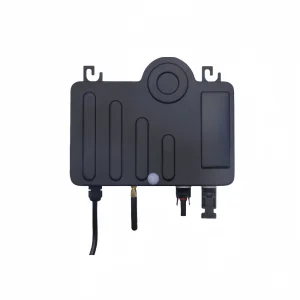
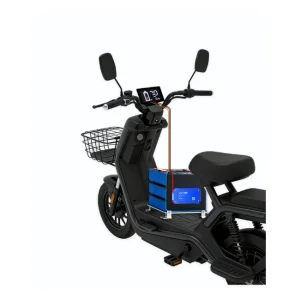
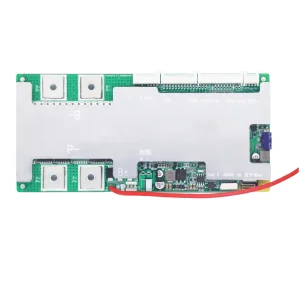
The global transition toward decentralized power systems, electric mobility, and smart grid infrastructures has elevated the status of the Battery Management System (BMS) from a simple protection board to the neural core of the battery pack. Among the various voltage configurations, the 24V BMS occupies a critical segment. Operating typically on 7S or 8S architectures for Lithium-ion (Li-ion) and Lithium Iron Phosphate (LiFePO4) chemistries, 24V systems offer the optimal compromise between safety, payload efficiency, and thermal management.
For original equipment manufacturers (OEMs) and developers, sourcing from an experienced OEM BMS 24V Supplier ensures that battery packs are equipped with dynamic protection topologies. A high-performance 24V BMS protects sensitive cells from over-charge, over-discharge, over-current, and thermal runaway. More importantly, it features intelligent communication interfaces (such as CAN, UART, and RS485) that feed real-time telemetry back to central controller units, enabling the high-precision calculations of State of Charge (SoC) and State of Health (SoH) that modern smart applications demand.
In complex electronics operations, a BMS must execute real-time calculations within microseconds. Under the engineering standards at Shenzhen Litongwei Electronic Technology Co., Ltd., our 24V BMS architectures incorporate several safety layers designed to optimize performance and battery lifespan:
Integrated Negative Temperature Coefficient (NTC) thermistors monitor localized heat gradients inside the pack. If temperatures exceed predefined parameters, the BMS triggers an alert or breaks the circuit, avoiding thermal runaway.
Ensuring each cell maintains voltage equilibrium during charge and discharge cycles is crucial. Our advanced balancing algorithms maximize the usable capacity of the battery pack, extending overall lifecycle duration by up to 30%.
Featuring support for CANbus, SMBus, and Bluetooth interfaces, Litongwei BMS systems allow users and host controllers to track system performance, pull real-time cycle data, and troubleshoot issues remotely via customized app interfaces.
Partnering with a leading China-based BMS manufacturer like Litongwei gives global buyers a competitive edge in cost, capacity, and customization. Established in 2005, Shenzhen Litongwei Electronic Technology Co., Ltd. operates a highly automated production ecosystem spanning two strategic hubs:
With over 13,000 square meters of independent manufacturing space in Shenzhen and an additional 27,000 square meters in Dongguan Huangjiang, we are equipped to support both high-mix low-volume prototyping and massive commercial rollouts.
Our facilities are equipped with 24 high-speed pick-and-place SMT assembly machines and 12 state-of-the-art PCBA production lines, driving our monthly output to more than 15 million high-reliability BMS units.
For five consecutive years, Litongwei has reinvested over 10% of its annual sales revenue into R&D. This sustained commitment has produced over 100 patents in circuit topologies, automation firmware, and testing algorithms, protecting clients from patent infringement risks.
As the demand for lithium battery protection systems evolves, several technological trends are reshaping the engineering landscape of 24V BMS architectures:
1. Artificial Intelligence and Cloud Telemetry: Modern battery packs increasingly rely on AI-driven SoC algorithms. By utilizing edge-computing chips in the BMS and pairing them with cloud databases, operators can predict battery health trends, forecast maintenance windows, and prevent issues before they occur.
2. Integration of Secondary Protections: Hardware redundantly backed by software is becoming the standard. A modern 24V system features dual-protection loops to ensure safety even if a primary control MOSFET fails under voltage stress.
3. Smart Heating Systems: For systems operating in sub-zero environments, integrated heating elements managed directly by the BMS preheat cells during charging, protecting them from internal damage caused by lithium plating.
The 24V BMS is utilized across a wide variety of industrial and commercial platforms, serving as a reliable foundation for robust energy management:
In warehousing and logistics hubs, AGVs operate continuously under demanding cycles. A heavy-duty 24V BMS with CANbus interface allows central warehouse management systems to track battery levels in real-time, coordinating automated charging without disrupting operations.
Electric golf carts, utility vehicles, and electric two- or three-wheelers rely on stable 24V battery packs. Built-in bluetooth connectivity allows operators and technicians to read state-of-health data directly on mobile phones or dashboard interfaces.
Smaller residential energy storage installations and micro-inverter applications utilize 24V setups for backup power. The BMS balances cell configurations over thousands of cycles, preserving battery longevity and ensuring reliable power output.
International enterprise buyers require rigorous testing, complete manufacturing traceability, and certified quality management. Litongwei addresses these requirements with comprehensive operational control systems:
To maintain product reliability across millions of units, we implement an advanced MES (Manufacturing Execution System) for warehouse automation and process tracking. Every component, from a single resistor to the main processor, is tracked through its serial code. If a field issue occurs, our database can trace it back to the exact manufacturing lot, time, and test parameters.
Furthermore, our production lines are certified under the automotive quality standard IATF 16949, as well as ISO 9001 and ISO 14001. This ensures that every BMS supplied to our global partners—which include leading brands like Lenovo, Huawei, Eve Energy, and Desay—is manufactured to the highest standards.
Continuous Innovation and Dedication to Battery Safety since 2005
Commenced R&D and manufacturing of digital BMS. Expanded into power battery management system development in 2006. Obtained ISO 9001 in 2007 and ISO 14001 in 2009.
Secured 8 utility model and design patents by 2011. Established the Litongwei Technology Research Institute in 2012. Recognized with the Quality Excellence Award in 2014.
Upgraded certifications, achieved IATF 16949 in 2018, and deployed automated MES tracking. Named a leading brand in two-wheeler lithium protection board tech in 2020.
Deepening technology integration with IoT and Industry 4.0. Our Smart Manufacturing+ strategy drives digital transformation across our global operations.
Clear, technical answers to common queries on 24V BMS engineering, procurement, and integration.
Discover more protection hardware, portable power banks, and micro-inverter technologies from our factory.
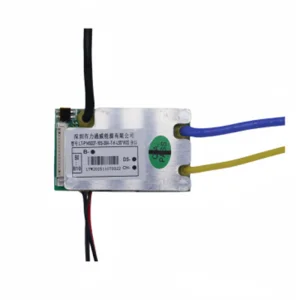
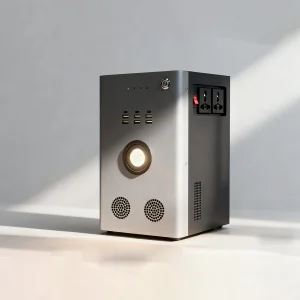
 Litongwei Electronic