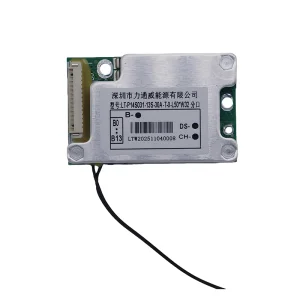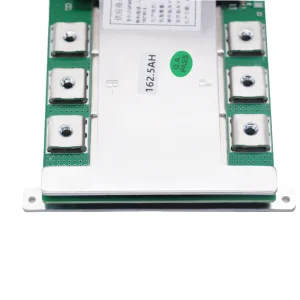
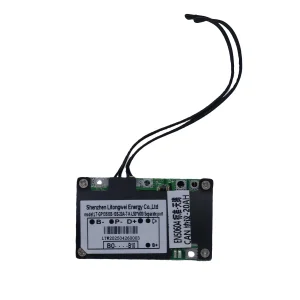
In the rapidly evolving global technological landscape, the demand for highly reliable, scalable, and intelligent hardware solutions has reached unprecedented levels. Modern commercial and industrial systems require custom configurations that address critical performance bottlenecks while offering solid structural safety, low power consumption, and compliance with strict regulatory standards. Shenzhen Litongwei Electronic Technology Co., Ltd., established in 2005, stands at the vanguard of this engineering shift. As a national high-tech enterprise specializing in the research, development, and advanced manufacturing of lithium-ion safety control systems, we supply critical components that power everything from light electric vehicles (LEVs) to renewable energy networks and intelligent IoT systems.
By leveraging over a decade and a half of engineering design, we deliver solutions targeting the exact performance metrics required by hardware purchasers. Through a vertical business model covering design, PCB assembly, firmware integration, and multi-stage testing, we help international companies navigate structural, financial, and operational challenges. Our solutions encompass premium intellectual property protection, standard shared boards that reduce upfront non-recurring engineering (NRE) costs, automated trace-management processes, and active telemetry integration to future-proof hardware assets.
Enterprise procurement professionals in sectors such as micro-mobility, renewable energy, and industrial robotics face a complex environment defined by safety regulations, volatile component pricing, and rapid design iteration. When securing suppliers for critical hardware assemblies, key indicators dictate long-term project success:
These priorities define how Litongwei approaches manufacturing partnerships. Rather than operating as a transactional assembly plant, we act as a joint-engineering partner. This setup allows procurement officers to reduce supply chain risk while delivering products that meet regional safety and electrical standards.
Our solutions target diverse sectors, providing optimized safety control mechanisms and system integration. Below are the key applications where Litongwei technology is deployed:
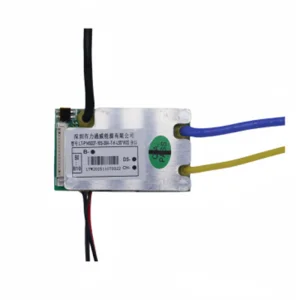
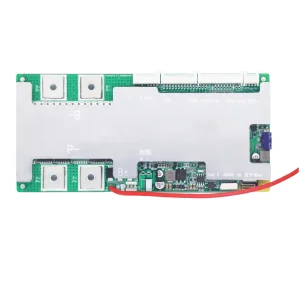
Designed for electric scooters, e-bikes, motorcycles, golf carts, and automated guided vehicles (AGVs). Our smart BMS platforms ensure stable discharge curves, thermal monitoring, and CAN-bus/RS485 communications for multi-cell pack configurations.
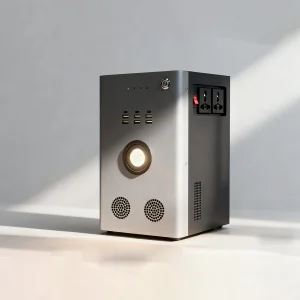
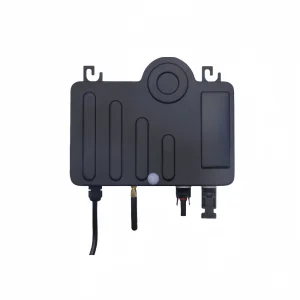
Powering portable backup generators, bidirectional PV microinverters, and off-grid home energy systems. Engineered for high conversion efficiency, thermal dissipation, and long-term durability in outdoor installations.
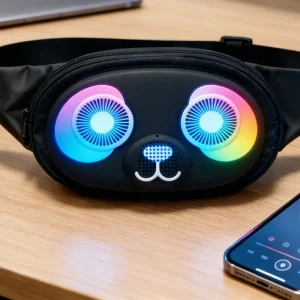
From 3C digital gadgets to specialized consumer accessories like LED Bluetooth-enabled sports bags. We integrate processing, wireless control, and battery charging circuits into small-form-factor assemblies.
Each application is supported by dedicated test suites, ensuring components survive physical shock, electrostatic discharge, temperature shifts, and prolonged mechanical wear.
Over the past two decades, Litongwei has evolved from a local assembly facility into a multi-site high-tech enterprise. Our developmental journey highlights our long-term focus on quality engineering:
Commenced dedicated R&D and manufacturing of digital Battery Management Systems (BMS). Upgraded power battery system safety controls and secured ISO9001 and ISO14001 certifications in 2007 and 2009.
Secured eight utility model and design patents. Established the Litongwei Technology Research Institute in 2012 to develop smart control circuits, winning key industry awards for quality excellence.
Earned IATF16949 automotive-grade quality certification. Implemented automated MES execution software for warehouse management and received leading industry innovation awards.
Deepening IoT integration with active BMS monitoring, cloud diagnostics, and micro-grid systems. Expanding automated SMT capabilities to support high-volume global client needs.
Manufacturing reliability depends on scale and precision. Litongwei operates two manufacturing bases to meet high-volume global demands. Our Shenzhen facility covers 13,000 square meters of high-density assembly space, while our Dongguan Huangjiang campus provides 27,000 square meters of specialized production area. The facilities feature 24 automated high-speed SMT pick-and-place lines and 12 PCBA production lines, allowing a total capacity exceeding 15 million units per month.
Our commitment to R&D is reflected in our budget allocations: we invest over 10% of total sales revenue back into our research laboratories annually. This sustained funding has generated over 100 patents in circuit layouts, test programs, and functional housing models. These technological capabilities have made us a trusted partner for leading global enterprises, including Huawei, Lenovo, Desay, Guoguang, Sunwoda, Eve Energy, and Guoxuan High-tech.












The safety control and micro-grid inverter landscapes are shifting toward high integration, smart communications, and cloud diagnostics. The future roadmap of Litongwei's hardware solutions addresses these long-term trends:
Traditional voltage-based monitoring shows performance deviations over time. Litongwei's next-generation BMS platforms utilize coulomb-counting coupled with dynamic impedance tracking to estimate battery capacity within 1.5% margin. This level of precision prevents sudden loss of power in industrial robots and light electric vehicles.
As micro-grids and commercial energy systems scale to higher voltages, we are developing modular BMS boards capable of handling up to 1000V in daisy-chain configurations. This design uses isolated communications to protect low-voltage microcontrollers from transient voltage spikes.
Our micro-inverter roadmap prioritizes Gallium Nitride (GaN) and Silicon Carbide (SiC) switches. These materials support faster switching frequencies, reducing the footprint of magnetic components and boosting conversion efficiency to 98% while improving thermal performance in harsh conditions.
By integrating low-energy Bluetooth, CAN, and NB-IoT modems, our hardware connects directly to fleet management systems. Operators can track individual cell status, update safety profiles via OTA firmware, and receive automated warnings before component wear causes issues.
In high-power electronics, manufacturing quality determines overall product safety. Our production sites follow strict automotive-grade management guidelines. Through regular audits under ISO9001 and ISO14001, we maintain control over trace chemical use, component sourcing, and waste treatment.
Every PCBA we manufacture undergoes a multi-stage testing process. Solder paste application is checked with 3D Solder Paste Inspection (SPI), and components are verified using Automated Optical Inspection (AOI) after reflow. High-current circuits are subjected to in-circuit testing (ICT) and functional testing under thermal load before packaging, ensuring every board meets our safety standards. This systematic approach allows us to deliver reliable products to global markets, protecting our partners' brand equity.
Review key technical considerations regarding our manufacturing capabilities and design parameters:
 Litongwei Electronic