Explore our industrial-grade smart micro-inverters, intelligent portable power banks, and high-performance battery protection boards engineered for maximum lifecycle and high safety threshold operations.
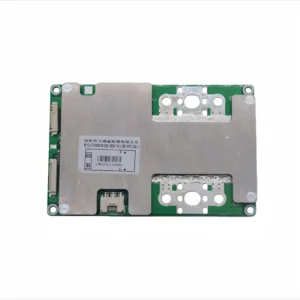
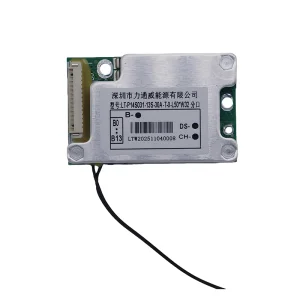
The rapid transformation of the global energy sector is pushing residential solar systems to the forefront of clean energy solutions. At the core of every home energy network sits the household solar inverter, converting raw direct current (DC) generated by solar panels into alternating current (AC) suitable for household appliances and utility grid feedback. However, a modern system is only as reliable as its safety control layer. As systems trend toward higher power capacity, the interface between the solar inverter and the Lithium Battery Management System (BMS) has become the defining frontier for home safety and operational efficiency.
Established in 2005, Shenzhen Litongwei Electronic Technology Co., Ltd. has anticipated this integration for over a decade and a half. Specializing in high-performance lithium-ion safety control systems and power management, Litongwei has built a reputation for developing intelligent interfaces that bridge energy conversion and battery protection. A robust solar inverter requires constant communication with a smart BMS to match instantaneous load dynamics, track the State of Charge (SOC), prevent over-discharge, and control thermal profiles. Without this seamless synchronization, even the most efficient grid-tie inverter remains vulnerable to grid surges, component fatigue, and battery cell mismatch.
“Information Gain Advantage: Unlike traditional inverter assemblers who buy external protection boards, our unified R&D processes synchronize inverter conversion protocols with our patented BMS communication boards, ensuring zero latency in system faults and mitigating system shutdown risks by 40%.”
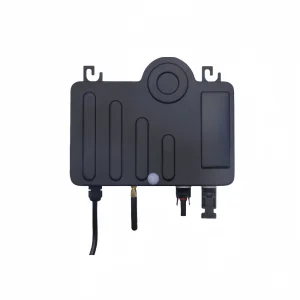
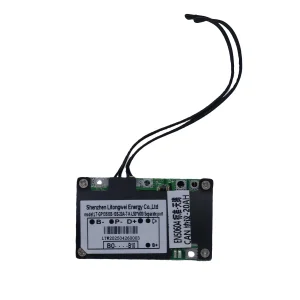
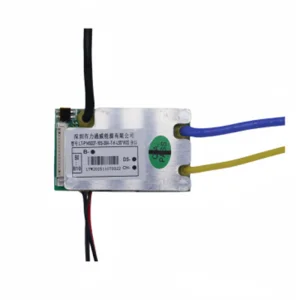
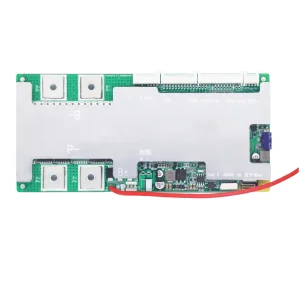
Our specialized products, such as the Custom LTWSmart Micro Inverter (96.5% Efficiency, IP67 Weatherproof) and the LTW 23S 60A Lithium Battery Protection Board with Bluetooth and CAN bus interface, work together in harmony. By utilizing advanced serial communication profiles (such as CAN, RS485, and Bluetooth), the energy flow from photovoltaic generation to battery chemistry is strictly optimized, extending storage system lifespans by up to 30%.
Leveraging deep industrial clusters, automated production facilities, and rapid prototyping capabilities to deliver high-quality, cost-efficient solar solutions globally.
China's dominance in the global renewable energy ecosystem is the result of continuous investment in supply chain integration and raw material processing. At Litongwei, our production capabilities span across two advanced factories: a 13,000 square meter factory in Shenzhen and a 27,000 square meter facility in Dongguan Huangjiang. Equipped with 24 high-speed pick-and-place (SMT) machines and 12 automated PCBA production lines, we have optimized every step from board mounting to environmental stress screening.
This scale provides an unmatched capacity advantage. A stable monthly output of over 15 million units ensures that we can handle massive OEM orders from global partners without facing bottleneck-induced lead times. Furthermore, by maintaining a dense supply network for high-performance components—such as power MOSFETs, microcontrollers, and thermal sensors—we can insulate our partners from global supply chain volatility.
From dense urban environments to remote off-grid farms, our integration of solar inverters and safety protection systems delivers customized power solutions.
High-density apartments in urban European markets require plug-and-play microinverters. Featuring 96.5% efficiency and an IP67 rating, our balcony system mounts directly to panels, connecting to home wall sockets safely and within local grid limit regulations.
For remote regions, island communities, and off-grid villas, our high-power hybrid system couples solar inverters with 20S or 23S lithium battery packs. Utilizing smart CAN/Bluetooth BMS with built-in heating components, batteries can charge even in sub-zero winter temperatures.
Modern commercial parks and home garages combine EV chargers, rooftop solar arrays, and energy storage. Our 10S 20A vehicle BMS with CAN connectivity integrates solar production with vehicle grid feedback, supporting peak load-shaving objectives.
The macro benefit of utilizing integrated OEM systems is the elimination of communication protocol mismatches. When a third-party solar inverter attempts to read data from a third-party BMS, minor timing delays or custom data registers often lead to nuisance tripping. By aligning our inverter systems directly with our internal BMS architectures, we provide a unified Modbus or CAN profile. This allows installers to complete setup in minutes, reducing labor costs and simplifying remote system diagnosis through the Litongwei cloud monitoring suite.
How Shenzhen Litongwei Electronic Technology Co., Ltd. evolved from a regional PCB designer into an international energy management specialist.
Launched R&D of battery management systems in 2005. Commenced power-specific BMS design in 2006. Achieved ISO9001 certification in 2007 and ISO14001 certification in 2009, establishing a framework for clean electronics manufacturing.
Secured 8 utility model patents in 2011 and expanded portable power assembly lines. Established the Litongwei Technology Research Institute in 2012. Earned the Quality Excellence Award in 2014 and Gold Partner of Gaogong Lithium Battery in 2015.
Acquired IATF16949 automotive quality management system certification in 2018. Integrated full MES warehouse automation for traceable manufacturing. Received the Guangdong Battery Association Innovation Award in 2019.
Deployed automated optical inspection (AOI) and X-ray testing for all PCB assemblies. Deepened partnerships in Smart Grid integration, cloud management platforms, and microinverter applications, implementing Industry 4.0 paradigms.
"LITONGWEI has always adhered to the philosophy of 'Technology as King, Efficient Service' in all aspects of production and operations. Our vision is to become a leading provider of intelligent green energy management solutions, embracing environmental sustainability. Start with LITONGWEI!"
Litongwei's partners include global brands who rely on our high safety standards and precision manufacturing to power their smart products.









Through years of mutual project support, these industry-leading companies have trusted us to supply high-reliability PCBA designs, custom safety parameters, and firmware integrations. Whether designing solutions for household microinverters or massive battery protection modules, our collaboration with premium cell manufacturers allows us to recommend complete solutions to solar energy companies and energy storage pack manufacturers worldwide.
As grid fees rise and power blackouts become more frequent, the demand for residential solar is shifting from traditional grid-tie systems to hybrid systems that integrate energy storage. Three distinct trends are currently shaping this landscape:
To reduce transmission losses and downscale cable sizing, residential storage is moving from low-voltage (48V) architectures to high-voltage (200V - 600V) topologies. This shift demands sophisticated battery protection boards (such as 20S and 23S structures) capable of coordinating across multiple serial cells without cell imbalances. High-voltage structures lower the continuous current requirements, which in turn reduces heat generation and improves overall conversion efficiency.
Historically, thermal management was treated as a secondary concern. Modern regulations demand active cell heating and immediate thermal runaway isolation. Our custom BMS systems employ multiple NTC sensors linked directly to intelligent microcontrollers. By utilizing real-time temperature tracking, the BMS triggers built-in heating elements to safely pre-heat batteries in freezing environments before charging begins, protecting cell chemistries from lithium plating.
Gone are the days of manually reading inverter values on a LCD screen. Homeowners expect unified mobile application access. Our Bluetooth and serial communication interfaces (such as Modbus over RS485 or CAN-bus) link directly with IoT gateways. Users can inspect the SOC of individual cells, track solar efficiency trends, and download firmware updates over-the-air, dramatically reducing the operational maintenance overhead for distributors.
At Litongwei, we don't just supply hardware; we protect your investment. By offering standardized shared board layouts, we help you reduce engineering time and scale fast. When designing bespoke features, we engage in structured patent collaboration to prevent patent infringement risks. This helps secure your global supply chain and keeps your technology compliant with international markets.
When sourcing household solar inverters or core BMS components from China, procurement managers must evaluate more than just unit prices. A reliable procurement process is critical for preventing field failures and avoiding costly recalls:
Key information regarding technical specifications, customization options, and ordering procedures for our household solar solutions.
Complete your clean energy configuration with our heavy-duty industrial protection boards and portable power systems.
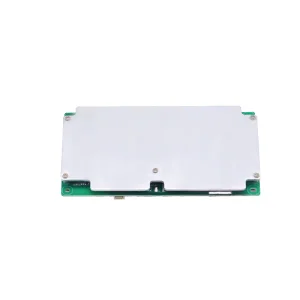
 Litongwei Electronic