Explore our state-of-the-art intelligent BMS modules and micro inverters designed to orchestrate peak efficiency in solar harvesting and portable power storage devices.

Whitepaper Analysis on Market Drivers, Technology Barriers, and OEM Dynamics.
In the era of decentralized power generation and mobility-driven workflows, the demand for solar charging portable chargers has evolved from a consumer leisure accessory into a critical infrastructure category. Multinational corporations, industrial operations, defense personnel, and emergency relief organizations require reliable, off-grid power solutions capable of operating in extreme conditions. The integration of high-conversion solar panels directly into heavy-duty lithium storage systems has transformed how energy is managed in the field.
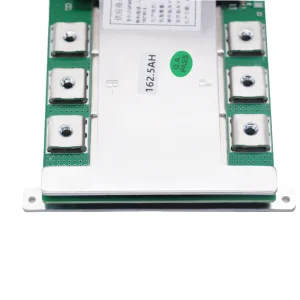
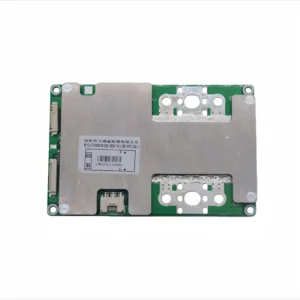
Modern commercial environments require portable chargers that offer far more than simple USB power delivery. Today’s industrial solar chargers incorporate integrated MPPT (Maximum Power Point Tracking) controller chips, high-performance battery packs managed by complex Battery Management Systems (BMS), and smart telemetry frameworks. These integrated components allow operators to monitor State of Charge (SoC), State of Health (SoH), and discharge cycles in real time via Bluetooth or serial communication protocols. Underpinning this market growth is the massive expansion of outdoor recreation, emergency disaster preparedness, and construction fields where grid access is nonexistent.
Our OEM solar charging platforms offer built-in Bluetooth communication protocols and dedicated apps to track charge performance under variable sunlight conditions, monitoring cell health parameters dynamically.
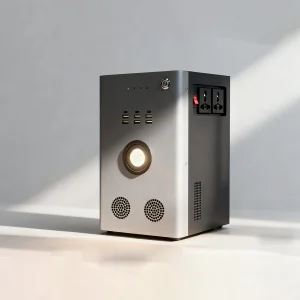
Integrating MPPT smart algorithms with weatherproof micro-inverters enables pure sine wave AC output alongside high-density multi-cell DC power storage, allowing off-grid operators to support delicate electronic diagnostics tools safely.
Built with heavy-duty IP67 weatherproof shells, fire-retardant structural polymers, and shock-absorbent mounting systems designed to endure drops, salt spray, and extreme dust conditions globally.
Inside the production ecosystem of Litongwei Electronics: Shenzhen & Dongguan manufacturing powerhouses.
The manufacturing complexity of portable solar charging stations involves combining silicon photovoltaic encapsulation, high-capacity lithium cell assembly, and precision electronic printed circuit board assembly (PCBA). Chinese electronic clusters, specifically located in Shenzhen and Dongguan, provide unparalleled supply chain efficiency, enabling high-performance manufacturing processes at scale.
Shenzhen Litongwei Electronic Technology Co., Ltd., established in 2005, sits at the heart of this technology cluster. As a recognized national high-tech enterprise, we specialize in the custom engineering and volume production of safety control systems for lithium-ion battery configurations. Our manufacturing framework operates out of two primary locations: a 13,000 square meter dedicated facility in Shenzhen, and a massive 27,000 square meter manufacturing plant in Huangjiang, Dongguan. This dual-facility infrastructure ensures business continuity and scale capability for global OEM distributors.
Our infrastructure is backed by continuous capital investment: over the past five consecutive years, we have funneled more than 10% of our gross sales revenue back into our dedicated R&D division. This sustained investment has generated more than 100 patents in the battery protection and solar charging sector, focusing on intelligent circuit design, automated testing methodologies, and intellectual property protection. When sourcing from us, international partners receive robust protection against IP infringement disputes, backed by our comprehensive MES (Manufacturing Execution System) tracking, which offers full-process traceability from raw silicon wafer to the final packaged solar power unit.
How enterprise organizations rely on solar charging technology for off-grid operations.
Scientific teams surveying remote geolocations rely on solar charging boards with high IP67 ingress protection. These chargers harness solar energy in high-salinity and extreme weather environments to keep telemetry transponders active.
During natural catastrophes when public utilities collapse, emergency hospitals deploy portable solar charging packs with micro-inverters. They provide clean AC power to keep patient monitoring equipment running using local sunlight.
Global supply chain systems integrate solar battery panels directly on cargo container roofs. The systems feed backup power into Bluetooth/GPS tracking devices, maintaining visibility without manual battery swaps.
Over two decades of structural growth, engineering validation, and technological transformation.
Commenced R&D and precision manufacturing of digital Battery Management Systems (BMS) in Shenzhen, laying down the structural foundation for specialized power cell protection.
Expanded operations into power battery management system development. The company secured ISO9001 certification in 2007, followed by ISO14001 certification in 2009 to standardize internal environmental and quality management workflows.
Secured 8 utility model and design patents while expanding operations into mobile power bank manufacturing. The Litongwei Technology Research Institute was founded in 2012. Litongwei won the Del New Energy Quality Excellence Award (2014) and was named Gold Partner by Gaogong Lithium Battery (2015).
Upgraded to modern ISO 9001/ISO14001 standards, earned the IATF16949 automotive quality management system certification, and deployed an integrated MES system for warehouse automation. Litongwei received the Guangdong Battery Industry Association Innovation Award (2019) and was named the leading brand in battery protection for two-wheeled vehicles (2020).
Implementation of Smart Manufacturing+ strategies, deeply integrating IoT, cloud data monitoring, and Industry 4.0 paradigms across all lithium protection board and green energy converter lines.
Understanding cell chemistry, structural design, and technical integration benchmarks.
When procurement officers, supply chain managers, and distributors select an OEM partner for solar charging portable power cells, evaluating specific parameters ensures reliable product performance and avoids common failures. High return rates and field breakdowns often occur due to poor integration between the solar panels, battery management systems, and outer enclosures. Sourcing groups should review several critical performance factors:
Industrial applications increasingly demand LiFePO4 (Lithium Iron Phosphate) or high-density NMC chemistry. LiFePO4 cells are preferred for high thermal stability and lifetimes exceeding 3,000 charge cycles, making them ideal for heavy-duty applications. For lightweight consumer products, NMC chemistry offers high energy density while remaining cost-effective.
Polycrystalline solar panels have lower conversion efficiencies (typically 15-17%). Industrial-grade OEM solar chargers should use high-efficiency SunPower or monocrystalline solar arrays, achieving conversion rates between 22% and 24%. This ensures charging can occur even in weak or indirect sunlight.
Connecting direct current (DC) solar electricity to consumer electronics requires stable voltage regulation. For products featuring AC output, using a pure sine wave inverter is essential. Inverters that output modified sine waves can generate harmonic distortion, which can damage sensitive equipment like medical diagnostic gear or high-end laptops over time.
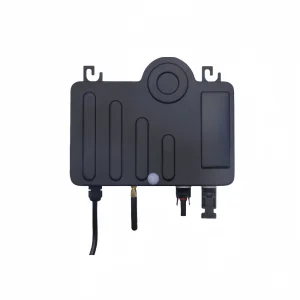
Our micro inverter platforms (such as the LTWSmart MINV500S series) feature IP67 all-weather protection and achieve energy conversion efficiencies up to 96.5%, ensuring stable, safe power delivery in varying environments.
Technical clarifications regarding OEM partnerships, solar charging efficiency, and BMS protection configurations.
Trusted by industry leaders and global brands for long-term strategic collaboration.
Litongwei's partners include Huawei, Lenovo, Desay, Guoguang, Sunwoda, Eve Energy, Guoxuan High-tech, and other leading brands who have collaborated with us for many years.













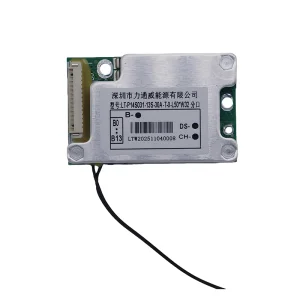
Browse our selection of heavy-duty, smart communication BMS controllers and portable inverter modules.
 Litongwei Electronic