Engineered for telecommunication backups, residential energy storage, electric vehicles, and heavy-duty industrial applications.
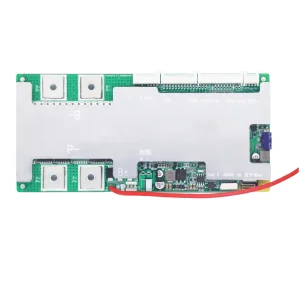
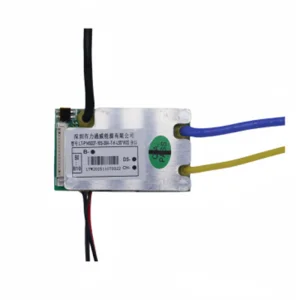
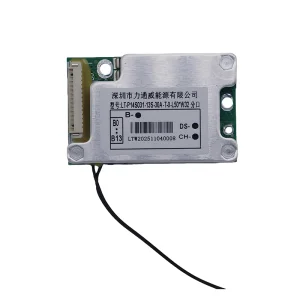
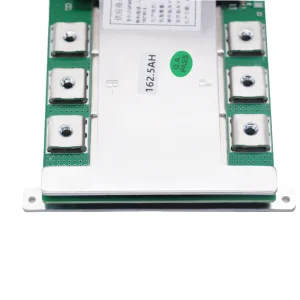
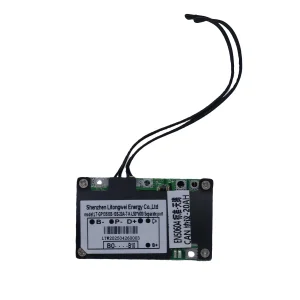
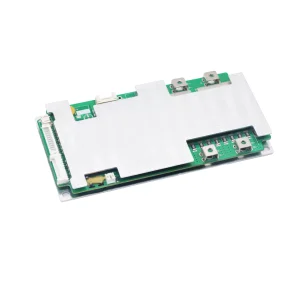
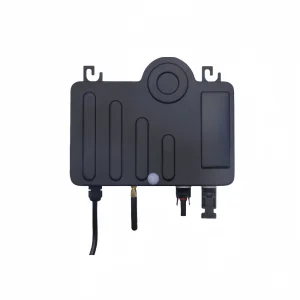
Established in 2005, Shenzhen Litongwei Electronic Technology Co., Ltd. is a national high-tech enterprise specializing in the R&D and manufacturing of lithium-ion safety control systems. Over two decades of technical evolution has positioned us as a top-tier Chinese developer in the global energy storage market.
Our products are widely used in 3C digital devices, electric scooters, bicycles, motorcycles, tricycles, golf carts, AGVs, drones, and heavy duty power tools. We support our global partners through:

A combination of massive capacity, relentless R&D investment, and verified intellectual property.
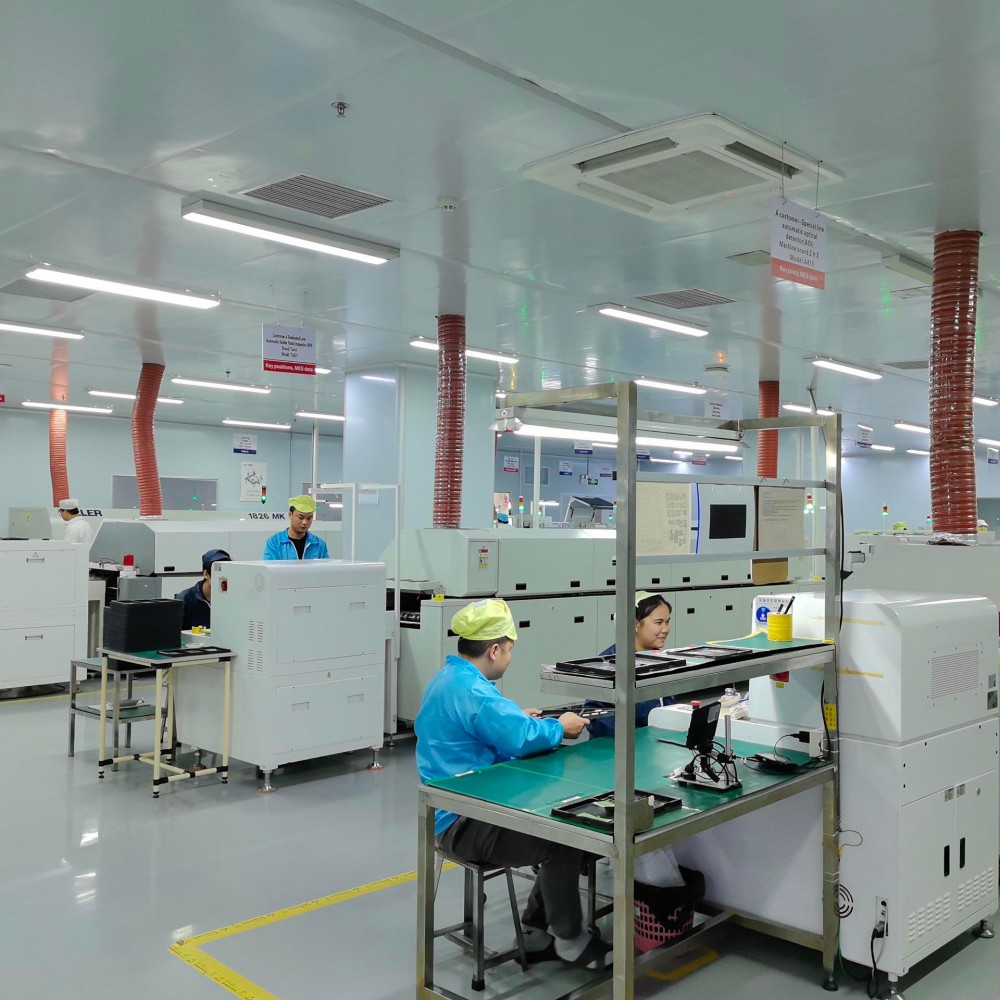
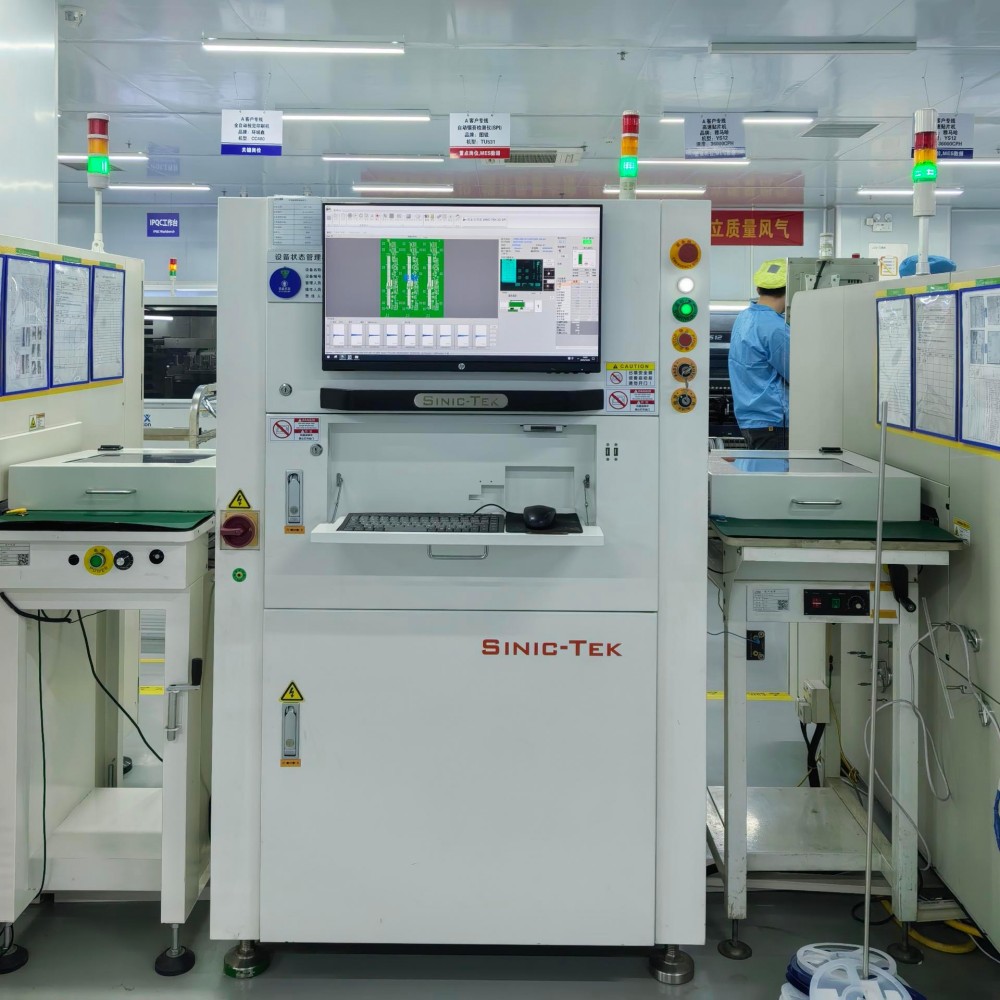
Our manufacturing ecosystem includes over 13,000 square meters of independent factory space in Shenzhen and 27,000 square meters in Dongguan Huangjiang. Outfitted with 24 high-speed pick-and-place placement machines and 12 fully automated PCBA lines, we easily achieve a monthly output exceeding 15 million control boards.
Innovation is the core driver of our success. Litongwei allocates more than 10% of annual sales revenue back into research and development. This sustained dedication ensures that our protection boards feature cutting-edge IC components, highly responsive firmware, and advanced safety protocols.
With more than 100 design and utility patents across the battery protection and management industry, we provide a robust intellectual shield. We work with our strategic customers to co-develop programs that prevent patent infringements, safeguarding their global logistics operations.
Why 16S (51.2V Nominal) configuration demands industrial-grade safety, high precision, and custom system architectures.
A 16S LiFePO4 battery configuration consists of 16 lithium iron phosphate cells in series. The nominal voltage sits at 51.2V (assuming 3.2V per cell), which aligns perfectly with standard 48V telecom rectifiers and energy storage inverters. Operating ranges fluctuate between a low-discharge cutoff of 40V (2.5V/cell) and a maximum charging threshold of 58.4V (3.65V/cell).
Managing this range requires absolute balance. Due to production variations, internal resistance, and operating temperatures, individual cells can drift in voltage over time. Litongwei's 16S BMS employs high-precision Analog Front-Ends (AFE) and powerful 32-bit MCU microprocessors. These components continuously sample the voltage of all 16 cells with a calibration margin of ≤±5mV.
We offer both passive and active balancing mechanisms depending on the target application:
| Parameter Description | Standard Value |
|---|---|
| Cell Over-Charge Protection Threshold | 3.65V ± 0.025V |
| Cell Over-Discharge Protection Threshold | 2.50V ± 0.050V |
| Over-Current Protection (Discharge) | 50A / 100A / 150A / 200A (Customized) |
| NTC Temperature Sensor Channels | 3 - 6 (Cell, ambient, power board) |
| Working Temperature Range | -20°C to +75°C |
| Communication Interface Support | CAN, RS485, RS232, UART, Bluetooth |
| Pre-heating Element Support | Yes (Automated under 0°C charging) |
* Custom parameters can be programmatically adjusted via our diagnostic desktop software or Bluetooth mobile app.
How Litongwei is adapting to the next generation of energy storage control demands.
Traditional State-of-Health (SOH) calculation relies on basic coulomb counting, which drifts over time. Our future roadmap integrates Kalman filtering and neural networks on our microcontrollers, delivering precise SOC/SOH diagnostic telemetry even at deep discharge thresholds.
Leveraging real-time cellular links (4G/5G/NB-IoT), our Cloud-BMS initiative shifts historical data analysis off the local board and onto secure cloud platforms. This helps operators manage localized multi-site battery health, detect premature degradation, and roll out OTA firmware modifications.
As battery chemistry transitions toward semi-solid and solid-state matrices, Litongwei's laboratory teams are testing ultra-high voltage sensing matrices capable of detecting micro-voltage spikes, safeguarding future next-generation clean energy projects.
Integrating Litongwei 16S BMS configurations across critical power infrastructure sectors.
In telecommunication infrastructure, 48V power backup is non-negotiable. Our 16S BMS integrates seamlessly with network base station controllers. Featuring built-in CAN/RS485 connectivity protocols, it transmits voltage, temperature, and alarm logs directly to the command center. Equipped with parallel safety control circuitry, multiple battery packs can be safely linked in parallel without dangerous high-current loops.
Modern homes are turning to solar-coupled storage to build energy independence. Litongwei 16S BMS boards support communication protocols matching the world's leading residential hybrid inverters (including Growatt, Deye, Voltronic, Victron, and more). An integrated heating driver enables low-temperature performance in sub-zero winter temperatures without lithium plating risk.
For medium-sized distribution grids and industrial facilities, a stable 48V modular bank is standard. Our high-current 200A BMS units manage the intense thermal loads associated with sudden demand shifts. Using robust heat-dissipating copper plates and high-grade low-RDS(on) MOSFETs, we deliver exceptional efficiency during sustained charge and discharge cycles.
Automated Guided Vehicles (AGVs), electric utility carts, and golf carts operate under harsh vibrational and shock conditions. Litongwei's reinforced PCBA substrates and secure component anchorage meet tough structural durability guidelines, preventing trace cracks and micro-fissures from shorting active cells.
Under the hood of our highly automated Shenzhen & Dongguan manufacturing divisions.
Producing reliable battery management systems at scale requires world-class automated precision. Our production centers in Shenzhen and Dongguan employ advanced **Industry 4.0** automation networks. Human error is mitigated by utilizing synchronized manufacturing lines and digital control systems.
Every raw component—ranging from individual resistors to advanced microprocessors—is registered into our Manufacturing Execution System (MES) upon entering our facility. During each stage of PCBA fabrication, SMT placement, reflow soldering, and automatic calibration testing, the product barcode is scanned. This logs operator details, machine variables, and material batches to ensure full traceability.
To secure our quality standard, all boards undergo a rigorous verification sequence: Solder Paste Inspection (SPI), Automated Optical Inspection (AOI), X-Ray inspection for BGA chip arrays, and Functional Circuit Testing (FCT) under maximum electrical loads. This comprehensive testing ensures that only zero-defect boards leave our facility.
How we address localized compliance, risk management, and product safety across global regions.
Global logistics demand adherence to high safety and design standards. Our production bases operate under strict **ISO9001:2015**, **ISO14001:2015**, and **IATF16949:2016** certified quality systems. Our BMS platforms comply with **CE**, **FCC**, **RoHS**, and **REACH** mandates, simplifying system-level approval for your end products.
We offer full customization of physical form factors, communication registers, and specific safety points to align with your proprietary applications. Litongwei's engineering teams handle every phase from schematics to prototype board verification, ensuring seamless integration.
We provide remote diagnostic support and field integration consulting to keep your projects on schedule. From initial communication driver setup to pack testing, our Field Application Engineering teams help resolve integration issues quickly.
Over a decade and a half of innovation, technological development, and manufacturing scale-up.
In 2005, the company commenced R&D and manufacturing of digital Battery Management Systems (BMS). By 2006, we expanded into power battery management system development. ISO9001 certification was obtained in 2007, followed by ISO14001 certification in 2009.
Secured 8 utility model and design patents in 2011, while expanding mobile power bank manufacturing operations. Established the Litongwei Technology Research Institute in 2012. Received the Del New Energy Quality Excellence Award in 2014 and earned the Gold Partner title from Gaogong Lithium Battery in 2015.
Upgraded our ISO9001 and ISO14001 frameworks in 2016. Achieved IATF16949 certification in 2018 and deployed a fully automated MES network for SMT line control. Honored with the Guangdong Battery Industry Association Innovation Award in 2019 and named a leading lithium protection board brand in 2020.
Deepening our technical footprint with IoT and Industry 4.0 integrations. Under our Smart Manufacturing+ strategy, we drive industrial transformations, providing cutting-edge green energy management solutions globally.
Litongwei's partners include Huawei, Lenovo, Desay, Guoguang, Sunwoda, Eve Energy, Guoxuan High-tech, and other industry brand clients who have collaborated for many years.













Common technical questions regarding system integration, safety limits, and custom configurations.
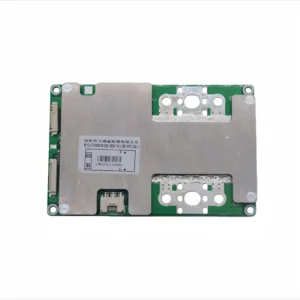
Select from our list of custom-designed safety protection systems below.
 Litongwei Electronic