Wholesale Battery Circuit Board Factory & Companies

Global Electrification Infrastructure, Advanced BMS Engineering, and High-Speed SMT Manufacturing Solutions

Intelligent Lithium Battery Management Boards

Engineered safety controls, smart communications, and auto-balancing modules for high-voltage and high-current installations.
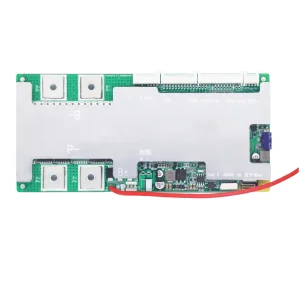
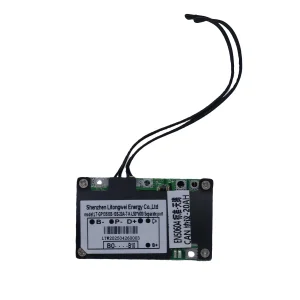
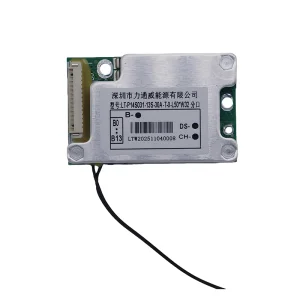
LTW 23S 60A Lithium Battery Protection Board

Wholesale China LTW 23S 60A Lithium Battery Protection Board - Smart BMS with CAN/Bluetooth

View Details
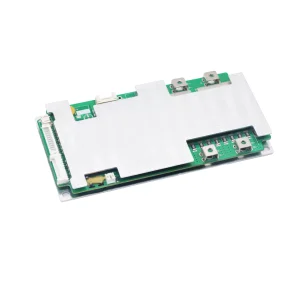
10S 20A Lithium Battery Protection Board with CAN

Custom 10S 20A Lithium Battery Protection Board with CAN Communication - China BMS for Electric Vehicles

View Details
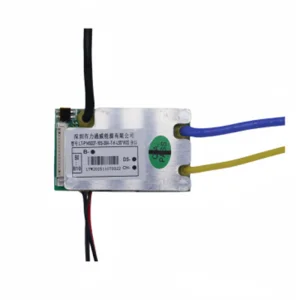
LTW 13S 30A Lithium Battery Protection Board

OEM LTW 13S 30A Lithium Battery Protection Board with NTC - Intelligent BMS and Safety Features

View Details
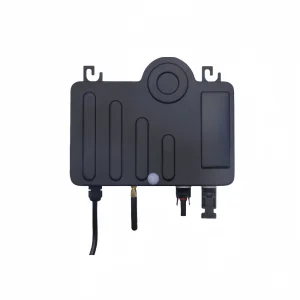
LTWSmart Micro Inverter IP67

Custom LTWSmart Micro Inverter from China Suppliers | IP67 All-Weather Safe, 96.5% Efficiency

View Details
LTW 20S 120A Intelligent Heating Protection Board

Custom LTW 20S 120A Intelligent Heating Lithium Battery Protection Board with Bluetooth

View Details
OEM China LTW 20S 120A Bluetooth BMS

OEM China LTW 20S 120A Intelligent Heating Lithium Battery Protection Board with Bluetooth

View Details
Custom 30A Lithium Battery Protection Board 13S

Custom 30A Lithium Battery Protection Board 13S - Intelligent BMS with Low Power Auto Discharge

View Details
Custom 30A Battery Protection Board LTW 13S

Custom 30A Lithium Battery Protection Board LTW 13S - China Factory Suppliers for Smart BMS

View Details

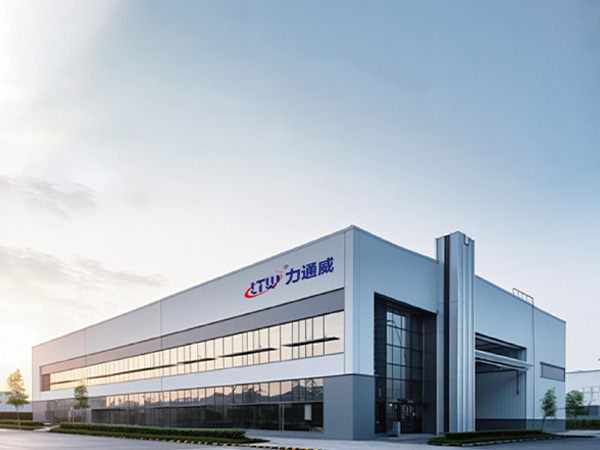
Shenzhen Litongwei Electronic Technology Co., Ltd.

Established in 2005, Litongwei has evolved into a nationally recognized high-tech enterprise specializing in the research, development, and manufacturing of advanced lithium-ion safety control systems and BMS circuit boards. Our robust core solutions are deeply integrated into the structures of 3C digital devices, electric scooters, bicycles, motorcycles, tricycles, golf carts, automated guided vehicles (AGVs), unmanned aerial vehicles (drones), and heavy-duty power tools.

By prioritizing research investment, we provide comprehensive industrial security solutions, including intellectual property protection (via patent collaboration to mitigate litigation risk), industry-standard shared boards (maximizing cost reduction and process optimization), full-process quality traceability (leveraging enterprise MES systems), and remote IoT maintenance modules (supported by our native cloud management platform).
Our Global Commitment:

"To engineering battery protection circuits that exceed safety benchmarks, lower operational overheads, and streamline system integration for top-tier OEMs and battery assembly factories globally."
Corporate Vision Litongwei

Corporate Vision

"Technology as King, Efficient Service" — Embracing environmental sustainability with advanced, intelligent green energy management solution sets.

40,000+
Sqm Manufacturing Base
15M+
Monthly Unit Capacity
10%+
R&D Investment Rate
100+
Patents & Certifications

Why Industrial Leaders Partner With Litongwei

A look inside our high-performance production ecosystem and technical capabilities.

Advanced SMT Production Capacity

Our facility spans across two massive bases: 13,000+ sqm of specialized floor space in Shenzhen and 27,000+ sqm in Dongguan Huangjiang. Outfitted with 24 high-speed pick-and-place component mounters and 12 fully automated PCBA assembly lines, we comfortably scale production up to 15 million units per month.

Unrivaled R&D Dedication

Innovation demands relentless investment. Over the past 5 consecutive fiscal years, Litongwei has reinvested more than 10% of total annual sales revenue directly back into our R&D departments. This continuous loop keeps us ahead in battery monitoring topologies and multi-protocol smart telemetry.

Intellectual Property Protection

Operating with over 100 proprietary utility models, testing firmware algorithms, and mechanical designs, we secure our clients' operations. Working in tight synergy with overseas procurement legal teams, we co-develop and cross-license intellectual property to completely eliminate risk of patent infringement.

Deep Industrial Analysis: Global Battery Circuit Board Market

The global push towards clean energy and localized electrification has thrust the Battery Circuit Board (PCBA / BMS / PCM) into the spotlight. No longer considered simple protective fuses, modern battery protection boards act as the brain and central nervous system of complex lithium power cells. In consumer devices, industrial machinery, and micro-mobility grids, a battery's efficiency, longevity, and thermal threshold are strictly determined by the layout, component quality, and intelligence of its management system.

1. Global Battery Circuit Board Commercial & Industrial Landscape

As international economies transition away from internal combustion systems, battery circuit board engineering has split into distinct focus areas: high-voltage architectures (often utilizing CAN-bus communication layers) and low-to-medium power modules (prioritizing Bluetooth telemetry and analog efficiency). Regions such as Western Europe and North America have seen soaring demand for custom battery management configurations in smart urban delivery systems, light electric vehicles, and home energy storage devices (ESS).

The integration of IoT features directly into the battery board has emerged as a major commercial requirement. Fleet managers overseeing hundreds of electric delivery scooters or utility golf carts rely on real-time data streams—transmitting state-of-charge (SoC), state-of-health (SoH), and internal thermal metrics over wireless interfaces like Bluetooth or physical networks like CAN-bus. Consequently, circuit board manufacturers must now possess equal mastery over high-current analog design and wireless RF firmware optimization.

2. Shenzhen & Dongguan: The Epicenter of BMS SMT Manufacturing

Why does South China continue to dominate the global battery protection board supply chain? The answer lies in the concentrated ecosystem of electronic components and raw materials. In cities like Shenzhen and Dongguan, the lead time from high-density interconnect (HDI) PCB fabrication to complete surface-mount technology (SMT) assembly is counted in hours rather than weeks.

Under the Hood of Production Speed: At the Litongwei manufacturing centers, we harness advanced Fuji SMT line equipment alongside computerized wave soldering ovens and automated optical inspection (AOI) machines. Components like power MOSFETs, analog front-ends (AFEs), and microcontrollers are sourced from nearby component suppliers, eliminating shipping delays and maximizing product adaptability. This allows us to guarantee structural cost savings of 15% to 25% while maintaining absolute compliance with global quality guidelines.

Furthermore, China's strict engineering training programs and specialized electronics universities supply a steady stream of QA technicians and layout designers. This concentration of human capital and logistics infrastructure makes South China factories the go-to choice for global OEMs requiring rapid scaling from prototypes to multi-million unit batches.

3. Localized Applications & Engineering Considerations

Different markets present distinct engineering challenges for battery circuit board design:

  • E-Mobility (Electric Bikes, Scooters, AGVs): These systems require high mechanical stability. Heavy vibrations can compromise solder joints. The protection board must be engineered with reinforced copper layers and high-grade thermal conductive epoxy to withstand continuous shaking and physical shock.
  • Industrial Drones & Heavy-Duty Power Tools: Drones operate under extreme discharge dynamics, frequently pulling currents up to 200A. The circuit boards require low internal resistance MOSFETs and thick-copper PCBs to prevent high temperatures.
  • Micro Inverters & Energy Storage Systems: Devices like the LTWSmart IP67 micro inverter demand 96.5% peak conversion efficiency and long-term weatherproofing. Intelligent heating circuits are crucial for charging in sub-zero climates, preventing lithium plating and degradation.

Corporate Development Timeline

Over 18 years of continuous innovation, technological breakthroughs, and quality leadership.

2005 - 2010

Technology-driven Foundations

In 2005, the company commenced R&D and manufacturing of digital Battery Management Systems (BMS). By 2006, it expanded into power battery management system development. ISO9001 certification was obtained in 2007, followed by ISO14001 certification in 2009, laying the groundwork for rigid quality management.

2010 - 2015

Technological Advancement & Patents

The company secured 8 utility model and design patents in 2011, while expanding its mobile power bank manufacturing operations. The Litongwei Technology Research Institute was established in 2012. It received the Del New Energy Quality Excellence Award in 2014 and earned the Gold Partner title from Gaogong Lithium Battery in 2015.

2015 - 2020

Digital Transformation & Automotive Standards

The company upgraded its ISO 9001 and ISO14001 certifications in 2016, achieved IATF16949 certification in 2018, and implemented an MES system for warehouse automation. It was awarded the Guangdong Battery Industry Association Innovation Award in 2019 and recognized as a leading brand in lithium battery protection board technology for two-wheeled vehicles in 2020.

2020 - 2025

Smart Manufacturing+ & Industry 4.0

Litongwei Electronics continues to innovate, deepening its technological expertise while embracing IoT and Industry 4.0. Through its Smart Manufacturing+ strategy, the company drives industrial transformation, deploying advanced firmware platforms and telemetry-driven smart-BMS architectures.

Global Procurement Guide: Selecting the Right BMS Partner

For procurement officers, sourcing directors, and product designers at major electrical equipment OEMs, choosing a battery circuit board manufacturer is a highly technical decision with far-reaching quality implications. A failure in the field not only costs millions in warranties but can also devastate brand reputation. Below are critical metrics that global purchasers must audit when qualifying a manufacturer.

1. ISO & IATF 16949 Auditing

Automotive-grade certifications (such as IATF 16949) are the benchmark for quality control in the BMS market. A partner holding these credentials uses APQP (Advanced Product Quality Planning) and PPAP (Production Part Approval Process) to ensure zero defect rates.

2. MES-Driven Component Traceability

Manufacturing Execution Systems (MES) link every printed board to its exact bill of materials (BOM) components, raw copper batch, and reflow oven parameters. If a single MOSFET fails in the field, this traceability isolates the exact production lot, preventing massive, untargeted product recalls.

3. In-House Quality Assurance Testing

A reliable manufacturer does not rely only on visual checks. Look for comprehensive automated optical inspection (AOI), in-circuit testing (ICT), functional testing (FCT), thermal cycling chambers, and high-voltage isolation analysis built directly into the assembly line flow.

Advanced Protective Systems & Comm Interfaces

Explore our custom OEM series featuring heating logic, high-current pass-throughs, and micro-inverter boards.
Wholesale LTW 20S 60A BMS with Bluetooth

Wholesale LTW 20S 60A Lithium Battery Protection Board - Bluetooth + Serial Comm + Intelligent Heating BMS

View Details
Wholesale LTW 10S 20A BMS with CAN

Wholesale China LTW 10S 20A Lithium Battery Protection Board with CAN Communication - Factory Direct

View Details
Wholesale LTW 20S 200A Bluetooth BMS

Wholesale LTW 20S 200A One-Line Pass + Bluetooth + 4.3-inch Screen Heating BMS Manufacturer

View Details
Custom 500W Portable Power Bank Inverter

Custom 500W Single-Cell 1 kWh Portable Power Bank 3.2V PV Bidirectional Inverter Company

View Details
Custom LTW 13S 30A Switch NTC BMS

Custom LTW 13S 30A Lithium Battery Protection Board with Switch NTC - Reliable China Factory

View Details
Custom Cool LED Bluetooth Waist Bag

Custom Cool LED Bluetooth Speaker Waist Bag - China Suppliers Factory for Outdoor Solutions

View Details
Custom LTW 20S 120A Bluetooth BMS

Custom LTW 20S 120A Intelligent Heating BMS with Bluetooth and One-Line Configuration

View Details
OEM LTW 23S 60A CAN Bluetooth BMS

OEM LTW 23S 60A Lithium Battery Protection Board with CAN/Bluetooth Heating - China Manufacturer

View Details

Our Trusted Partners

Collaborating with leading enterprises to build robust power infrastructure worldwide.

Frequently Asked Questions (FAQ)

Technical, manufacturing, and procurement guidance answered by our core engineering staff.
What is the core difference between a passive balancing and an active balancing battery protection board?
Passive balancing works by dissipating excess energy from high-voltage cells as heat through a series of bypass resistors on the circuit board, ensuring all cells match the lowest-capacity cell. Active balancing, on the other hand, dynamically transfers energy from higher-voltage cells to lower-voltage cells using capacitive or inductive charge shuttling. Active balancing is far more efficient but requires more complex PCB space and sophisticated control firmware, making it the preferred choice for large-capacity EV battery packs and industrial energy storage systems.
Why is CAN-bus preferred over UART or simple Bluetooth communications in industrial e-vehicles?
CAN-bus (Controller Area Network) is a robust automotive-grade differential communication standard designed to operate reliably in electrically noisy environments. It features built-in error checking, prioritizing messages without host intervention, which is critical for safety devices like electric vehicles and AGVs. Simple interfaces like UART and Bluetooth are useful for diagnostics and local telemetry monitoring but lack the necessary hardware-level noise rejection and real-time determinism required for primary drive system coordination.
What benefits does an "Intelligent Heating" BMS board provide?
Charging lithium-ion cells at sub-zero temperatures (below 0°C/32°F) triggers permanent lithium plating on the anodes, resulting in severe capacity degradation and dangerous internal short circuits. An intelligent heating BMS detects cold ambient conditions via integrated NTC temperature sensors. When charge power is applied, the BMS redirects that energy to run thin-film heating pads to safely warm the battery core to a safe charging temperature before allowing current to enter the cells.
How does Litongwei protect global buyers from intellectual property (IP) disputes?
Litongwei holds over 100 patents in circuit topologies, firmware routines, and SMT assembly processes. When developing custom protection boards for global markets, our IP legal team coordinates directly with client engineers. We cross-verify designs to prevent patent infringement, issue licensing agreements, and guarantee indemnification for verified production configurations.
What testing protocols are run on Litongwei battery circuit boards before shipment?
Every protection board undergoes a multi-stage validation pipeline: first, automated optical inspection (AOI) to catch solder defects; second, in-circuit testing (ICT) to verify electrical integrity of resistors and capacitors; and third, functional testing (FCT) simulating real-world charge, discharge, over-current, and communication protocols. We also perform periodic thermal shock testing and high-voltage insulation tests to ensure long-term reliability in the field.