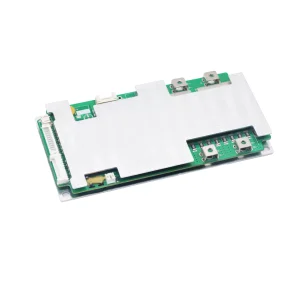
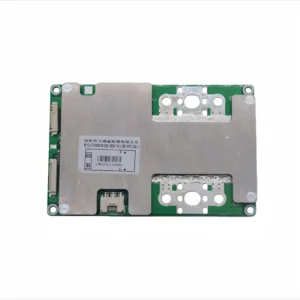
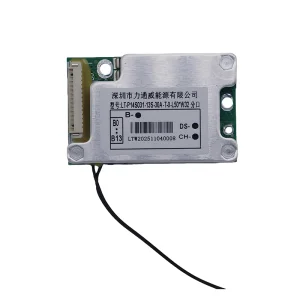
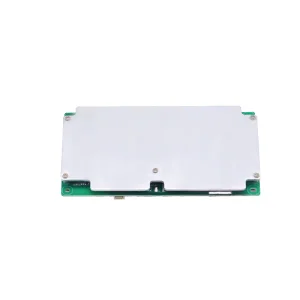
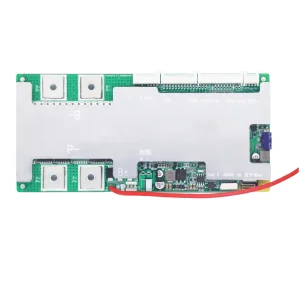
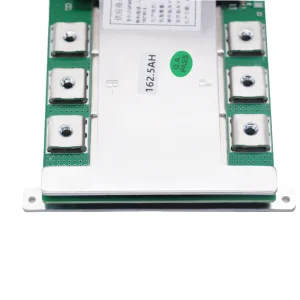
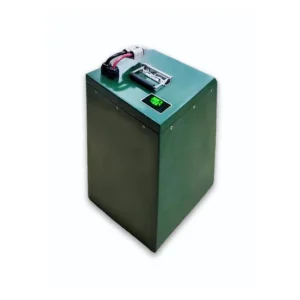
Premium OEM and Wholesale products manufactured using state-of-the-art automated production pipelines.
A Technical Whitepaper on Industrial and Commercial Electrification Solutions
As global carbon neutrality targets accelerate, the transition from high-emission fossil fuels to advanced electrochemical storage systems has placed battery management systems (BMS) at the core of industrial innovation. Among various system voltages, the 48V configuration—achieved via a 13S (13 series) lithium-ion cell configuration—has emerged as the definitive standard for micro-mobility, light electric vehicles (LEVs), telecommunication backup systems, and specialized material handling units.
The decision to design around a 13S 48V platform is rooted in foundational electromagnetic and safety engineering principles. In electrical standards worldwide, 60V DC represents the maximum limit for Safety Extra Low Voltage (SELV) systems. Operating above this threshold triggers extensive compliance mandates, isolated wiring topologies, and physical protection systems that increase both manufacturing costs and weight.
A 13S lithium configuration features a nominal voltage of 48.1V (assuming a standard NMC chemistry of 3.7V per cell) and tops out at 54.6V when fully charged. This keeps the entire electrical setup safely under the 60V threshold while providing twice the power delivery capability of legacy 24V architectures at the exact same current. Reducing the current in this manner allows manufacturers to scale down cable thickness, decrease system thermals, and minimize energy losses caused by resistance (calculated as I²R).
"By deploying a robust 13S BMS solution, industrial systems minimize copper utilization across cabling and improve overall system round-trip efficiency by up to 12% compared to traditional low-voltage configurations."
For large-scale commercial deployments, such as public e-bike networks, autonomous guided vehicles (AGVs) in smart warehouses, and remote telecom towers, a battery pack is only as reliable as its BMS. Leading wholesale factories are shifting from basic protection boards to "Intelligent Connected BMS." These systems enable fleet operators to harvest real-time State-of-Health (SoH) and State-of-Charge (SoC) parameters.
Through cloud integration and MES (Manufacturing Execution System) databases, predictive maintenance algorithms can alert operators before a cell experiences catastrophic failure or deep degradation. This shifts battery maintenance from a reactive approach to a proactive, automated workflow, minimizing downtime and optimizing capital expenditure.
Core technologies engineered by Shenzhen Litongwei to deliver functional safety and high longevity.
Equipped with high-accuracy Negative Temperature Coefficient (NTC) thermistors, providing real-time temperature sensing directly on critical junctions. Implements localized thermal cutoff points to stop charging or discharging if safe limits are breached.
Engineered with active and passive shunt-balancing microcircuits. Resolves microscopic manufacturing inconsistencies across cells by dissipating energy from high-voltage cells during the top-off phase, ensuring uniform capacity utilization.
Integrates CAN, RS485, UART, and low-energy Bluetooth (BLE) configurations. Enables field engineers to diagnose firmware parameters, extract event logs, and update safety parameters over-the-air (OTA) via secure cloud gateways.
Selecting a manufacturing partner for wholesale 13S BMS requires a deep evaluation of production capability and quality control standards. In the high-volume electronics industry, sourcing a reliable supplier is crucial to avoid downstream component failures. Modern facilities must deploy fully automated SMT (Surface Mount Technology) assembly lines equipped with SPI (Solder Paste Inspection) and online AOI (Automated Optical Inspection) systems.
Furthermore, raw materials must undergo strict incoming quality control (IQC). By sourcing components from tier-one semiconductor vendors (e.g., Texas Instruments, STMicroelectronics, and Infineon), certified factories ensure high reliability and minimize drift over time. This approach prevents field failures caused by component fatigue under harsh conditions.
Different regions present unique challenges for battery integration. In North America and Northern Europe, cold weather performance is vital. Sub-zero temperatures can trigger lithium plating if batteries are charged too quickly. Advanced BMS systems address this by managing heating elements that warm the battery pack before initiating the charging cycle.
Conversely, in regions like Southeast Asia, systems must handle extreme humidity and heat. BMS designs require high-grade conformal coatings (such as polyurethane or silicone) to prevent corrosion, moisture ingress, and subsequent short-circuits.
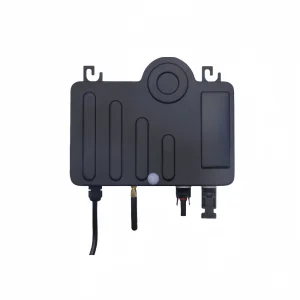
"From IP67 weatherproof micro-inverters to vibration-resistant golf cart battery management systems, our hardware is designed to withstand harsh physical environments while maintaining precise, low-drift cell monitoring."
Entering international markets requires adherence to strict safety standards, including UL 2271 (for light electric vehicle batteries), EN 50604-1, and UN38.3 (for safe transportation). Working with an established manufacturer guarantees that the BMS design includes necessary physical and electrical protections to pass these complex tests.
Additionally, intellectual property (IP) protection is vital in the modern technology landscape. Partnering with a manufacturer that offers patent collaboration and joint design reviews ensures that proprietary technology is protected, preventing infringement risks during global scaling.
Established in 2005 — National High-Tech Enterprise and Smart Energy Innovator
Shenzhen Litongwei Electronic Technology Co., Ltd. specializes in the R&D and manufacturing of lithium-ion safety control systems. Our products are widely used in 3C digital devices, electric scooters, bicycles, motorcycles, tricycles, golf carts, AGVs, drones, and power tools. We provide intellectual property protection (patent collaboration to prevent infringement), industry-standard shared boards (cost reduction and efficiency improvement), full-process traceability (quality control), and remote maintenance (cloud platform support) to help you address technical, cost, and operational challenges.
A history of engineering excellence, technical innovation, and supply chain validation.
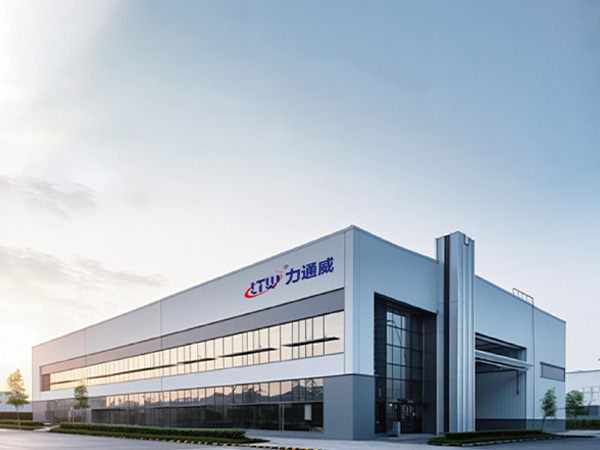
LITONGWEI has always adhered to the philosophy of "Technology as King, Efficient Service" in all aspects of production and operations. Our vision is to become a provider of intelligent green energy management solutions, embracing environmental sustainability. Start with LITONGWEI!
By integrating advanced embedded architectures, hardware-in-the-loop (HIL) testing systems, and automated SMT lines, we guarantee that every BMS unit leaving our facility meets our high standards for safety and reliability.
Litongwei's partners include industry brand clients who have collaborated with us for many years.














Innovation roadmap for the next generation of smart battery protection platforms.
As the lithium-ion industry transitions toward high-voltage chemistry variations and solid-state batteries, the demands placed on BMS hardware are shifting. Litongwei's R&D roadmap targets three main technology trends:
Solid-state cells require specialized pressure and mechanical expansion monitoring alongside standard voltage and temperature tracking. Our future BMS architectures are designed to integrate thin-film strain gauges and localized pressure sensors, preventing micro-crack propagation and dendrite growth inside the solid electrolyte.
By integrating energy-efficient microcontrollers, future Litongwei BMS units will compute battery aging models directly on the board. Rather than relying on simple lookup tables, the BMS will utilize dynamic Kalman filtering algorithms to estimate SoC and SoH with an accuracy margin under 1%, regardless of load profile or environmental noise.
As clean energy infrastructure relies more heavily on IoT connectivity, future systems will incorporate native cellular protocols, such as NB-IoT and LTE-M. This will enable direct communication with utility platforms without requiring external gateway systems, reducing costs for distributed smart grid implementations.
Technical answers to common engineering questions regarding 13S 48V BMS implementation.
Explore our industrial-grade components and battery management devices, shipped globally.
 Litongwei Electronic