Premium engineering designs and highly integrated energy systems optimized for residential, industrial, and global grid standards.

The global energy landscape is transitioning from centralized fossil fuel generation to highly distributed, intelligent renewable networks. At the heart of this grid revolution is the Solar AC Inverter. Historically treated as simple DC-to-AC conversion units, modern inverters have evolved into complex energetic command centers. They are now tasked with real-time grid stabilization, maximum power point tracking (MPPT), active power curtailment, dynamic frequency response, and bidirectional energy storage synchronization.
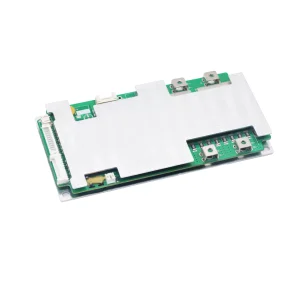
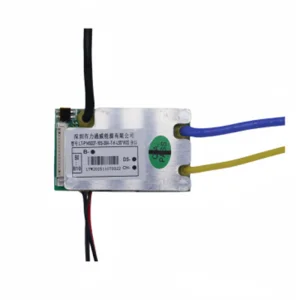
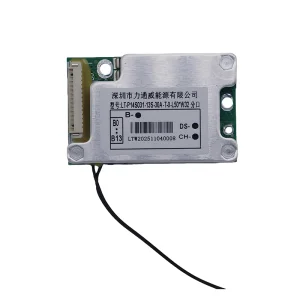
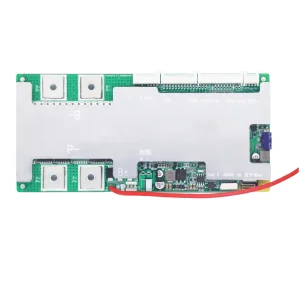
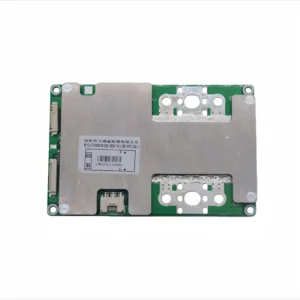
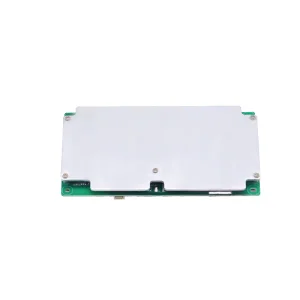
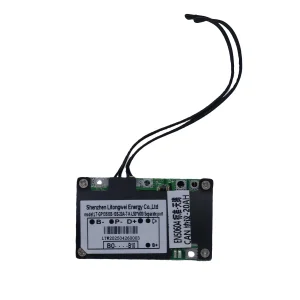
For wholesale procurers, developers, and system integrators, selecting the right manufacturing partner is not merely a question of unit pricing; it is an evaluation of operational longevity, safety profile, and cross-compatibility with storage systems. As battery chemistries transition toward high-safety Lithium Iron Phosphate (LiFePO4) frameworks, the interdependency between the AC inverter and the Battery Management System (BMS) has become absolute. Efficient inverters require highly responsive BMS protection boards, such as the LTW 13S and 20S Smart BMS series, to protect delicate power stage electronics from current transients and DC-link voltage fluctuations.
As solar energy approaches grid parity in almost every major economic zone, manufacturers are turning to advanced hardware topologies to squeeze out fractions of percentage points in efficiency. The roadmap for Solar AC Inverter technology is driven by several key breakthroughs:
By replacing traditional Silicon IGBTs with SiC and GaN power switches, modern factories are reducing switching losses by up to 50%. This enables higher switching frequencies, leading to smaller, lighter inductors and capacitors, reducing the overall footprint of string and microinverters alike.
Under partial shading conditions, traditional tracking algorithms can get stuck at a local power peak, losing up to 30% of potential energy output. Next-generation AC inverters utilize neural networks to scan the entire voltage-power curve within milliseconds, identifying the absolute maximum power point.
Using proprietary phase-change materials, vacuum-sealed thermal channels, and advanced convective fin layouts, Tier-1 factories are eliminating active fan cooling in outdoor microinverters. This increases the mean time between failures (MTBF) to over 25 years.
In addition to these semiconductor advancements, the integration of grid-forming capabilities allows modern hybrid inverters to construct standalone voltage profiles. In microgrid setups, this eliminates the dependence on the primary grid to kickstart operations, a massive value-add for remote industrial operations and telecommunication tower networks.
Established in 2005, Shenzhen Litongwei Electronic Technology Co., Ltd. has grown to become a national high-tech enterprise at the forefront of lithium-ion safety control systems and power conversion equipment. For over two decades, our core R&D has been dedicated to manufacturing high-stability protection circuitry and battery management systems (BMS), which now act as the safety backbones for advanced battery-integrated solar inverters, grid storage systems, smart mobility setups, and off-grid power solutions.
Our comprehensive production footprint includes over 13,000 square meters of independent manufacturing space in Shenzhen, alongside an expansive 27,000 square meter facility in Dongguan Huangjiang. To sustain our market leadership, we operate 24 high-speed pick-and-place (SMT) machines and 12 state-of-the-art PCBA production lines. This automated capacity delivers a monthly output exceeding 15 million units. By reinvesting over 10% of annual sales back into R&D for five consecutive years, we hold over 100 industry patents, protecting our clients' intellectual property and providing unmatched system reliability.
Over 18 years of pioneering power management, structural patenting, and high-efficiency manufacturing.
R&D and Digitalization Foundations: Commenced development of digital Battery Management Systems (BMS) in 2005. Expanded into power battery management system development in 2006. Secured ISO9001 certification in 2007 and ISO14001 certification in 2009, cementing our quality control standard.
Patent Expansion and Industrialization: Secured 8 utility model and design patents in 2011. Established the Litongwei Technology Research Institute in 2012. Honored with the Del New Energy Quality Excellence Award in 2014 and named Gold Partner by Gaogong Lithium Battery in 2015.
Digital Transformation & Smart SMT: Achieved IATF16949 certification in 2018. Integrated automated MES systems for warehouse and logistics coordination. Won the Guangdong Battery Industry Association Innovation Award in 2019 and became the leading brand for two-wheeled vehicle BMS boards in 2020.
Smart Manufacturing+ & Industry 4.0: Implemented IoT-driven architectures for cloud monitoring of battery-integrated inverter arrays. Scaled SMT lines to 24 units, achieving full automation and deep integration with global Tier-1 clean energy systems.
Trusted by industry giants and global technology leaders for long-term strategic supply security.












Our partners include Huawei, Lenovo, Desay, Guoguang, Sunwoda, Eve Energy, Guoxuan High-tech, and other renowned industry brand clients who have collaborated with us for many years.
Implementing grid-scale or large-scale residential solar networks requires structural integration across multiple engineering sub-systems. An isolated solar inverter is a liability without robust battery storage safety, and conversely, a lithium storage bank is useless without a grid-interactive inverter. We provide tailored macro-level solutions to address these dependencies:
C&I installations demand high power stability and peak shaving capabilities. Our hybrid AC inverter systems work in direct synchronization with multi-series battery setups managed by our intelligent 20S 120A Bluetooth BMS boards. This design allows operators to view cells' real-time State-of-Charge (SoC) and State-of-Health (SoH) metrics, ensuring that current spikes generated by commercial HVAC equipment or electric motors do not trigger circuit protection or interrupt facility uptime.
Remote telecommunication stations operate in hostile thermal conditions. The combination of our 13S series smart BMS boards with bidirectional inverters ensures continuous 48V telecom system operation. Incorporating anti-reverse connection circuitry, NTC temperature sensors, and dynamic heating modules allows these power stations to withstand extreme winter cycles down to -20°C and desert heat up to 60°C without system degradation.
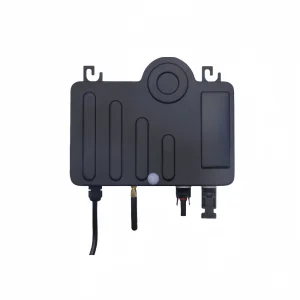
For high-density residential developments, safety and modular expansion are critical. Our LTWSmart Microinverters feature IP67 protection, allowing direct installation behind solar panels. This eliminates high-voltage DC cabling inside ceilings, mitigating fire risks while maintaining clean, sinusoidal AC outputs directly compatible with local utilities.
The global energy storage and solar inverter market faces persistent challenges, ranging from silicon wafer supply gaps to microchip shortages and component price volatility. Our factory operations leverage advanced lean manufacturing methodologies to insulate clients from external market fluctuations.
By implementing a closed-loop Manufacturing Execution System (MES) alongside automated component warehouses, we guarantee full-process traceability for all assembled units. Every batch of smart BMS protection boards and microinverters undergoes automated testing at various stages of production: automatic optical inspection (AOI), in-circuit testing (ICT), and functional testing (FCT) under simulated grid load. This rigorous system-level screening is how we maintain a QA pass rate exceeding 99.8% across our 15 million monthly units.
Furthermore, our regional localization inside Shenzhen and Dongguan places us within a one-hour supply ring for key raw materials (including semiconductors, copper windings, and high-frequency transformer cores). This geographical clustering dramatically reduces logistics overheads, allowing us to offer highly competitive pricing structures for large-volume wholesale contracts without compromising technical specifications or safety standards.
Robust OEM solutions designed to operate seamlessly under rigorous load profiles and variable weather conditions.
 Litongwei Electronic