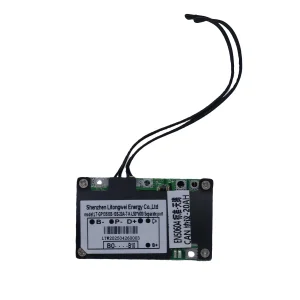
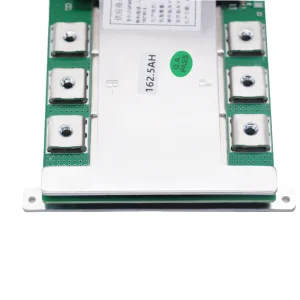
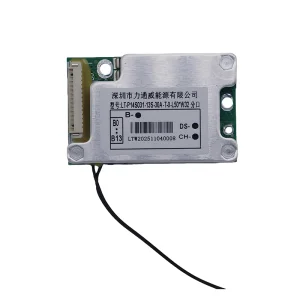
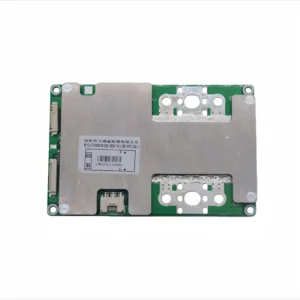
Strictly aligned with local industrial requirements, offering IoT safety communication ports, reliable balancing systems, and ruggedized structures.
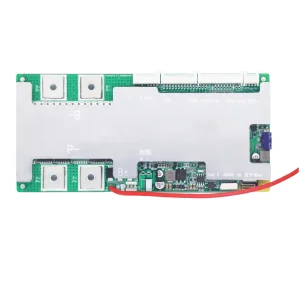
Japan is at the forefront of the global transition to clean energy, automated logistics, and smart grid infrastructures. With its strict national targets for carbon neutrality, Japanese conglomerates, energy providers, and equipment manufacturers are investing heavily in reliable electrochemical energy storage systems. As the heart of any lithium-ion setup, the Battery Management System (BMS) and corresponding power accessories dictate the system's longevity, active safety, and integration capabilities. Finding an experienced **Accessories Factory & Companies for Japan** that meets local requirements is crucial.
In the Japanese domestic market, strict compliance under the Den-an Law (Electrical Appliance and Material Safety Act) and METI ministerial notifications is a pre-requisite. Whether the application is a lightweight e-scooter, automated guided vehicles (AGVs) operating inside cleanroom environments, or decentralised balcony solar power arrays in urban Tokyo, performance reliability cannot be compromised.
“Japan's energy transformation requires battery protection systems that integrate high-precision analog front-ends (AFE), redundant hardware watchdogs, and robust industrial communications interfaces like CAN, RS485, and low-energy Bluetooth.”
The Japanese market displays a unique dichotomy. While housing global pioneers in battery chemistry and automotive-grade integration, Japan faces challenges in scaling high-flexibility, cost-effective accessory manufacturing for high-mix, low-volume industrial, and mid-range consumer products. Devices such as localized electric delivery bicycles, golf carts, agricultural drones, and automated warehouse machinery require custom-designed BMS boards. Standard off-the-shelf boards do not provide the exact form factors, communication registers, or active thermal safety parameters needed for these applications.
In response, Japanese OEMs are increasingly outsourcing the design and production of battery safety accessories and power electronics to high-tech, specialized manufacturers based in China's Silicon Valley—Shenzhen and Dongguan. This bridge pairs Japan's rigorous Quality Management (QM) frameworks with the agility, raw material ecosystem, and cost advantages of China's lithium supply chain.
Selling or operating battery products in Japan demands careful navigating of regulatory agencies. Litongwei understands that Japanese business customers operate under zero-defect expectations. Key criteria for the Japanese market include:
Shenzhen Litongwei Electronic Technology Co., Ltd. (established in 2005) provides reliable engineering, manufacturing capacity, and safety systems for lithium-ion applications.
Over 40,000 sqm across our Shenzhen and Dongguan bases, housing 12 PCBA production lines and high-speed assembly. We deliver up to 15 million high-quality battery safety modules monthly.
We hold over 100 patents in circuit design, automation, and diagnostic software. We work with Japanese clients on joint patents to mitigate infringement risks in global markets.
Using our custom-configured MES system, every battery accessory and smart board is tracked from raw components and SMT placement to final functional testing. This supports strict quality audits.
The application of advanced BMS safety control units, lithium accessories, and microinverter technologies is expanding across Japanese cities and industrial hubs:
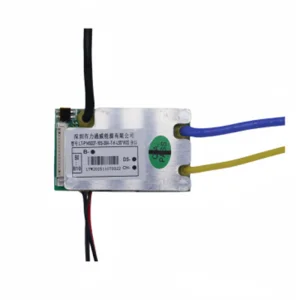
Faced with demographic shifts and labor constraints, Japan’s logistics sector relies heavily on automated material handling. AGVs and Autonomous Mobile Robots (AMRs) operate continuously in warehouses. Our custom lithium-ion protection boards with CAN and RS485 communication protocols support seamless communication with the vehicle's master controller. This allows telemetry monitoring of State of Charge (SoC), State of Health (SoH), temperature, and discharge current in real time, preventing sudden downtime on the warehouse floor.
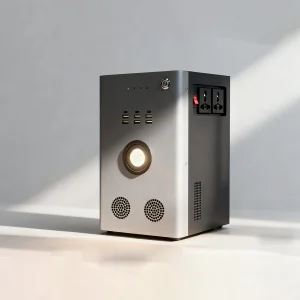
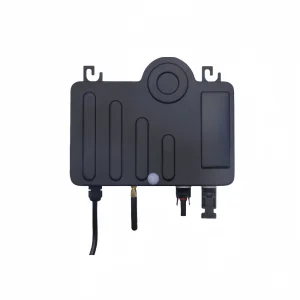
In metropolitan areas like Tokyo, Osaka, and Nagoya, residential space is at a premium. The market for micro-solar arrays and portable power storage is growing. Balcony solar configurations use our 96.5% high-efficiency micro-inverters with IP67 weatherproof ratings, enabling energy generation on balcony rails. Paired with 1kWh bidirectional inverter power banks, these systems provide everyday energy savings and serve as emergency power reserves during earthquakes and natural disasters.
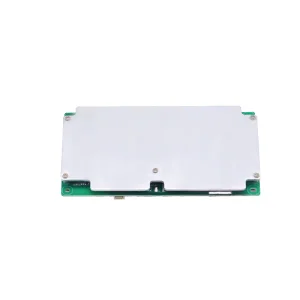
Micro-mobility is a key element of Japan's urban transport strategy. Shared electric bicycles and last-mile delivery scooters require battery packs that withstand high-frequency charge/discharge cycles and physical vibration. Our 10S and 13S BMS models are engineered with physical shock protection and anti-reverse polarity safeguards. These boards are widely used in commercial two-wheeled fleets across Japan.
Corporate Development Path: Since launching our first digital BMS solutions in 2005, Litongwei has focused on technological growth. From receiving ISO9001 and ISO14001 certifications in 2007-2009 to achieving IATF16949 automotive standard compliance in 2018, we design every component to meet international industrial standards.
The integration of Bluetooth and IoT modules into BMS boards is changing battery management. Operators of distributed energy storage systems can monitor battery status, balance cells remotely, and download diagnostic logs via cloud APIs. This remote troubleshooting reduces maintenance costs for systems deployed across Japan.
Over 18 years of continuous R&D and quality standards development in the battery protection industry.
Launched R&D and manufacturing of digital Battery Management Systems (BMS) in 2005. Expanded into power battery management system development in 2006. Secured ISO9001 certification in 2007 and ISO14001 in 2009, establishing a foundation for our export operations.
Secured 8 utility model and design patents in 2011 while expanding mobile power bank manufacturing. Established the Litongwei Technology Research Institute in 2012. Recognized with the Del New Energy Quality Excellence Award in 2014 and named Gold Partner by Gaogong Lithium Battery in 2015.
Upgraded to modern ISO 9001 & 14001 standards in 2016. Achieved IATF16949 automotive certification in 2018 and implemented our MES system for warehouse automation. Received the Guangdong Battery Industry Association Innovation Award in 2019 and recognized as a leading brand in lithium battery protection board technology for two-wheeled vehicles in 2020.
Implementing IoT-enabled Smart Manufacturing+ and Industry 4.0 systems. Deepening integration with global clean energy networks and providing custom, high-durability solutions for industrial clients in Japan and Asia-Pacific.
We work with leading enterprises to build reliable, high-performance battery systems.




Our partners include Huawei, Lenovo, Desay, Guoguang, Sunwoda, Eve Energy, Guoxuan High-tech, and other leading industry brands with long-term collaborations.
Technical details, compliance questions, and logistical info for Japanese engineering and procurement teams.
We supply battery management components designed to comply with PSE Circular 9 (Lithium-ion secondary batteries). We assist our customers with necessary documentation, cell test data, schematics, and manufacturing audits to support smooth METI filing and PSE certification by registered bodies.
Our intelligent protection boards support CAN (Controller Area Network), RS485, and UART protocols, which are widely used in Japanese industrial AGVs and light EVs. We also offer integrated Bluetooth modules for field monitoring and mobile device diagnostics.
We prioritize protecting client IP. Litongwei offers collaborative patent models to prevent design infringement. All customized schematics, layout designs, and custom firmware are protected under strict Bilateral Non-Disclosure Agreements (NDAs).
Standard prototype design and layout take 7-14 business days, followed by 10-15 days for PCB fabrication, component sourcing, SMT assembly, and functional safety testing. Mass production runs are typically completed within 25-35 days, depending on component availability and schedule.
Yes. We design BMS models with integrated heating film controls and NTC sensors. When low temperatures are detected, the BMS routes power to heating elements to warm the battery cells before enabling charging, preventing lithium plating in cold climates.
We use Automated Optical Inspection (AOI), X-ray testing for BGA packages, and customized function testing (FCT) jigs. These steps ensure every board is tested under load before packaging.
Explore our complete product lineup, optimized for Japanese energy solutions, mobility fleets, and smart grids.
 Litongwei Electronic