Explore our core control accessories engineered for high reliability, seamless device integration, and advanced local user interactions across Italy's commercial battery storage and industrial automation sectors.
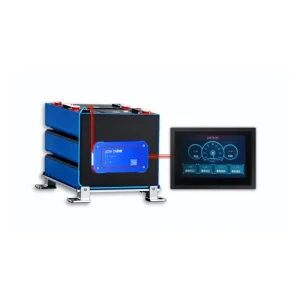
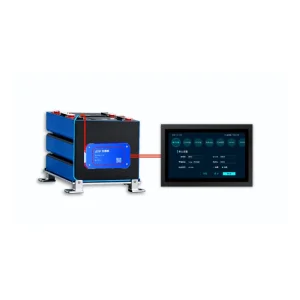
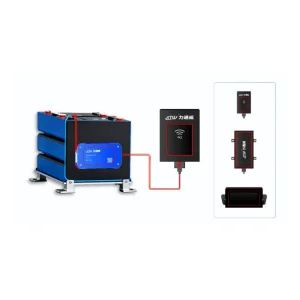
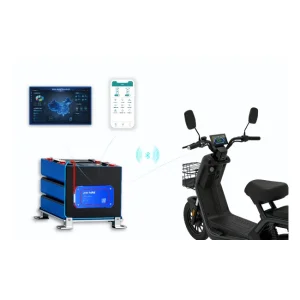
Italy stands at a historic crossroads in its transition to a decentralized, electrified, and highly digitized industrial landscape. Under the impetus of Italy's National Recovery and Resilience Plan (PNRR) and the European Green Deal, key economic sectors—ranging from the high-precision machinery manufacturers of Lombardy and Emilia-Romagna's "Motor Valley" to the agricultural processing zones of Veneto—are demanding high-performance electrical components. The demand for reliable safety control electronics, intelligent battery accessories, high-efficiency micro-inverters, and smart human-machine interfaces (HMI) has surged exponentially.
For Italian importers, engineering houses, and equipment builders, the procurement of safety control systems and electronic accessories is no longer merely a matter of finding the lowest unit price. Rather, it is a complex optimization process balancing regulatory compliance (CE, EN 50604-1, RoHS, and WEEE directives), technological durability under harsh environmental conditions, and intellectual property safety. Standard off-the-shelf electronic modules often fail to withstand the vibration profiles of industrial utility vehicles or the thermal cycles of balcony-mounted solar arrays, highlighting the critical importance of selecting a qualified, high-tech manufacturing partner.
In the Italian commercial landscape, the deployment of intelligent control electronics and energy storage accessories spans several high-growth verticals:
While European design houses excel in system integration, the global center of gravity for high-volume, precision electronic manufacturing remains in China, specifically in the Shenzhen-Dongguan electronics cluster. Litongwei's double-engine manufacturing layout provides a blueprint for how Chinese efficiency can be harnessed to serve the meticulous quality requirements of the Italian industrial market.
By operating state-of-the-art SMT (Surface Mount Technology) assembly lines equipped with high-speed pick-and-place machinery, Litongwei achieves a level of manufacturing precision that mitigates typical failure modes in high-power PCBAs, such as cold solder joints or micro-fractures. Furthermore, the localized supply chain for high-performance silicon, microcontrollers, and multi-layer FR4 boards allows for a compressed R&D-to-production lifecycle, reducing time-to-market for Italian clients from months to weeks.
For global procurement managers, this synergy delivers massive advantages: the engineering flexibility of custom R&D coupled with the economics of scale. By utilizing advanced testing equipment like Automated Optical Inspection (AOI), X-ray component verification, and simulated aging chambers, every batch of lithium-ion BMS, smart GPS tracking modules, or industrial LCD displays leaves our facility pre-validated to meet CE and international safety standards.
Established in 2005, Shenzhen Litongwei Electronic Technology Co., Ltd. is a national high-tech enterprise specializing in the R&D and manufacturing of lithium-ion safety control systems and intelligent electronic accessories. Over the past two decades, we have dedicated ourselves to solving complex power management challenges for global industries, specifically catering to the evolving requirements of European importers, e-mobility developers, and clean energy integrators.
Our products are widely utilized in 3C digital devices, electric scooters, bicycles, motorcycles, tricycles, golf carts, automated guided vehicles (AGVs), agricultural drones, and high-performance power tools. By offering a comprehensive business model built around intellectual property protection (patent collaboration to prevent infringement), industry-standard shared boards (cost reduction and efficiency improvement), full-process traceability (MES quality control), and cloud platform support (remote management and IoT diagnostics), we help our Italian clients mitigate technical, cost, and operational risks.
Our Shenzhen factory covers over 13,000 square meters of independent manufacturing space, and the Dongguan Huangjiang facility spans 27,000 square meters. Equipped with 24 high-speed SMT assembly machines and 12 dedicated PCBA production lines, we deliver a reliable monthly output of over 15 million units.
To ensure our technological edge, Litongwei's R&D investment has consistently accounted for more than 10% of total sales revenue for five consecutive years. This funding fuels research into active balancing, smart diagnostic firmware, and cloud IoT connectivity.
Holding over 100 patents in the lithium-ion battery protection board sector, alongside multiple software copyrights for testing and automation programs, we offer enhanced intellectual property protection for our OEM/ODM clients, helping them mitigate infringement risks globally.
Litongwei's long-term business partners include leading tech brands and battery industry heavyweights who trust our manufacturing standards and safety control systems year after year:






Modern lithium-ion battery configurations (whether using LFP, NMC, or LTO chemistries) are inherently unstable if subjected to over-voltage, deep discharge, or temperature excursions. A Battery Management System (BMS) serves as the brain of the battery pack, monitoring physical parameters and orchestrating safety procedures. In the context of Italian industrial vehicle design and grid-tied balcony energy storage, functional safety is paramount.
Our intelligent lithium battery protection boards integrate complex hardware and software protections. This includes dual-stage overcurrent protection, real-time cell-level voltage monitoring, short-circuit shutdown with automatic recovery, and multi-point NTC thermal sensing. If any individual cell deviates from the safe operating area (SOA), the BMS immediately opens the safety FETs or sends a warning signal to the main vehicle controller via CANbus, preventing thermal runaways.
Furthermore, our Bluetooth-enabled protection boards allow engineers to set specific safety thresholds directly via mobile or desktop applications, simplifying commissioning and remote diagnostic support in the field.
Manufacturing variations and localized thermal gradients inside a battery pack inevitably lead to cell imbalance over time, reducing the usable capacity of the battery. Litongwei's BMS boards employ precise cell balancing algorithms. Passive balancing dissipates excess charge from high-voltage cells as heat, keeping cost and complexity low. For high-capacity industrial applications (such as electric utility vehicles or large-scale energy storage), our active balancing systems dynamically transfer energy from stronger to weaker cells, maximizing pack life, range, and longevity.
Select from our certified industrial electronic control modules, solar micro-inverters, and power conversion components. All products are manufactured in our IATF16949-certified factories and support full customization for the Italian market.
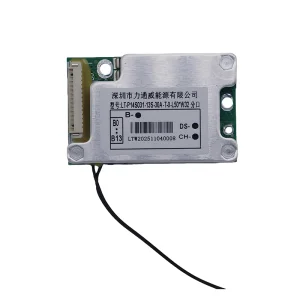
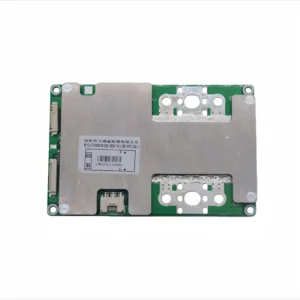
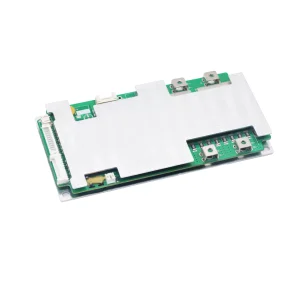
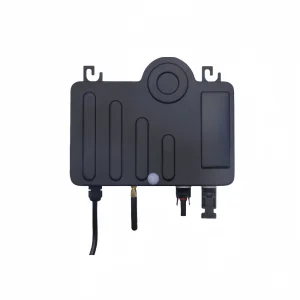
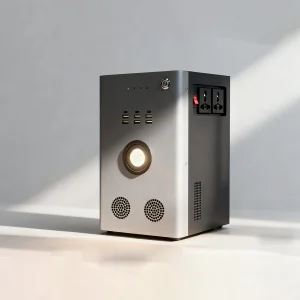
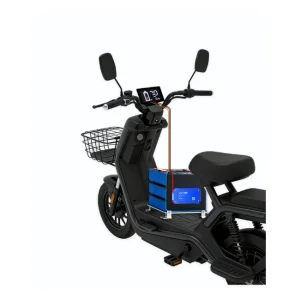
Partnering with an overseas manufacturing facility requires a systematic, transparent design and production cycle. At Litongwei, our workflow is optimized to align with the engineering and validation processes of Italian industrial clients. By integrating development stages from hardware architecture design to pilot assembly runs, we ensure that the finished product meets performance specifications and regulatory compliance.
We collaborate with your engineering team to define hardware topology, micro-controller architecture, safety limits, and protocol layers (CANbus, RS485, SMBus). This phase includes layout validation to prevent patent infringement.
Prototypes are assembled using our dedicated SMT lines and subjected to simulated stress testing, including thermal cycle analysis, vibration tests, and high-current validation, ensuring compliance with European CE standards.
Upon prototype approval, mass production begins across our 12 automated PCBA production lines. Every single electronic component is scanned and recorded in our MES system, offering complete process traceability.
Find technical answers regarding our manufacturing standards, compliance, design customization, and supply chain logistics for Italian and European importers.
Yes. All Litongwei BMS systems, battery control accessories, and micro-inverters are designed and manufactured to meet European standards. Our micro-inverters carry CE certificates and comply with EN 50549-1 requirements for grid connection, while our battery protection boards are engineered to align with EN 50604-1 and EN 62133 safety benchmarks.
Intellectual property protection is a core business value. We offer patent collaboration services to our partners, conducting thorough IP reviews before manufacturing custom designs. Additionally, we sign strict Non-Disclosure Agreements (NDAs) to safeguard your unique software firmware, PCB layouts, and industrial designs.
We provide full hardware and firmware customization. This includes custom casing shapes, display interfaces (LCD, LED, OLED), custom communication configurations (CAN, RS485, Bluetooth), and custom menu navigation languages (including Italian). We also support branding and logo printing for your industrial machinery or e-mobility applications.
For custom BMS or display screen PCBA prototypes, engineering layout and sampling typically take 15 to 25 days. Once prototypes are approved, bulk production is completed within 30 to 45 days, depending on batch volume and component procurement complexity.
We operate under IATF 16949 (Automotive Quality Management System) and ISO 9001 certifications. Our factories are run using an integrated Manufacturing Execution System (MES), which scans and records the batch origin of every component (MOSFETs, IC chips, capacitors) utilized on your PCBA. This enables complete traceability and simplifies field diagnostics.
 Litongwei Electronic