Designed to withstand high humidity and extreme thermal shifts typical of Bangkok and Thailand's industrial zones. High-speed overcurrent response and dynamic thermal cut-offs built natively into hardware components.
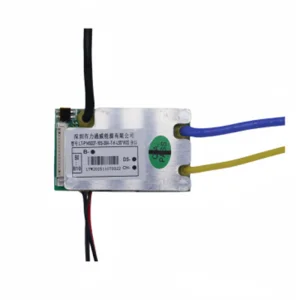
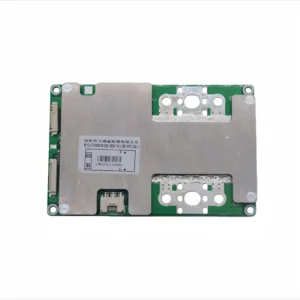
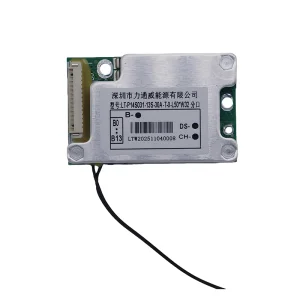
Thailand is emerging as Southeast Asia’s primary manufacturing hub for electric vehicles (EVs) and advanced energy storage systems (ESS). Driven by the government's ambitious "30@30" policy, which aims for zero-emission vehicles to comprise 30% of total automotive production by 2030, the demand for highly reliable Hardware Battery Management Systems (BMS) has scaled exponentially. From industrial logistics corridors in the Eastern Economic Corridor (EEC) to congested metropolitan passenger transits in Bangkok, lithium-ion battery packs require sophisticated protection circuits to survive harsh environmental stresses.
Tropical climates pose critical challenges to lithium chemistries (specifically LiFePO4 and NCM). Sustained ambient temperatures above 35°C paired with relative humidity exceeding 80% accelerate cell degradation and amplify thermal runaway hazards. Our hardware BMS integration features multi-channel Negative Temperature Coefficient (NTC) thermistors, which continuously track localized thermal points across the battery array, executing millisecond-level over-temperature cut-offs to prevent pack catastrophic failure.
In the global energy storage and electric mobility ecosystem, purchasing directors often evaluate the trade-offs between pure hardware protection and complex, software-programmable Smart BMS. Pure Hardware BMS topologies provide instantaneous, hardware-level analog circuit protection using dedicated ICs to monitor cell voltage limits. These systems are highly stable, impervious to firmware corruption, and offer rapid time-to-market due to their simpler architecture.
Conversely, modern commercial operations require telemetry. By combining hardware-level fail-safes with digital microcontrollers (MCU), we create Intelligent BMS solutions utilizing CAN bus, RS485, and Bluetooth protocols. These platforms support active/passive cell balancing algorithms, dynamic State-of-Charge (SoC) calculations, and State-of-Health (SoH) diagnostics, projecting crucial performance parameters to vehicle dash displays or remote cloud servers.
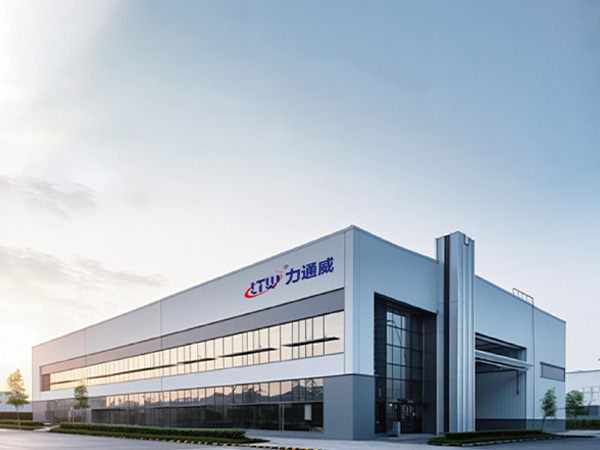
As a premier national high-tech enterprise established in 2005, Shenzhen Litongwei Electronic Technology Co., Ltd. has dedicated two decades to developing and manufacturing advanced lithium-ion safety control systems. Operating over 13,000 square meters of production space in Shenzhen alongside a massive 27,000 square meter facility in Dongguan Huangjiang, we optimize every segment of the BMS value chain. Equipped with 24 high-speed SMT assembly lines and 12 PCBA production lines, we maintain the operational agility to fulfill bulk OEM orders with rapid lead times.
To meet strict global compliance frameworks (such as IATF 16949 for automotive components), Litongwei deploys a full-lifecycle Manufacturing Execution System (MES). From raw component incoming quality control (IQC) of MOS tubes and ICs to automated optical inspection (AOI) post-reflow, every individual BMS board is assigned a unique tracking code. This ensures complete trace-back capability, documenting test values, thermal profiles, and component lots for the lifetime of the battery protection circuit.
Navigating international IP parameters can be a complex venture for global sourcing groups. Litongwei offers collaborative patent-sharing frameworks, ensuring client proprietary battery housing and pack geometries are fully protected against infringement. By coordinating closely with Thai local engineering companies, we provide customized shared-board designs that lower tooling costs while optimizing electrical efficiency, offering local businesses in Thailand a seamless path to product marketization.
Commenced intensive R&D into digital Battery Management Systems (BMS). Formulated original safety architectures for 3C applications, achieving ISO9001 and ISO14001 certifications to lay down a solid baseline for export-quality products.
Secured multiple utility model and structural design patents in safety circuitry. Founded the specialized Litongwei Technology Research Institute, cementing relationships with top tier cells providers and global electronics houses.
Upgraded our factory floors with high-capacity Yamaha and Fuji SMT lines. Integrated MES system management to secure end-to-end trace history. Earned the prestigious IATF16949 certification to authorize entry into high-reliability markets.
Pioneered intelligent cloud-connected BMS platforms with integrated Bluetooth/CAN bus telemetry. Deepened engineering partnerships inside Thailand and the wider ASEAN green corridor to facilitate localization of clean technology.
LITONGWEI operates on the absolute philosophy of "Technology as King, Efficient Service". We target a sustainable future where green transportation and grid storage are accessible, safe, and highly efficient. Rather than operating simply as a supplier, we align ourselves as system developers who collaborate directly with battery pack assemblers, grid developers, and system integrators globally.
Our established partner list includes global hardware and automotive leaders such as Huawei, Lenovo, Desay, Guoguang, Sunwoda, Eve Energy, Guoxuan High-tech, and many other blue-chip organizations who rely on our safety control boards for their mission-critical applications.
Browse our comprehensive selection of robust protection designs, engineered to streamline international regulatory approval for systems deployed in Thailand, Europe, and the Americas.
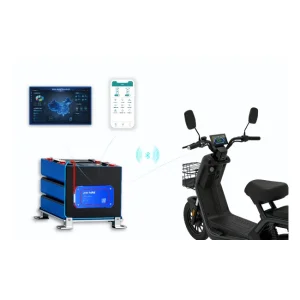
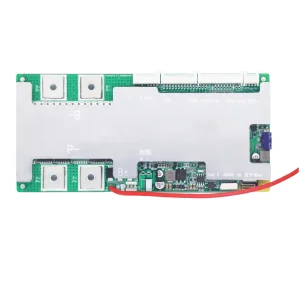
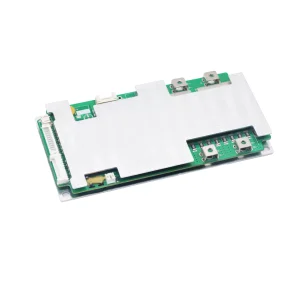
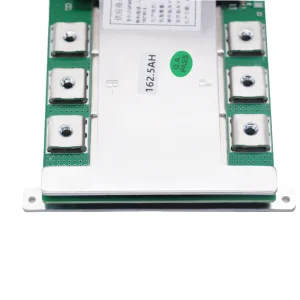
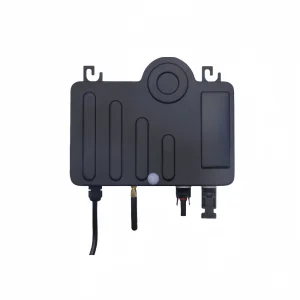
When sourcing hardware BMS protection boards for operations in Southeast Asia, engineers must look past basic overcurrent limits and scrutinize transient electrical profiles. The primary responsibility of any high-quality hardware BMS is guarding against the critical conditions of lithium cells:
Because of Thailand's elevated ambient temperatures, heat dissipation in protection circuits is a key engineering priority. If a BMS has high internal resistance, the circuit board can heat up under continuous high discharge currents, driving the cells near it past safe operating limits. Litongwei designs its protection boards with thick copper traces (2oz to 4oz) and integrated aluminum heat sinks to minimize board temperature rise. Our multi-channel NTC sensors interface directly with safety logic to trigger early thermal shutdowns before critical thresholds are crossed.
Exporting batteries and high-power electronics requires stringent certification compliance. Litongwei's manufacturing lines support systems built to pass UN38.3 (transport safety), CE, FCC, RoHS, and UL testing frameworks. Our robust testing process includes automated functional testing (FCT), circuit trace impedance validation, and high-temperature burn-in tests to ensure every board arrives at your Thailand assembly plant ready for installation.
A Hardware BMS uses dedicated analog circuits to monitor voltage and current thresholds. It operates instantly without microcontrollers or firmware, making it highly reliable and cost-effective. An Intelligent (Software) BMS incorporates a microcontroller (MCU) to compute State-of-Charge (SoC) and State-of-Health (SoH), supporting protocols like CAN bus, RS485, and Bluetooth for remote telemetry.
Thailand's high average humidity (often above 80%) and temperatures (regularly reaching 35°C–40°C) accelerate cell degradation and risk thermal runaway. A reliable BMS must feature moisture-resistant conformal coating, multi-point NTC temperature sensors, and low internal resistance (low RDS-ON MOSFETs) to ensure stable heat dissipation.
Our quality control process includes 100% automated optical inspection (AOI), in-circuit testing (ICT), functional testing (FCT) under simulated load conditions, voltage calibration, and high-temperature environmental burn-in. All data points are logged in our MES tracking database.
We sign strict Non-Disclosure Agreements (NDAs) and offer joint intellectual property structures. We construct customized shared-board safety designs to prevent trademark or utility infringements, protecting our partners' proprietary designs in global and local Thai markets.
Get in touch with our engineering and logistics teams to receive a detailed quote, design recommendation, or sample unit for your project in Thailand or anywhere globally.
 Litongwei Electronic