High-performance intelligent Hardware BMS designed to protect complex lithium packs in high-stress, off-grid Saharan operations.
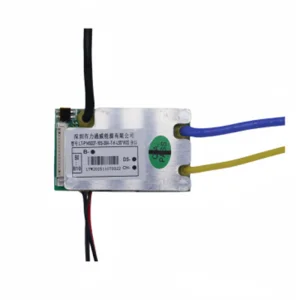
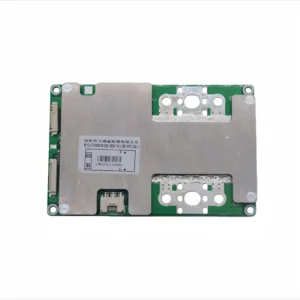
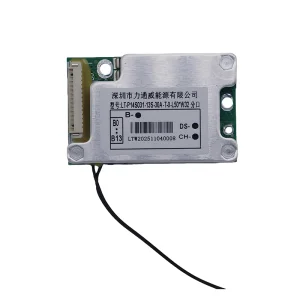
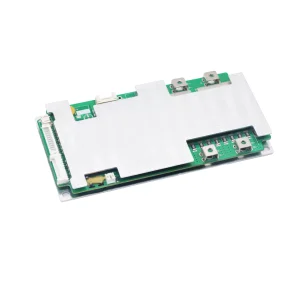
As Africa's largest nation by land area, Algeria is undergoing a rapid energy transition. Driven by the Algerian government's ambitious national renewable energy plan (aiming for 15,000 MW of solar power capacity by 2035), clean energy projects are expanding from urban hubs like Algiers and Oran down to remote desert settlements in Adrar, Tamanrasset, and Illizi. In these remote areas, off-grid microgrids, solar-powered agricultural irrigation, and telecommunications towers are vital lifelines. Battery Energy Storage Systems (BESS) based on lithium-ion technologies have become the backbone of these off-grid networks, necessitating ultra-reliable Hardware Battery Management Systems (BMS).
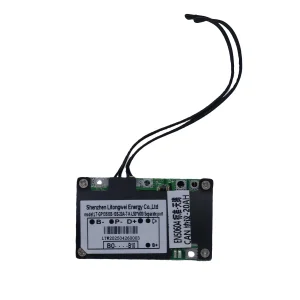
Operating a lithium-ion battery system in Algeria presents extreme engineering challenges. Ambient temperatures in the Sahara Desert routinely exceed 50°C (122°F), with surface ground temperatures reaching even higher. Standard consumer-grade protection circuits will fail under such intense thermal stress, leading to premature cell degradation or catastrophic thermal runaway events. Consequently, procurement specialists and energy engineers in Algeria require custom-engineered hardware BMS solutions. These boards must be equipped with multiple high-precision NTC thermistors, advanced thermal dissipation designs, and ruggedized protection circuitry capable of executing physical circuit cuts instantly when safe thresholds are breached.
Engineered to handle elevated Saharan ambient temperatures with heat sink optimization and high-precision NTC temperature sensors.
Robust MOSFET switches and heavy-duty printed copper trace paths to ensure long-term stability under heavy load cycles.
Three-proofing conformal coating shields components against fine sand penetration and ambient moisture typical in coastal regions.
Global EPC contractors and local Algerian distributors face stringent import and product lifecycle requirements. They must procure BMS units that satisfy international safety benchmarks (such as IEC 62619, CE, RoHS, and UN38.3) while keeping custom configuration paths clear. Since many Algerian applications utilize locally-assembled battery packs using imported A-grade cells, there is a strong demand for customized 10S, 13S, 16S, and 20S hardware protection boards. These systems require integrated balancing functions (using passive resistive bleeding circuits) to maintain charge consistency across cells over thousands of operational cycles, safeguarding the asset and maximizing returns on solar and industrial microgrid investments.
A pure hardware Battery Management System (BMS) manages critical safety protocols through physical circuit components rather than heavy software logic. This makes it highly robust, invulnerable to software bugs or digital system crashes, and incredibly cost-effective for mass production. Let us analyze the foundational pillars of this architecture and how it operates in the context of the Algerian market:
In high-power application scenarios like industrial power tools or electric vehicles, transient voltage spikes can occur frequently. The hardware BMS deploys high-speed analog comparators within the protection ICs. When current levels exceed safe parameters, the comparator triggers a state change in the drive circuit within microseconds (μs), immediately turning off the discharge MOSFETs. For Algerian solar plants, this immediate decoupling protects cells from major failure cascades, ensuring system stability even if the grid suffers sudden external load variations.
Temperature control is critical for safety. The integration of high-precision Negative Temperature Coefficient (NTC) resistors allows the hardware BMS to measure local temperatures directly on cell junctions and high-power busbars. If temperatures exceed the pre-set safety thresholds (e.g., 65°C for charging, 70°C for discharging), the protection circuit disables charging or discharging. This physical shut-off process occurs independently of any external software intervention, making it a reliable fail-safe for critical Saharan storage units.
Over time, cell-to-cell variations in internal resistance and capacity lead to unbalanced cell voltages. A unbalanced pack will hit its over-voltage limit prematurely, leaving significant capacity unused. Litongwei's hardware BMS incorporates high-precision shunt resistors that activate when cell voltages exceed the balancing threshold (typically 4.18V to 4.2V for standard lithium chemistries). By discharging the higher cells at a passive rate of 30mA to 100mA, the pack is brought back into alignment, extending its overall lifecycle and improving pack efficiency by up to 15%.
Fine desert sand in southern Algeria and saline-heavy sea breezes along coastal Oran and Algiers pose severe corrosion and leakage risks to electronic circuit boards. All hardware BMS units manufactured by Litongwei undergo automated spraying of advanced polyurethane or silicone-based conformal coatings. This creates a thick barrier against dust infiltration, moisture, and chemical attack, ensuring the PCBA maintains high isolation values over years of operation.
Shenzhen Litongwei Electronic Technology Co., Ltd., established in 2005, is a national high-tech enterprise specializing in the R&D and manufacturing of lithium-ion safety control systems. Our products are widely used in 3C digital devices, electric scooters, bicycles, motorcycles, tricycles, golf carts, AGVs, drones, and power tools. We provide intellectual property protection (patent collaboration to prevent infringement), industry-standard shared boards (cost reduction and efficiency improvement), full-process traceability (quality control), and remote maintenance (cloud platform support) to help you address technical, cost, and operational challenges. By choosing us, you'll receive top-tier products and services. Litongwei is committed to collaborating with you to build a brighter future together.
LITONGWEI has always adhered to the philosophy of "Technology as King, Efficient Service" in all aspects of production and operations. Our vision is to become a provider of intelligent green energy management solutions, embracing environmental sustainability. Start with LITONGWEI!
Decades of technical growth, product optimization, and compliance engineering that support our global distribution capability.
In 2005, the company commenced R&D and manufacturing of digital Battery Management Systems (BMS). By 2006, it expanded into power battery management system development. ISO9001 certification was obtained in 2007, followed by ISO14001 certification in 2009.
The company secured 8 utility model and design patents in 2011, while expanding its mobile power bank manufacturing operations. The Litongwei Technology Research Institute was established in 2012. It received the Del New Energy Quality Excellence Award in 2014 and earned the Gold Partner title from Gaogong Lithium Battery in 2015.
The company upgraded its ISO 9001 and ISO14001 certifications in 2016, achieved IATF16949 certification in 2018, and implemented an MES system for warehouse automation. It was awarded the Guangdong Battery Industry Association Innovation Award in 2019 and recognized as a leading brand in lithium battery protection board technology for two-wheeled vehicles in 2020.
Litongwei Electronics continues to innovate, deepening its technological expertise while embracing IoT and Industry 4.0. Through its Smart Manufacturing+ strategy, the company drives industrial transformation and upgrading to serve clients in global markets like Algeria.
Litongwei's partners include Huawei, Lenovo, Desay, Guoguang, Sunwoda, Eve Energy, Guoxuan High-tech, and other industry brand clients who have collaborated for many years.







In response to the increasing demand for energy storage in Algeria, Litongwei has established a future technical roadmap focused on high durability, integrated telemetry, and thermal safety. While classic hardware BMS setups rely strictly on analog circuits, our latest product line bridges the gap by offering physical fail-safes alongside optional low-power communication interfaces (such as Bluetooth, CAN Bus, and RS485). This hybrid approach allows operators in Algeria to safely monitor state-of-charge (SOC) and state-of-health (SOH) values while trusting the hardware-based overrides for critical safety thresholds.
Advanced silicon gate drivers and precision shunt resistors have been designed to automatically self-calibrate for thermal drift. In environments like the Algerian Sahara, resistance levels in shunt components can fluctuate under extreme heat, potentially distorting current measurements. Litongwei's new generation hardware platforms address this by integrating temperature compensation components directly into the current measurement path. This guarantees stable trip levels (over-current and short-circuit limits) across a temperature range of -40°C to +85°C.
Essential insights for procurement managers, solar installers, and battery pack assemblers in Algeria.
Explore our full line of protective solutions and accessories, fully customizable for industrial battery pack manufacturing in Algeria.

 Litongwei Electronic