Pre-tested, certified protection modules engineered to meet strict urban power limitations and building safety guidelines.
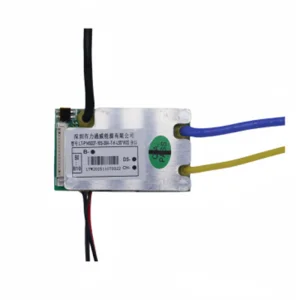
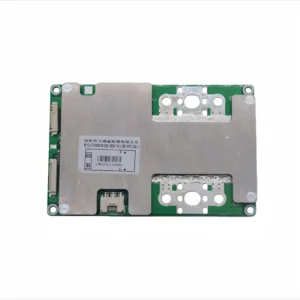
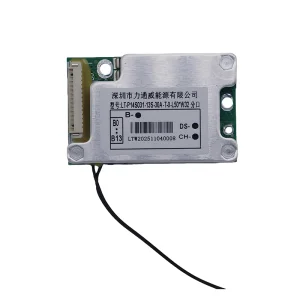
Navigating strict FDNY safety limits, utility grid integrations, and the infrastructure demands of a carbon-neutral empire state.
New York State's Climate Leadership and Community Protection Act (CLCPA) mandates the development of 6,000 megawatts of energy storage capacity by 2030. Within the dense urban confines of New York City, achieving this goal requires unparalleled engineering safety. The Fire Department of New York (FDNY) enforces some of the world's most rigorous installation guidelines for stationary lithium-ion battery energy storage systems (BESS). In this regulatory environment, the Hardware Battery Management System (BMS) is not merely a control board; it is the vital safety barrier preventing thermal runaway, monitoring system health, and ensuring compliance.
Whether deploying commercial and industrial (C&I) microgrids in Manhattan skyscrapers, retrofitting warehouse facilities in Brooklyn, or upgrading off-grid municipal backup systems in Upstate New York, choosing the right Hardware BMS supplier is a critical business decision. Systems must monitor cell-level parameters continuously, interfacing directly with external energy management system (EMS) software and fire suppression mechanisms via robust communication protocols such as Modbus, CAN Bus, and RS485.
Our advanced BMS designs utilize dual-loop temperature sensors (NTC) and instant overcurrent cut-offs to intercept cell-level stresses before thermal propagation occurs.
Compliance with Local Law 97 means buildings must drastically reduce emissions. High-performance BMS components facilitate safe onsite solar-plus-storage integration.
C&I applications in NY demand fast response for peak shaving and demand response markets, requiring robust hardware architectures that sustain continuous cycling.
Transitioning from basic analog cell protectors to AI-driven edge intelligence for advanced state-of-health forecasting.
The global battery landscape is shifting rapidly. The roadmap for next-generation hardware BMS centers on three main technological pillars: high-precision analog front-ends (AFE), active cell-balancing topographies, and intelligent edge computing layers. Classic passive balancing relies on burning off excess voltage through bypass resistors, which creates system heat. Modern high-power industrial designs are adopting active charge redistribution systems, transferring energy from high-SOC cells to low-SOC cells with minimal efficiency losses.
Furthermore, the integration of cloud-connected digital twins allows real-time diagnostics. Algorithms running on microcontrollers now monitor state-of-charge (SOC) and state-of-health (SOH) using advanced Kalman filtering and electrochemical impedance spectroscopy (EIS) principles. This predictive capacity allows microgrid operators to preemptively swap aging modules, mitigating downtime and optimizing total lifetime returns on battery assets.
Tailored BMS configurations addressing distinct commercial scale requirements, from micromobility to multi-megawatt configurations.
Different operating conditions demand custom architectures. A light electric vehicle (LEV) battery requires a compact BMS that handles vibration, moisture ingress, and thermal fluctuations within a very tight physical layout. Conversely, large utility energy storage systems (ESS) use hierarchical master-slave architectures. In these configurations, multiple slave modules monitor cell groups, feeding telemetry back to a centralized master controller, which communicates directly with the high-voltage inverter.
Shenzhen Litongwei Electronic Technology Co., Ltd. provides customized solutions across all scales, ensuring high reliability under continuous operation. Our hardware configurations support multi-channel temperature protection (NTC), high-current charging and discharging paths, and integrated safety switches to protect the battery system from electrical faults.
Meeting UL 1973, UL 9540, and NFPA 855 codes for seamless system integration in the United States.
Deploying energy systems in New York requires navigating complex regulatory standards. To obtain building permits, systems must comply with UL 1973 (for batteries in stationary or light rail applications) and UL 9540 (for energy storage systems). Testing to these standards requires robust BMS safety controls. The BMS acts as the primary safety mechanism during functional safety testing under UL 991 and UL 1998 standards.
Our engineering support team collaborates with global compliance labs, providing the documentation, hardware safety margins, and performance data required to streamline local certification processes. By choosing a partner with high regulatory alignment, developers avoid project delays and reduce engineering costs.
Leveraging advanced manufacturing facilities to deliver reliable components at scale.
Shenzhen Litongwei Electronic Technology Co., Ltd., founded in 2005, is a high-tech enterprise specializing in the R&D and manufacture of lithium-ion safety control systems. With an independent factory space of over 13,000 square meters in Shenzhen and a 27,000 square meter facility in Dongguan Huangjiang, Litongwei has built a scalable production infrastructure.
Equipped with 24 high-speed pick-and-place (SMT) machines and 12 PCBA production lines, our monthly capacity exceeds 15 million units. Full-process traceability is integrated via our MES (Manufacturing Execution System) warehouse and shop floor automation, ensuring high repeatability and reliability across production batches.
How we evolved from a regional developer into an industrial BMS supplier serving global partners.
Technology-driven growth. Commenced R&D and manufacturing of digital BMS in 2005. Expanded into power battery management system development. Obtained ISO9001 in 2007 and ISO14001 in 2009.
Technological advancement. Secured 8 utility model and design patents in 2011, establishing the Litongwei Technology Research Institute in 2012. Recognized with the Quality Excellence Award in 2014.
Digital transformation. Upgraded ISO certifications in 2016 and achieved IATF16949 certification in 2018. Implemented full MES automation for high-reliability warehouse and quality control workflows in 2019.
Smart Manufacturing+ Era. Continuing to integrate IoT and Smart Manufacturing solutions, upgrading BMS products to support wireless, high-voltage, and smart cloud communications.
Litongwei's partners include Huawei, Lenovo, Desay, Guoguang, Sunwoda, Eve Energy, Guoxuan High-tech, and other leading brands with whom we have collaborated for many years.








Key metrics for sourcing high-reliability hardware BMS from OEM suppliers.
When selecting a Hardware BMS partner for commercial, industrial, or telecom deployment, procurement teams should evaluate several technical criteria:
Technical answers to common questions about battery protection boards, certifications, and compliance.
A pure Hardware BMS relies on analog circuitry, hard-wired comparative circuits, and discrete components to protect the battery system without running software. A Smart BMS integrates a micro-controller unit (MCU), allowing dynamic software configuration, digital communication protocols (such as Bluetooth, CAN Bus, and RS485), and real-time state estimation (SOC and SOH).
Lithium-ion cells display minor variances in internal resistance, capacity, and self-discharge rates. Over time, these variances lead to voltage imbalances during charge/discharge cycles. Cell balancing balances the voltages across the pack, helping to prevent individual cells from overcharging or overdischarging. This helps extend the life and improve the safety of the entire battery pack.
We manufacture in accordance with ISO 9001, ISO 14001, and IATF 16949 automotive standards. We work closely with our clients to supply technical documentation, circuit schematics, and component selections that facilitate UL 1973, UL 9540, and CE testing in target jurisdictions.
We offer customization of charge and discharge overcurrent limits, over/under voltage protection thresholds, temperature cut-off points (using NTC thermistors), and communication protocols (such as UART, I2C, Bluetooth, CAN, or RS485) to meet specific application profiles.
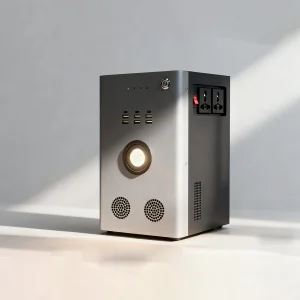
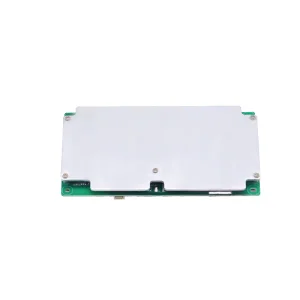
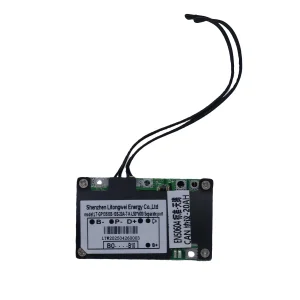
Explore our complete range of battery protection boards and backup energy solutions, built with high-quality components.
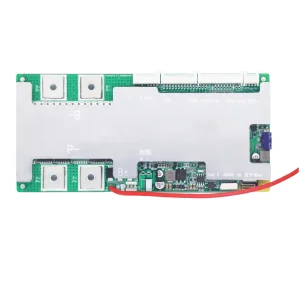
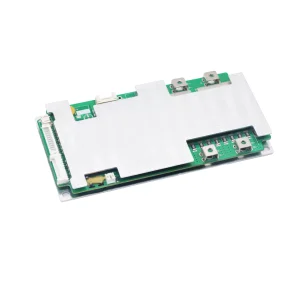
Partner with an IATF 16949-certified BMS manufacturer to ensure your energy installations comply with New York safety codes.
 Litongwei Electronic