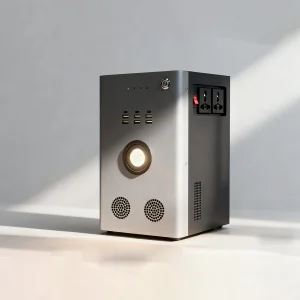
As Spain aggressively pursues its decarbonization targets under the National Integrated Energy and Climate Plan (PNIEC 2021-2030), the demand for high-reliability energy storage systems (ESS) and smart e-mobility platforms has experienced exponential growth. Spain is now Europe's second-largest automotive manufacturer and has established itself as an innovative hub for light electric vehicles (LEVs), automated guided vehicles (AGVs) for warehouse logistics, and utility-scale solar PV storage projects.
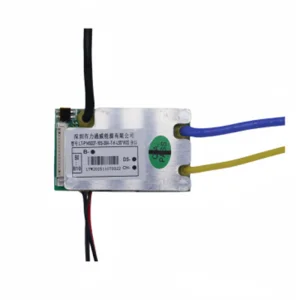
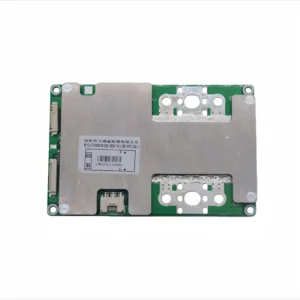
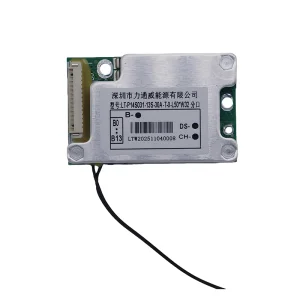
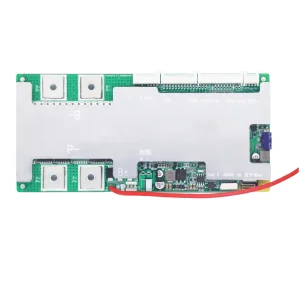
At the heart of every reliable lithium battery pack lies a critical component: the Hardware Battery Management System (Hardware BMS). Unlike pure software-based controls, a dedicated hardware BMS provides deterministic, microsecond-level safety protection against thermal runaway, short circuits, cell imbalances, and extreme operating conditions. Shenzhen Litongwei Electronic Technology Co., Ltd. delivers high-performance protection boards engineered to withstand the demanding requirements of Spanish industrial, commercial, and solar applications.
From Madrid’s e-mobility fleets to solar storage arrays in Andalusia, our hardware BMS solutions ensure that lithium battery systems run efficiently, operate within safe thermal limits, and conform strictly to European safety standards including CE, RoHS, and UNE-EN standards.
Engineered for Spanish urban transport fleets, utility grid networks, and regional warehouse logistics systems.
How our battery protection boards are designed to handle thermal challenges and load requirements unique to the Iberian Peninsula.
Spain's southern regions, such as Andalusia and Extremadura, routinely experience summer temperatures exceeding 40°C. Standard BMS designs fail when passive component ratings drift under intense heat. Litongwei integrates high-precision Negative Temperature Coefficient (NTC) thermistors directly mapped to control logic, enabling real-time over-temperature cutoff and dynamic thermal regulation.
With Spanish cities implementing Low Emission Zones (ZBE), the demand for e-scooters, electric motorbikes, and cargo bikes has surged. The Spanish regulatory landscape demands robust battery designs (UNE-EN safety codes). Our protection boards offer cell balancing and short-circuit protection to eliminate electrical fires in dense municipal storage locations.
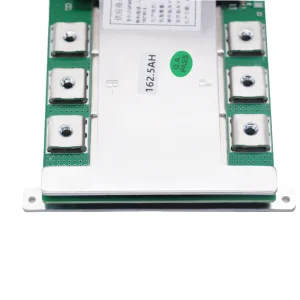
Residential and commercial solar self-consumption in Spain is expanding rapidly. Litongwei's high-current hardware BMS (up to 200A and above) works alongside grid-tied inverters, preventing high surge currents from damaging lithium iron phosphate (LiFePO4) cell chemistry during peak charging or heavy load shedding.
Global sourcing managers and battery system integrators who import solutions into Spain face three distinct bottlenecks: IP vulnerability, quality variation, and regulatory non-compliance. Litongwei addresses these challenges by offering a structured design pipeline that bridges Chinese high-scale manufacturing and European industrial expectations.
By designing standard layouts with configurable high-current paths, we reduce engineering NRE (Non-Recurring Engineering) expenses by up to 35%. This shared-board approach ensures Spanish pack assemblers can integrate boards quickly without investing in custom hardware tooling for every prototype run.
Litongwei respects and protects intellectual property. When we collaborate on custom BMS designs for the Spanish market, we provide comprehensive patent clearance and circuit diagram reviews. This protects our clients' proprietary ideas and guarantees their systems do not violate third-party IP rights within the European Union.
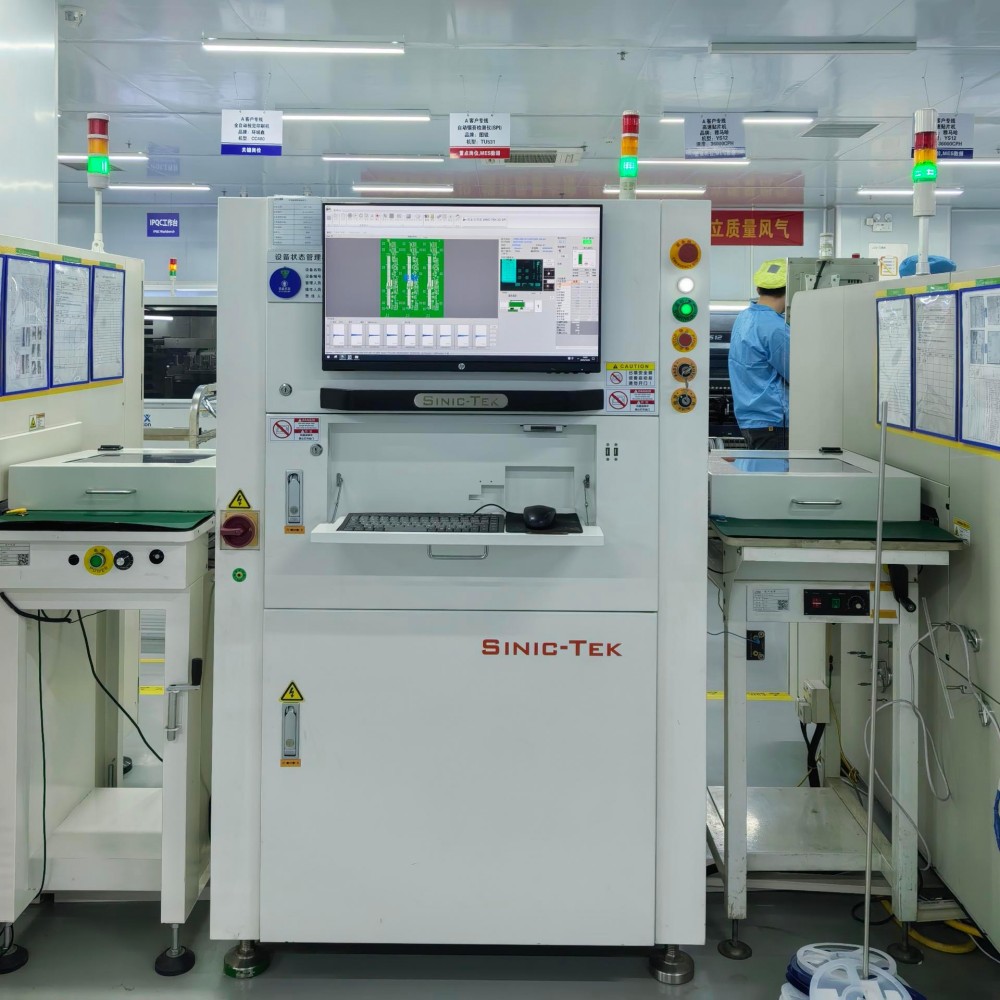
Our manufacturing facilities are integrated with state-of-the-art Manufacturing Execution Systems (MES). Every BMS board produced is logged with a unique serial tracker. This tracks component batch sourcing, Reflow Soldering profiles, functional AOI testing parameters, and final Quality Assurance checks. This enables complete product safety compliance tracking.
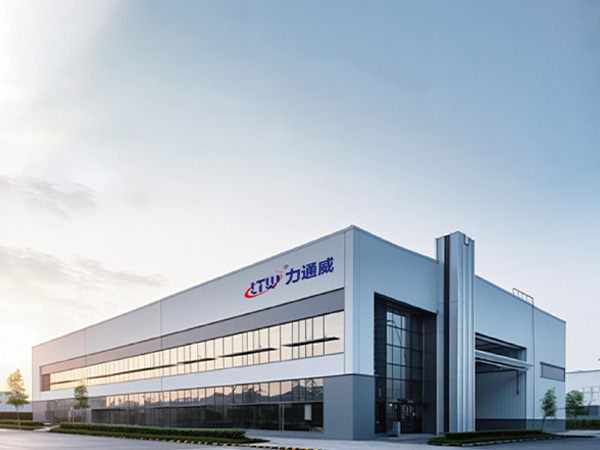
Established in 2005, Litongwei has evolved into a premier high-tech enterprise specializing in R&D, design, and manufacture of lithium-ion safety control systems.
Our mission is to engineer high-grade, intelligent green energy management systems that support sustainable global development. Over the past two decades, we have deployed millions of BMS protection boards worldwide, powering light electric vehicles (LEVs), portable power banks, power tools, home energy storage installations, golf carts, and advanced AGVs. Choosing Litongwei means partnering with a manufacturer that prioritizes safety, durability, and technological advancement.
Collaborating with top energy pioneers and hardware brands globally.







To clear European customs and operate in Spain, battery systems must meet stringent environmental and safety criteria. Imported components face strict inspection processes, and using sub-par protection circuits can result in product seizures or project delays.
Our hardware safety systems are designed to support pack-level compliance with UNE-EN 62619, the standard governing secondary lithium batteries used in stationary and industrial applications in Spain. It requires verified protective circuits that prevent overcharging, thermal runaway, and short-circuit faults.
Every product batch leaving our factories is certified under standard European CE directives. All components are RoHS and REACH compliant, guaranteeing that no hazardous heavy metals or restricted chemicals are exported to Spanish soil.
With the phased implementation of the European Union Battery Passport initiatives under Regulation (EU) 2023/1542, transparency in the supply chain is critical. Our MES serialization allows battery manufacturers in Spain to trace the precise date and parameters of BMS assembly, simplifying documentation compliance.
How our ongoing R&D matches the evolving storage landscape of 2025–2030.
As lithium costs fluctuate, Spanish industrial energy storage projects are turning to Sodium-Ion (Na-Ion) cell chemistry. Our upcoming hardware BMS platform integrates charge/discharge threshold profiles specifically calibrated for Sodium-Ion's unique curve.
Our next-generation smart boards support real-time connection to telemetry cloud dashboards via 4G/5G, allowing remote maintenance, cellular status alerts, and firmware updates across vast remote solar farms in Spain.
We are integrating edge computing architectures that use AI algorithms to track degradation patterns in high-current batteries, optimizing safety models for electric vehicle and stationary storage assets.
Comprehensive selection of BMS boards, screen displays, and off-grid inverters ready for distribution.
Answers to technical and commercial queries raised by Spanish lithium battery builders, engineering firms, and importing companies.
A hardware-only BMS utilizes hardwired discrete analog IC circuits to manage battery protection. Because there is no micro-controller (MCU) processing firmware code, it eliminates the risk of software lock-ups, coding glitches, or firmware corruption.
In extreme Spanish heat conditions where logic controller thresholds might drift, the analog components of our hardware BMS react instantly to over-voltage, under-voltage, or thermal conditions. This makes it highly cost-effective, durable, and reliable for high-stress applications such as power tools and light electric vehicle battery packs.
NTC (Negative Temperature Coefficient) thermistors act as physical sensors that monitor temperature within the battery pack cells. In regions such as Seville or Cordoba, where summer ambient temperatures can reach 45°C, charging or discharging lithium batteries generates internal heat that can lead to rapid degradation or thermal runaway.
Our BMS boards automatically monitor cell temperatures via NTC sensors. If the temperature exceeds a preset safety value, the BMS stops the charging or discharging process to protect the battery. The system resumes normal operation once temperatures cool down to safe levels.
Yes, our hardware BMS solutions are engineered to support compliance with UNE-EN 62619, which governs secondary lithium cells and batteries for industrial systems in Spain. This includes safety criteria for stationary storage, AGVs, and industrial telecommunications.
Our protection boards feature dual redundant safety architectures (including primary over-voltage protection and secondary hardwired fuse activation inputs) to ensure safe integration and simplify UNE-EN and CE compliance.
A same-port configuration uses the same cable path for both charging and discharging. This simplifies external wiring, making it ideal for systems with regenerative braking or integrated charge-discharge loops, such as electric bikes and solar storage systems.
A split-port configuration separates the charge and discharge paths, utilizing different terminals. This is often selected to reduce costs in applications where charging currents are significantly lower than discharge currents (e.g., specific power tool batteries).
We ship internationally from our advanced manufacturing bases in Shenzhen and Dongguan. Deliveries are regularly sent via major maritime and air networks to major Spanish ports and logistic centers, including Barcelona, Valencia, Madrid, and Bilbao.
For large commercial initiatives, we offer detailed technical documentation, hardware schematics, and remote engineering consultations. This ensures your local technical teams can integrate and test our products smoothly during installation.
You can contact us via our official contact page. Please provide details such as your chemistry type (e.g., LiFePO4, NMC), series cell count (e.g., 10S, 13S, 20S), maximum continuous current demands, and environmental constraints.
Our engineering team will review your specifications, configure custom thresholds if necessary, and supply initial samples for local testing and compliance verification.
 Litongwei Electronic