High-reliability safety control parameters tailored to support Tokyo's ultra-dense urban distribution channels and industrial transport platforms.
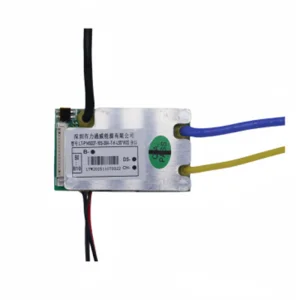
Optimal 13S configuration designed for electric bikes operating across metropolitan Tokyo.
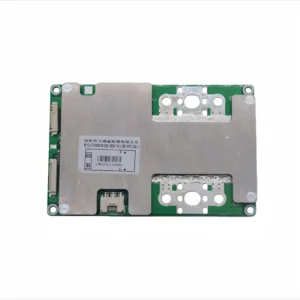
High-current capability combined with dual thermal-sensing NTC layers for industrial robot applications.
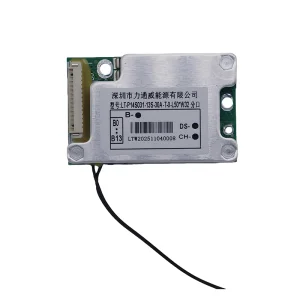
Features a physical/logical hardware switch mechanism and anti-reverse protection for delivery fleet operations.
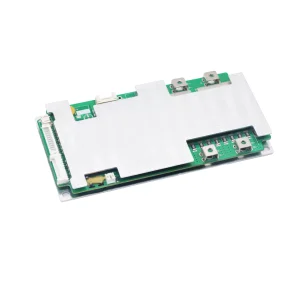
Integrated heating film control logic for stable operation during winter conditions in Kanto.
This technical brief evaluates Tokyo's local energy infrastructure requirements, regulatory compliances, and the global advancements in hardware battery management system (BMS) architectures.
As Japan ramps up its efforts to achieve carbon neutrality by 2050 under the Tokyo Metropolitan Government's "Zero Emission Tokyo" strategy, the demand for high-performance lithium-ion battery configurations is experiencing exponential growth. Tokyo's dense urban infrastructure, high land costs, and zero-tolerance policy for safety hazards place extreme engineering constraints on battery packs. From localized battery energy storage systems (BESS) installed in corporate high-rises to support peak shaving, to massive fleets of e-bikes, autonomous delivery carts, and e-scooters handling the last-mile logistics of the Kanto region, safety and longevity are paramount.
Operating battery installations in a dense metropolitan area like Tokyo requires adherence to rigid safety codes, including the strict PSE (Product Safety Electrical Appliance & Material) certification. A robust hardware-level BMS acts as the primary safety barrier, preventing hazardous scenarios such as thermal runaway, internal cell short-circuiting, and systemic overvoltage. Suppliers targeting the Tokyo market must deliver safety control platforms that incorporate hardware redundancy, high electromagnetic compatibility (EMC/EMI protection), and extreme precision in State of Charge (SOC) tracking.
Modern hardware BMS designs must establish dual-layer security protection pathways. At Litongwei, our systems leverage high-precision Analog Front-Ends (AFEs) coupled with automotive-grade microcontrollers (MCUs) to constantly monitor individual cell voltages. If a metric deviates, the hardware initiates protection mechanisms within microseconds, independent of software execution.
For light electric vehicles and industrial AGVs operating across Tokyo Port warehouses, cell balancing is the key to lifetime longevity. Passive cell balancing remains the most cost-effective and structurally reliable mechanism for battery packs up to 100A continuous discharge. By utilizing bypass resistors, excess charge from stronger cells is dissipated as heat, allowing weaker cells to catch up during the CV (Constant Voltage) charging phase. In micro-mobility configurations where spatial constraints limit thermal dissipation, precision-timed passive balancing prevents local hotspots, maintaining cell pack equilibrium.
Additionally, the integration of physical/logical switches and negative-temperature-coefficient (NTC) thermistors ensures the BMS monitors localized temperatures. For Tokyo's chilly winter mornings (temperatures dropping below 0°C), our advanced BMS variants trigger built-in heating film controllers (like those in our 20S 120A Bluetooth variant) to warm cells safely prior to accepting charge, thus preventing lithium plating and long-term capacity degradation.
As a premier hardware BMS supplier, Shenzhen Litongwei Electronic Technology Co., Ltd. delivers global-scale manufacturing depth combined with elite engineering expertise.
Litongwei's R&D investment has consistently accounted for more than 10% of the company's sales for five consecutive years. This continuous capital allocation drives our technological innovation, enabling us to hold over 100 patents in the lithium-ion battery protection board sector. We actively collaborate with our partners to provide patent defense, preventing infringement and minimizing operational, legal, and compliance risks across international markets like Japan and North America.
Mapping two decades of manufacturing scalability, safety advancements, and operational excellence.
In 2005, the company commenced R&D and manufacturing of digital Battery Management Systems (BMS). By 2006, it expanded into power battery management system development. ISO9001 certification was obtained in 2007, followed by ISO14001 certification in 2009.
The company secured 8 utility model and design patents in 2011, while expanding its mobile power bank manufacturing operations. The Litongwei Technology Research Institute was established in 2012. It received the Del New Energy Quality Excellence Award in 2014 and earned the Gold Partner title from Gaogong Lithium Battery in 2015.
The company upgraded its ISO 9001 and ISO14001 certifications in 2016, achieved IATF16949 certification in 2018, and implemented an MES system for warehouse automation. It was awarded the Guangdong Battery Industry Association Innovation Award in 2019 and recognized as a leading brand in lithium battery protection board technology for two-wheeled vehicles in 2020.
Litongwei Electronics continues to innovate, deepening its technological expertise while embracing IoT and Industry 4.0. Through its Smart Manufacturing+ strategy, the company drives industrial transformation and upgrading.
Litongwei's partners include Huawei, Lenovo, Desay, Guoguang, Sunwoda, Eve Energy, Guoxuan High-tech, and other leading brand clients who have collaborated with us for many years.














From solar micro-inverter solutions supporting rooftop microgrids to specialized high-capacity lithium protection boards.
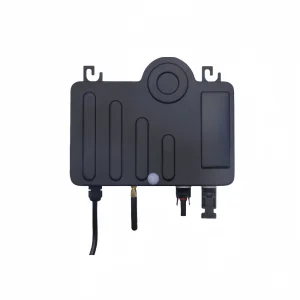
Ultra-efficient grid-tie module rated IP67 for harsh urban environments.
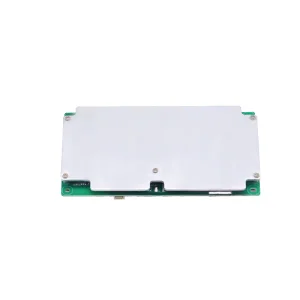
Bluetooth telematics module offering over-the-air status monitoring for smart fleets.
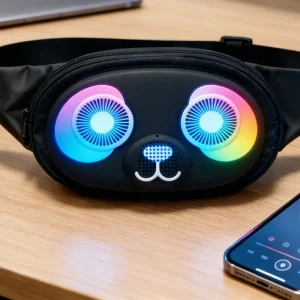
Innovative micro-battery integration ensures high-capacity runtime for night delivery riders.
Optimized for integration with commercial balcony solar panels in compact apartment blocks.
Auto-discharge safety function prevents cell degradation when stored for long periods.
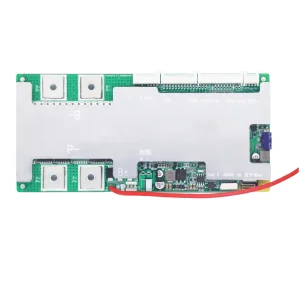
Dual-bus communication interface with dynamic heat management for machinery.
Prevents grid feedback surge damage during regenerative braking of electric cargo bikes.
Reliable safety control system built for municipal facility emergency power reserves.
Converts battery DC storage into pure sine wave AC output matching domestic grid parameters.
Dedicated safety integration keeps micro-cells balanced during vibration-heavy rides.
Perfect match for modular balcony PV systems common in central Tokyo residential blocks.
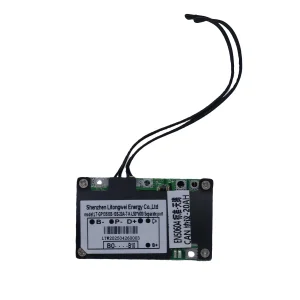
Optimized CAN bus protocols to report battery status directly to central telemetry units.
The expansion of modern micro-grids and EV fleets requires scaling hardware architectures to support higher voltages and currents while maintaining a compact form factor. For logistics operators in Tokyo, downtime equals massive revenue loss. Our smart BMS models incorporate communication interfaces such as CAN 2.0B, RS485, and Bluetooth, allowing maintenance personnel to extract real-time battery diagnostics without dismantling the physical battery enclosures.
When deploying energy arrays in urban areas, multi-layer overcurrent and short-circuit protection algorithms are programmed directly into the hardware registers of the BMS. This prevents accidental field-service errors from causing catastrophic short-circuits. For instance, in our 20S 100A design, the hardware includes a same-port charging/discharging configuration with integrated NTC thermistors. This simplifies installation wiring while maximizing protection reliability, which is a major benefit for e-bike rental networks operating in heavy traffic zones such as Shibuya, Shinjuku, and Chiyoda.
To address the next generation of battery chemistries, including solid-state and sodium-ion technologies, Litongwei's engineering team is actively upgrading the underlying hardware architecture of our BMS line. Over the next three years, our R&D timeline includes the following milestones:
Integrating standard BLE and 4G IoT modules directly onto the BMS substrate to enable continuous cloud diagnostic capabilities and SOH machine-learning algorithm assessments.
Transitioning consumer protection lines to follow ASIL-C and ASIL-D structural design metrics, ensuring high reliability for complex robotic and industrial transport systems.
Co-developing specialized voltage thresholds and heat sensing arrays optimized for the extreme safety demands of commercial solid-state batteries.
Technical answers for design engineers and system integrators deploying battery configurations in the Tokyo market.
Partner with Shenzhen Litongwei Electronic Technology Co., Ltd. for reliable, patent-protected, and highly efficient hardware BMS solutions. Let our engineering team optimize your next battery system for Tokyo's industrial and urban logistics sectors.
 Litongwei Electronic