Pre-engineered grid-tied micro-inverters and smart backup inverters tailored for local German safety compliance and VDE-AR-N 4105 criteria.
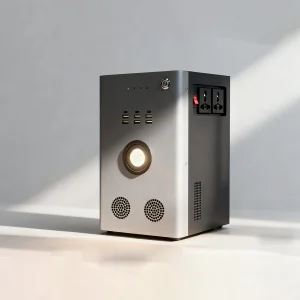
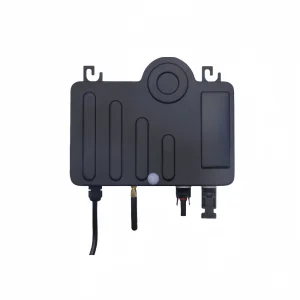
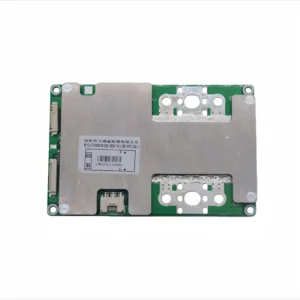
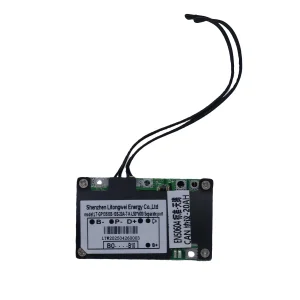
Germany’s commitment to the Energiewende has established it as a highly sophisticated market for power conversion, photovoltaic generation, and energy storage systems. The German energy landscape demands superior power electronic performance, grid safety, and robust system communications. From residential microgrids to utility-scale hybrid storage units, inverters must operate with high efficiency while maintaining active grid interaction.
To operate on the German utility network, inverters must fully comply with the stringent VDE-AR-N 4105 standard. This regulation outlines detailed grid-connection parameters, including dynamic grid support (fault ride-through capability), automatic frequency and voltage stabilization, and built-in active grid disconnection interfaces. These measures prevent uncontrolled islanding and preserve regional grid equilibrium.
As the local market transitions from simple PV feeding to self-consumption and micro-CHP models, bidirectional power management has become essential. Advanced energy storage systems rely on specialized Battery Management Systems (BMS) and inverters that coordinate via integrated CAN bus or RS485 lines. This ensures dynamic cell monitoring, accurate state-of-charge calculation, and active thermal management, resulting in optimal safety and performance.
Connect with our Technical Engineers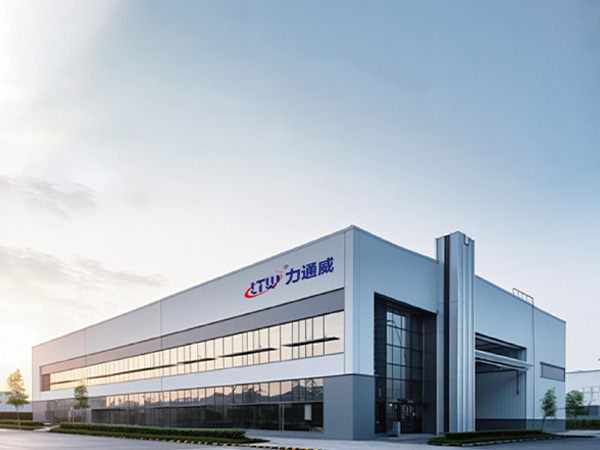
Tailored power electronics and intelligent control systems designed for Germany's distinct commercial and residential energy markets.
With the transition of output limits from 600W to 800W under Solarpaket I, micro-inverters must deliver high MPPT efficiency and direct Wi-Fi/Bluetooth monitoring while maintaining IP67 water and dust resistance for balcony environments.
Hybrid residential storage setups require bidirectional solar inverters matched with intelligent multi-cell BMS protection boards. This enables smooth grid-to-battery energy flow and reliable backup power during unexpected outages.
Commercial and industrial applications require safe, large-scale battery protection systems (e.g., 20S to 23S smart BMS configurations) coupled with robust inverters. This setup supports peak shaving, peak load shifting, and high operational safety.
The global push for decarbonization and distributed grid modernization is driving rapid innovation in power conversion technologies.
Replacing traditional silicon IGBTs with Silicon Carbide (SiC) and Gallium Nitride (GaN) MOSFETs significantly reduces switching losses, allowing for higher operational frequencies. This development yields more compact, lightweight micro-inverters with peak conversion efficiencies exceeding 98%.
Modern EV charging infrastructures are adopting Vehicle-to-Grid (V2G) systems. Bidirectional power banks and mobile micro-inverters allow electric vehicles to serve as decentralized home battery storage units, feeding power back into the grid during periods of peak demand.
Next-generation BMS protection boards utilize built-in Bluetooth, CAN bus, and LTE-M transceivers. These interfaces send real-time performance telemetry to cloud platforms, allowing for remote firmware updates, proactive fault detection, and simplified operational maintenance.
Founded in 2005, Shenzhen Litongwei Electronic Technology Co., Ltd. is a national high-tech enterprise specializing in the R&D and precision manufacturing of advanced lithium-ion safety control systems and intelligent power electronics. Our products protect and optimize battery-powered devices, ranging from light electric vehicles (LEVs) and smart power banks to household solar installations and commercial energy storage modules.
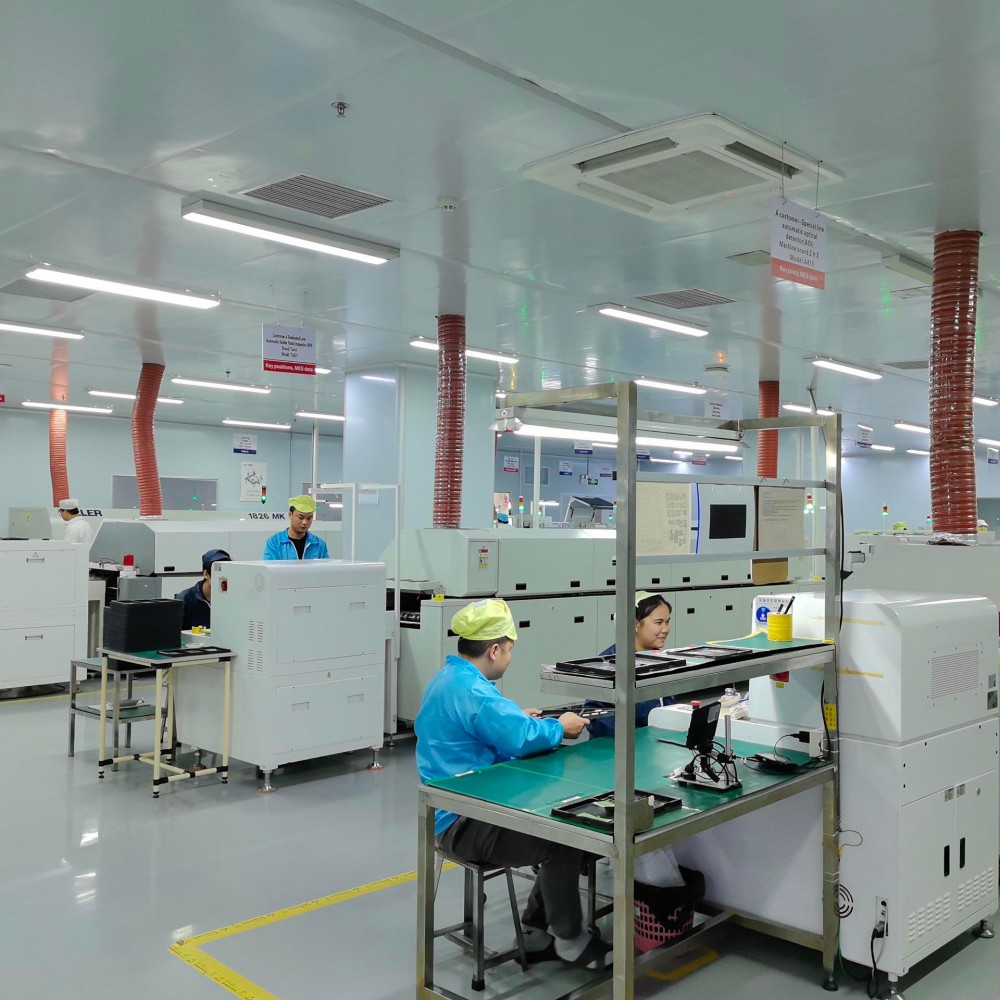
We maintain an advanced manufacturing infrastructure, featuring 13,000 square meters of production space in Shenzhen and a 27,000 square meter factory in Dongguan Huangjiang. Equipped with 24 high-speed pick-and-place SMT assembly machines and 12 dedicated PCBA production lines, our monthly output exceeds 15 million units. This high-capacity setup ensures a reliable supply chain for European distributors and OEMs during seasonal peak demand.
Our design approach focuses on product reliability and risk mitigation. We offer intellectual property protection through collaborative patent development, cost-efficient shared board designs, and full-process components traceability via a custom Manufacturing Execution System (MES). These production controls ensure compliance with international directives, including CE, RoHS, and WEEE, and satisfy the safety requirements of the German market.
A history of innovation, smart automation, and scaling production to meet clean energy challenges.
Commenced R&D and manufacturing of digital Battery Management Systems (BMS) in 2005. Expanded into power battery management system development in 2006. Secured ISO9001 certification in 2007, and ISO14001 certification in 2009.
Secured 8 utility model and design patents in 2011 while expanding mobile power bank manufacturing. Established the Litongwei Technology Research Institute in 2012. Received the Del New Energy Quality Excellence Award in 2014.
Upgraded certifications to IATF16949 in 2018 and deployed a comprehensive MES system for tracking and automated component verification. Awarded the Guangdong Battery Industry Association Innovation Award in 2019.
Integrated IoT cloud communication and micro-inverter topology to support balcony solar and home energy storage markets. Continued building direct partnerships with European importers, offering fully certified VDE-compliant products.
We work closely with global leaders in energy, consumer electronics, and lithium battery manufacturing to deliver reliable power solutions.





BMS and inverter components engineered to withstand demanding environments, featuring Bluetooth integration, auto-heating functionality, and communication interfaces.
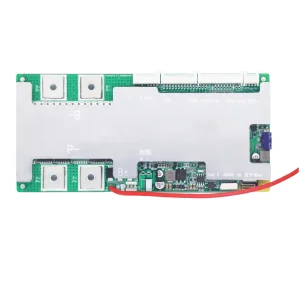
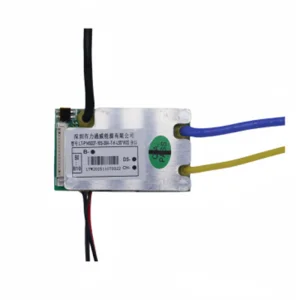
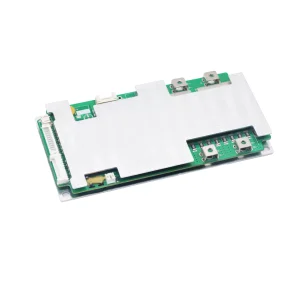
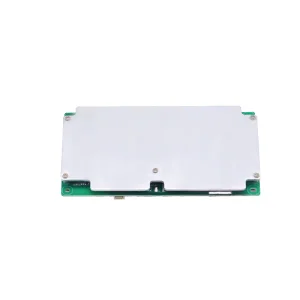
Combining rugged construction with embedded technologies to support smart electronics on the move.
Expert answers regarding VDE-AR-N 4105 compliance, OEM/ODM customizations, and our production capabilities.
Yes. Our micro-inverters are designed to meet VDE-AR-N 4105 grid requirements, which include a built-in safety relay for grid disconnection, active frequency drop handling, and power factor adjustment capabilities.
Absolutely. We specialize in custom BMS design, offering configurations from 10S up to 23S with same-port balancing, NTC temperature detection, and integrated CAN/Bluetooth hardware to communicate with host inverters.
We deploy a complete Manufacturing Execution System (MES) that tracks each PCBA board throughout production. Combined with automated SMT inspections and compliance testing, this system guarantees high reliability for international markets.
MOQ parameters vary based on custom requirements. Standard shared board configurations can be delivered rapidly, while fully custom designs undergo engineering verification before bulk scheduling.
Yes, we manufacture intelligent heating BMS options. When temperature sensors detect freezing conditions, the system directs charging current to heat the cells before initiating charge cycles, protecting the chemistry from lithium plating.
 Litongwei Electronic