Advanced battery protection boards optimized for Seoul's urban e-mobility fleets, automated warehousing (AGV), and local energy storage systems.
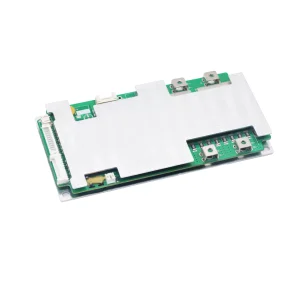
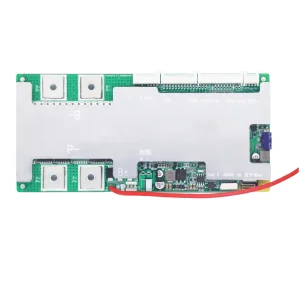
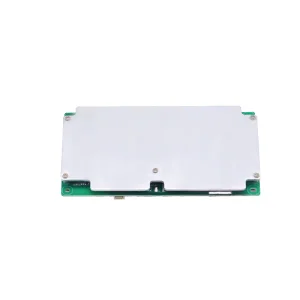
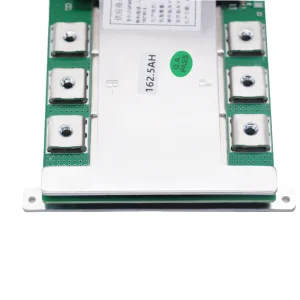
In South Korea’s highly dense metropolitan zones, particularly within the Seoul Capital Area (SCA), the transition toward high-density lithium-ion battery integration has outpaced conventional hardware-only protection layers. A traditional hardware-based protection board lacks the dynamic communication telemetry required for smart grids, remote logistics tracking, and battery fleet safety diagnostics. As a result, Software BMS (Battery Management Systems) featuring intelligent microcontrollers, programmable configurations, and field-updatable parameters have become the new industrial standard in the Seoul technology ecosystem.
Seoul’s key technology hubs—such as the Gasan Digital Complex, Magok Industrial Complex, and Mapo-gu smart city testbeds—rely extensively on smart mobility. These applications require real-time tracking of State of Charge (SoC), State of Health (SoH), and internal cell impedance levels. For instance, cold winter seasons in Seoul (where temperatures drop below -10°C) cause dramatic voltage drops in standard packs. Modern Software BMS designs integrate intelligent thermal control and pre-heating logic to preserve cycle life and maintain charge efficiency.
At Shenzhen Litongwei Electronic Technology Co., Ltd., we specialize in addressing these operational challenges. Since 2005, we have provided high-performance lithium safety control systems that bridge the gap between high-precision Chinese battery electronics manufacturing and local engineering requirements in Seoul and global smart hubs.
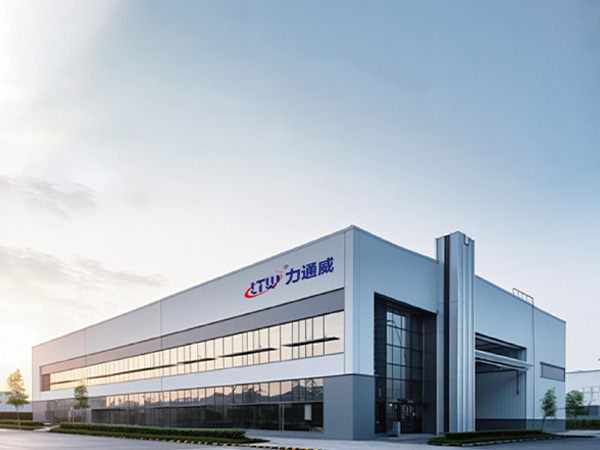
Delivering precision-engineered Software BMS to leading global and local Korean enterprises.
The core framework of our Software BMS relies on a robust ARM Cortex or similar high-performance MCU, running optimized algorithms for battery safety and performance prediction. Unlike static boards, our systems integrate active cell monitoring and communication protocols such as CAN Bus, RS485, Modbus, and Bluetooth Low Energy (BLE). This allows seamless integration with motor controllers, vehicle ECUs, and smart grid central hubs.
Implements Extended Kalman Filtering (EKF) algorithms to track cell state dynamically, reducing estimation errors to less than 3% even in low temperatures.
Intelligent thermal monitoring triggers auxiliary heating lines prior to charging cycles in freezing environments, preventing lithium plating.
Real-time remote cloud connectivity allows fleet managers in Gasan or Mapo-gu to monitor individual battery voltages, temperatures, and alarm logs.
One of the primary challenges for technology companies based in Seoul is finding high-speed prototyping and production scalability for custom BMS layouts. With over 13,000 square meters of independent manufacturing space in Shenzhen and 27,000 square meters in Dongguan Huangjiang, Litongwei Electronics offers unprecedented production agility.
Equipped with 24 high-speed pick-and-place assembly machines and 12 PCBA production lines, we can turn custom design modifications into fully validated prototypes in a fraction of the time required by local boutique fabricators. This hybrid model—where Seoul-based teams design core application parameters and partner with Shenzhen’s industrial-scale supply chain for components and board assembly—provides a significant cost-to-performance benefit.
Shenzhen Litongwei Electronic Technology Co., Ltd. has stood at the forefront of lithium safety engineering since 2005.
In 2005, the company commenced R&D and manufacturing of digital Battery Management Systems (BMS). By 2006, it expanded into power battery management system development. ISO9001 certification was obtained in 2007, followed by ISO14001 certification in 2009.
The company secured 8 utility model and design patents in 2011, while expanding its mobile power bank manufacturing operations. The Litongwei Technology Research Institute was established in 2012. It received the Del New Energy Quality Excellence Award in 2014 and earned the Gold Partner title from Gaogong Lithium Battery in 2015.
The company upgraded its ISO 9001 and ISO14001 certifications in 2016, achieved IATF16949 certification in 2018, and implemented an MES system for warehouse automation. It was awarded the Guangdong Battery Industry Association Innovation Award in 2019 and recognized as a leading brand in lithium battery protection board technology for two-wheeled vehicles in 2020.
Litongwei Electronics continues to innovate, deepening its technological expertise while embracing IoT and Industry 4.0. Through its Smart Manufacturing+ strategy, the company drives industrial transformation and upgrading.
Collaborating with global tech giants and domestic market leaders to deliver unmatched safety systems.





Full-scale configuration modules covering low-power consumer 3C digital packs up to ultra-high capacity power tools and grid-tie micro-inverters.
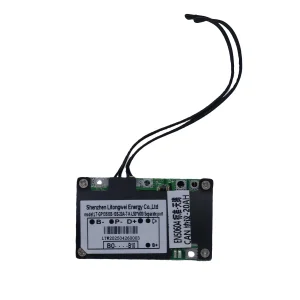
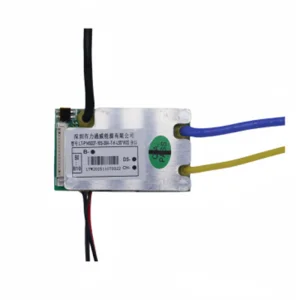
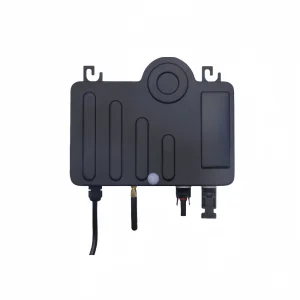
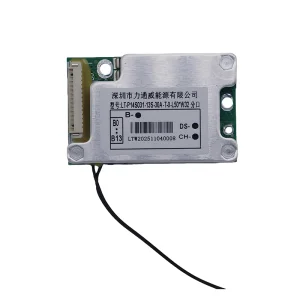
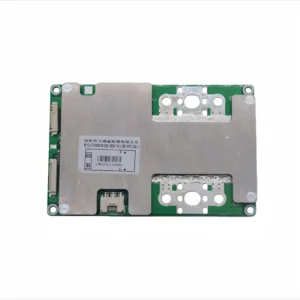
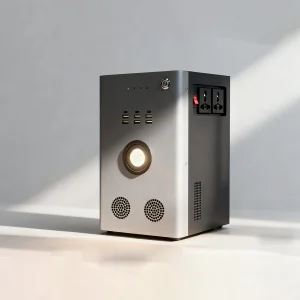
Deploying energy systems in the Seoul metropolitan area demands rigorous compliance with Korean national safety guidelines. Most notably, industrial batteries must satisfy the KC (Korea Certification) standard, ensuring cell-level safety, electrical compatibility, and environmental endurance. A critical aspect of satisfying these standards is a Software BMS capable of tracking charge-discharge histories to guarantee safe operation.
Litongwei works directly with testing houses in South Korea to assist our clients in obtaining KC validation for their final battery packs. Our Software BMS solutions can be customized to write proprietary diagnostic firmware, enabling seamless integration with local Korean testing protocols. Furthermore, our smart systems offer customized communication profiles for CAN communication and Bluetooth monitoring apps, complete with localized Korean UI/UX support for engineering teams in Gyeonggi-do and Seoul.
We understand that our clients’ proprietary firmware is their most valuable asset. To safeguard your designs, we support advanced firmware encryption and security key handshakes. When implementing joint development programs, we guarantee complete partition isolation. This allows your software team to upload custom estimation algorithms onto our hardware while preserving control over your proprietary code.
Essential insights on engineering, integration, compliance, and supply chain logistics for projects in Seoul and globally.
 Litongwei Electronic